Kingdom
The RNI Program: Purchasing Power as a Priority
The first pledge of the “Independents’ Program” aligns perfectly with the social-state policy pursued by the government over the past five years. It aims to replicate that impact across all social strata.

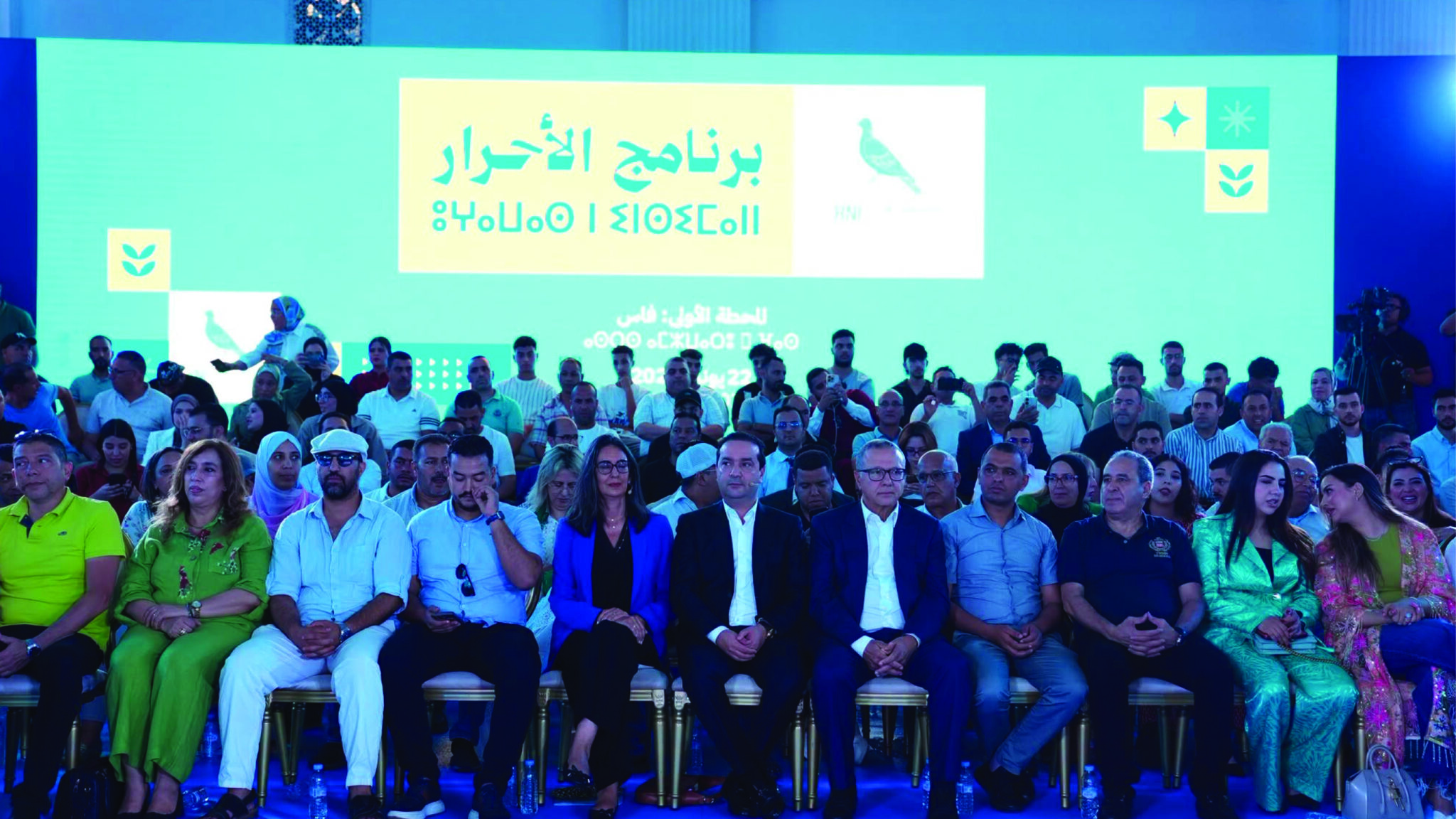
The National Rally of Independents launched, on Monday June 22, from the city of Fez, a national tour that took it to other regions.
This is certainly not new for a formation that, for nearly a decade, has made presence on the ground and direct communication with citizens a way of doing politics.
Over ten years, through its multiple initiatives, from “One Day, One City” to “the Path of Achievements,” the RNI has accustomed us to continuous communication and proximity action. Only the context changes, since we are a few weeks away from the close of the current legislature.
It is therefore logical that this new tour takes on importance, public opinion being on alert and awaiting the first announcements regarding the party’s program for the 2026–2031 period.
It was in Fez that the RNI presented and explained the first commitment of its program.
A program that, incidentally, rests on a set of major commitments broken down into several measures and that the party chose to present according to a progressive communication methodology, based on a gradual and coherent presentation of its content.
The commitments were thus presented during the regional stages, each stage being devoted to presenting a single commitment in detail, ensuring message clarity and ease of understanding. The complete program was announced during a major national convention.
It is also an established tradition: the “Independents’ Program,” as Mohamed Aujjar, a member of the political bureau, noted, “ambitions to elevate public debate in Morocco by presenting clear commitments, ideas and measures, respectful of citizens’ intelligence and founding a political practice based on ethics, nobility, explicit contracts, respect for commitments and courage in taking positions.”
In any case, the party president, Mohamed Chaouki, points out that this program “is not the result of the moment nor the outcome of a passing political conjuncture, but rather the result of several years of listening, proximity and direct interaction with the different layers of Moroccan society.”
The party, he insists, “has chosen to continue this approach, considering it a strategic choice without alternative.”
In short, as it was presented in its entirety, the “Independents’ Program” proposes an integrated vision for building a new social and economic model.
A model anchoring dignity, widening opportunities for social advancement and establishing a qualitative transformation that strengthens the philosophy of the social state, promotes equal opportunities and consecrates economic and social inclusion.
In Fez, the party therefore unveiled the first of its commitments. It concerns “A lasting protection of purchasing power,” considered a fundamental entry point to strengthen the economic security of Moroccan families. This commitment is broken down into four concrete measures.
ASD: Indexed index
The first measure targets people in vulnerable situations, beneficiaries of the direct social assistance program. It aims to ensure a lasting protection of the purchasing power of 4 million families receiving direct social support, or nearly 12 million Moroccan citizens, including more than 5.5 million children.
The measure is based on institutionalizing the RSU index, the level of which conditions access to direct social assistance.
This index will thus be indexed to inflation rates, through the establishment of an automatic revaluation mechanism that activates as soon as inflation exceeds a predefined threshold. It is unnecessary to recall that the purpose of the ADS itself is not to perpetuate social assistance for destitute families, but to make it a lever for economic integration. In other words, the aim is to help beneficiaries improve their economic and social situation.
Informal: Integration through savings
The second measure, which consists of establishing a “savings shield” for workers in the informal sector, seeks to offer them the possibility of opening a simplified savings account supported by the state.
For this, the party proposes to set up two formulas: precautionary savings that allow workers to have at any time a mobilizable capital in case of need to cope with life’s hazards.
And future savings that guarantee these workers the possibility of having a retirement pension. Beyond what appears to be an ordinary banking offer, it is also a financial inclusion mechanism for a large segment of the population that thus encourages the use of payment methods and reduces cash circulation.
Salary: SMIG revalued
This measure aims to create a “shield for improving wages and retirement pensions.” It targets not only the revision of the legal minimum wage in the industrial, commercial and liberal professions sectors (SMIG), and in the agricultural sector (SMAG), but also the alignment of the minimum wage in the agricultural sector with that of other sectors.
At the same time, this measure foresees the revaluation of wages in the formal sector to improve the standard of living. It is also planned to increase retirement pensions, raise the wage average and expand the formal sector.
Education: A fiscal boost
By this measure, the RNI commits to creating a “tax credit” that can reach 5,000 dirhams per year per child to cover schooling expenses.
This measure, which will come into effect from 2028, is intended to complement the reform of pioneering establishments, generalized to all school levels by that date and which guarantees excellence in education in the public sector.
It is aimed particularly at middle classes, allowing them to exercise their educational choices freely, that is to enroll their children in private rather than public education, without compromising their financial stability.
This is a “education shield” for these families.