Kingdom
One Party, One Programme, Three Versions
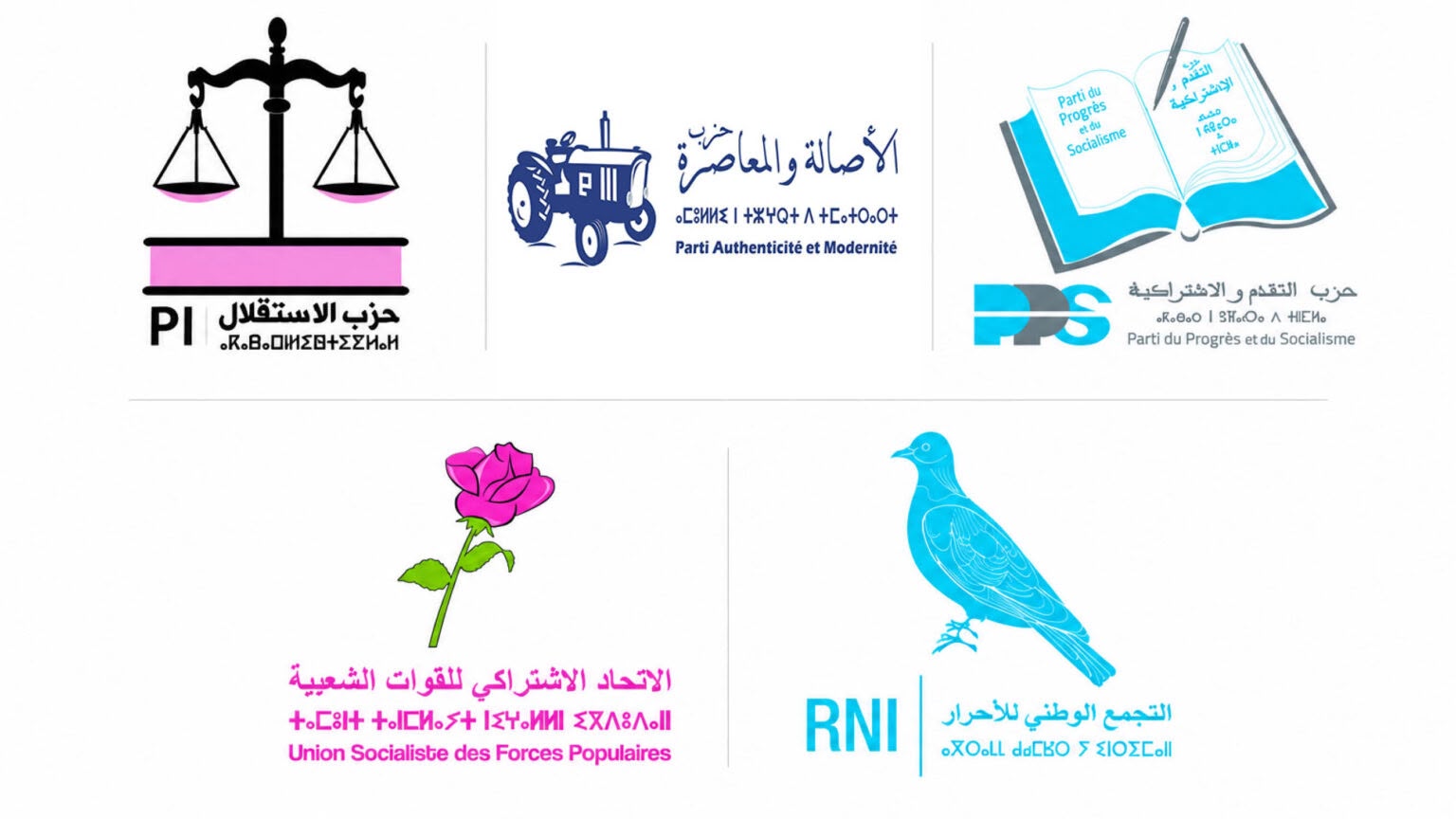
It is difficult to report on all the measures—hundreds for some parties—in the programmes drawn up by political parties for the September 23 legislative elections. Here, however, is an overview of the political offering of the RNI, Istiqlal, PAM, USFP and PPS parties from an institutional, economic and social perspective.

With experience in this field and a head start over the other parties, the RNI programme is undoubtedly the most developed and the earliest to be published, unveiled during the stages from Fez to Marrakech, via Oujda. Three pillars, twelve measures.
Against the backdrop of improving purchasing power for both disadvantaged social groups and the middle class. Indexing social assistance to inflation for 12 million beneficiaries, an education tax credit of 5,000 DH, an increase in the SMIG/SMAG, a unemployment rate below 9% and an investment target of 33% of GDP… are among the measures announced by the party.
 Institutional Measures
The programme provides for several measures aimed at reforming and structuring the action of the State and institutions:
- Simplify and modernize the administration.
- Regular monitoring of the quality of public services.
- Introduce a results-based monitoring approach.
- Create specialized oversight bodies, particularly for health and education.
- Accelerate the digitalization of the administration.
- Create one-stop shops (Dar Al Ousra).
- Strengthen territorial governance.
- Strengthen the resources of local authorities.
- Reform public establishments and enterprises.
- Strengthen coordination between government departments.
- Reform the justice system and digitalize procedures.
Economic Measures
Economic integration and recovery constitute a central pillar, with a clear objective of creating jobs:
- Create one million targeted jobs in several sectors.
- Reduce the unemployment rate to 9% and increase the investment rate to 33% of GDP, supported by targeted annual growth of 5%.
- Increase the SMIG to reach 5,000 DH and align the SMAG with the SMIG in the industrial and commercial sectors. Between 2021 and 2025, the government increased the SMIG by 20% (25% for the SMAG).
- Open the medium-voltage electricity market and develop liquefied natural gas, as well as green hydrogen. Households would be able to resell surplus electricity.
- Accelerate major projects to stimulate the territorial economy.
Social Measures
The social state is at the heart of the programme, with measures focused on protection and purchasing power:
- Index the direct social support index to the inflation rate through an automatic adjustment mechanism.
- Create a simplified two-pillar savings account (free precautionary savings and savings for the future blocked for 24 months), supported by the State for informal workers.
- Support the middle class through a tax credit of up to 5,000 DH per year per child to cover school fees.
- Increase medical density from 30 to 45 professionals per 10,000 inhabitants by 2030; complete university hospitals by 2029; introduce the family doctor and a single number (141) for emergencies.
- Replace the job-loss allowance with a “return-to-work bonus”, extended to 12 months (instead of 6), guaranteeing 70% of the reference salary (capped at 4 times the SMIG), with relaxed eligibility conditions.
- Grant seasonal workers (agriculture, tourism, construction, etc.) the same rights as regular employees (AMO, retirement, family allowances).
- Generalize pioneering schools and middle schools by 2028 and pioneering high schools by 2031; provide rural school transport and meals for public preschool and primary education.
Five clear commitments: family protection, purchasing power, the fight against corruption, the defense of public services, and national sovereignty. The anti-corruption component is the most developed, with a call for a specific law prohibiting the accumulation of interests and monopoly positions.
 Institutional Measures
The institutional measures mainly aim to reform governance, fight corruption and modernize the administration:
- Strictly apply the principle of accountability through precise performance contracts for each public official, with periodic performance evaluations.
- Enact a law on conflicts of interest and expand the obligation to declare assets to include monitoring illicit enrichment.
- Move from a system of prior authorization to a system based on specifications with a declaration of compliance.
- Create an institutional tool to assess and reduce Morocco’s strategic dependence on foreign countries in vital sectors.
- Create a national medical emergencies agency and overhaul the governance of public hospitals for greater management autonomy.
Economic Measures
The economic measures focus on strategic sovereignty, purchasing power and the transformation of the productive fabric:
- Revise corporate income tax (IS), with a progressive rate that may reach 40% for activities benefiting from monopoly or economic rent situations.
- Create regional companies for the purchase, storage and distribution of agricultural products, with a gradual increase in the SMIG and retirement pensions.
- Amend the public procurement decree to require a minimum of 30% “value produced in Morocco”, measured by the local integration rate and the quality of jobs created.
- Launch a new offer of affordable housing for the middle class with easier access to a first home.
- Create a unified industrial hub for the defense industry aiming for 40% local integration by 2031.
- Create a national merchant shipping company.
Social Measures
The social measures emphasize the family, mental health, education and the integration of young people:
- Grant financial assistance of 5,000 DH to young future newlyweds; create a “Family Start” grant and introduce flexible, paid childcare leave.
- Recognize addiction as a chronic disease; deploy a national mental health card and integrate psychological consultations into AMO.
- Gradually and free of charge generalize preschool education (ages 4–6) and upgrade schools in rural areas.
- Guarantee young people a supervised and paid first professional experience lasting 6 to 18 months.
- Ensure that no young person remains for more than 6 months without education, training or employment.
- Train 100,000 young people in digital professions to promote remote work internationally.
It proposes a more interventionist social state, acting directly on prices, incomes, youth integration and public services, while seeking to make every commitment measurable and financially traceable. It considers water, energy, food and technological mastery to be matters of national security.
 Institutional Measures
- Establish a systemic approach and cross-cutting steering to ensure the coherence of public policies related to youth.
- Accelerate the officialization of the Amazigh language through the creation of a dedicated fund.
- Enshrine in law the share of SMEs in public procurement, set at 15% of its value.
- Activate economic regionalization through regional programme contracts. Create 12 regional digital hubs offering very high-speed workspaces.
Economic Measures
- Create at least 1 million net jobs by 2031, in order to reduce the unemployment rate from 10.8% to 7.0%.
- Raise the share of renewable energy in electricity consumption to 52%, with the construction of 6 seawater desalination plants and nearly 400 hydraulic structures.
- Launch a training programme for 5,000 AI trainers and integrate AI into the education system.
- Reduce salary income tax (IR), with a scale reduced to 3 brackets (0% below 15,000 DH gross, 10% between 15,000 and 46,000 DH, and 20% above).
- Exempt TPEs/SMEs from corporate income tax (IS) for 5 years in exchange for creating 3 jobs.
- Grant interest-free loans for the establishment of 80,000 young farmers, with the mobilization of 1.2 billion dirhams per year.
Social Measures
- Introduce direct social assistance with a minimum amount of 1,000 DH. No retirement pension will be less than 3,000 DH.
- Make electricity bills free for consumption not exceeding 100 DH per month.
- Bring the prices of essential goods back to their normal level.
- Achieve 100% healthcare coverage, with the upgrading of 1,600 local health centers and 90 hospitals.
- Support 500,000 families in obtaining decent housing.
- Create a public fund to guarantee young people access to rental housing.
- Register 300,000 young people per year on the “Massar Integration” platform.
- Generalize vocational training to reach 150,000 to 200,000 beneficiaries per year.
- Provide 500,000 young people with a first professional experience through the “First Employment Contract” programme.
The party’s programme is less built around a massive increase in public spending than that of the PPS. It places particular emphasis on work, dignity, social protection, public schools and healthcare, tax justice and territorial equity.
 Institutional Measures
The programme places strong emphasis on State reform, transparency and territorial equity:
- Make corruption a “red line” by activating oversight and sanctions. Objective: 50th place worldwide in the Corruption Perceptions Index.
- Direct public investment towards the least developed regions, with a 50% increase in investments allocated to them.
- A 100% digital administration serving citizens, which would make it possible to reduce processing times by 70%.
- Raise the budget of the cultural sector to 1% of the State budget.
- Make the official status of Amazigh effective, with 100% of territorial administrations bilingual and 80% of essential administrative documents available in Amazigh.
Economic Measures
The USFP’s economic policy aims to be productive, focused on sovereignty, industrialization and support for local actors:
- Generate an additional 1.5 percentage points of growth per year, create 250,000 industrial jobs and increase industrial exports by 40%.
- Support 100,000 companies through the Investment Charter.
- Reserve 30% of public procurement for TPEs/SMEs and 10% for start-ups and innovative companies.
- Redirect support towards small farmers to increase their incomes by 30%, reduce rural poverty by 30% and create 200,000 jobs by strengthening local processing industries.
- Reduce water losses by 40% and raise the share of renewable energy in electricity production to 60% to reduce the energy bill by 20%.
Social Measures
Human beings and social justice are at the heart of the USFP’s development project:
- Reduce the unemployment rate to below 8% (below 10% for young people and below 15% for women).
- Integrate 200,000 young people per year into the labor market or entrepreneurship.
- Targeted increase of 20% in the SMIG and 15% in employees’ net income.
- Support the acquisition of housing for 250,000 families.
- Raise the number of healthcare workers to 4.5 per 1,000 inhabitants, reduce waiting times by 50% and reduce the cost of healthcare for households by 20%.
- Strict oversight of private clinics.
- Reduce the number of students per class to 30, generalize preschool education (100%) and reduce school dropout by 50%.
- Raise the research budget to 2% of GDP and create 10 new university hubs in future-oriented fields.
- Guarantee 100% social coverage, reduce multidimensional poverty by 50% and increase the minimum pension for retirees by 25%.
- Raise women’s participation in the labor market to 30% and double the number of women-led companies.
Its programme stands out for its density to the point of making it utopian. 220 commitments and 996 measures, with 575 billion dirhams in additional spending over five years. Between the lines, a much stronger intervention by the State in practically everything: redistribution, public services and the economy.
 Institutional Measures
This component aims to restore citizens’ trust and moralize public life:
- Zero tolerance for corruption, conflicts of interest and illicit enrichment.
- A binding “Ethics Charter” on assets and transparency.
- An efficient, transparent, territorialized administration serving citizens.
- Expand the powers of local authorities, particularly in education.
- Gradually generalize the teaching of the Amazigh language by 2031.
- Grant real administrative, educational and financial autonomy to universities and public hospitals.
Economic Measures
The economic component aims at productive sovereignty, wealth creation and adaptation to climate challenges:
- Relaunch industrial policy to enable Morocco to produce, innovate and control its value chains.
- Increase the share of industry in GDP.
- Support businesses, free up entrepreneurial activity and deploy efforts to integrate the informal sector.
- Ecological planning, energy transition and climate justice, with particular attention to water management and food sovereignty.
- Raise the R&D budget to 1.5% of GDP and link innovation to industrialization.
Social Measures
The social pillar focuses on investment in human capital, with absolute priority given to public services:
- Place the public hospital at the center of healthcare provision.
- Integrate the 8.5 million Moroccans “currently excluded from AMO” by the end of 2028. Reduce patients’ out-of-pocket costs to 25%.
- Create nearly 9,000 additional hospital beds to reach 10 beds per 10,000 inhabitants.
- Double the medical workforce by creating 15,000 physician positions and more than 33,500 nursing positions over five years.
- Limit the number of students in public schools to a maximum of 30 per class in primary and middle school.
- Recruit more than 18,000 teachers per year and equip 30,000 additional classrooms.
- Reduce the school dropout rate by 50%, particularly in middle school, and lower the failure rate in end-of-cycle examinations in secondary education by 30%.