Business
BAM Bets on Small Businesses to Reduce Cash Usage
By introducing a specific 0.15% cap on interchange fees applicable to local businesses, Bank Al-Maghrib hopes to accelerate the adoption of electronic payments where cash still reigns supreme. The reform is expected to reduce card acceptance costs, but its success will also depend on the ability to remove other obstacles, particularly cultural and tax-related ones.

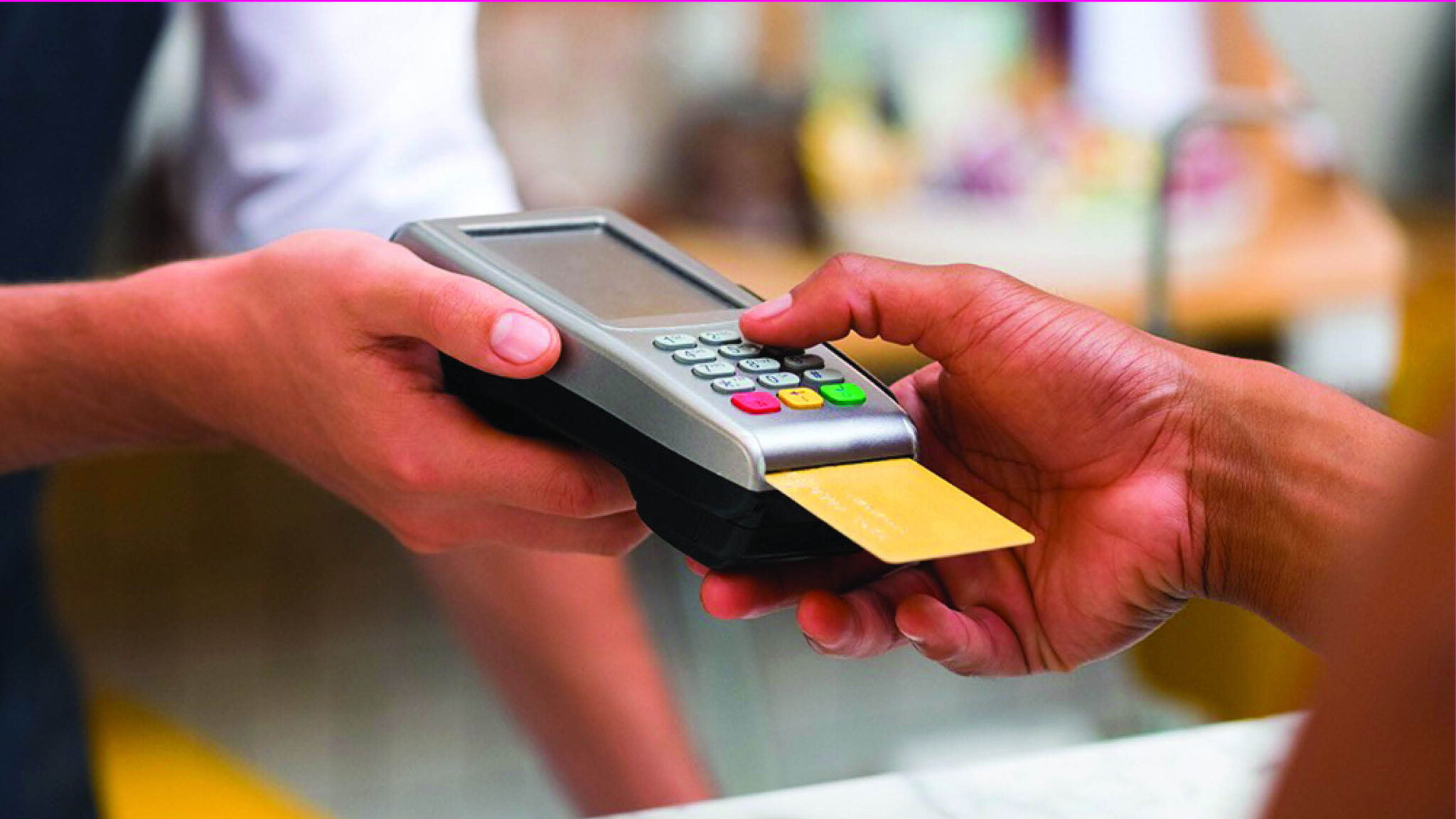
Bank Al-Maghrib (BAM) has taken a new step in its strategy to develop electronic payments and gradually reduce the use of cash.
In a regulatory decision signed last July, the central bank lowered the ceiling for domestic card-payment interchange fees from 0.65% to 0.50%, excluding taxes. This is a commission paid by the merchant’s bank to the bank that issued the customer’s card, to remunerate the processing and securing of the transaction.
The main new feature of this decision, which will enter into force on October 1, 2026, is nevertheless the introduction of a specific ceiling of 0.15% excluding taxes for payments made at local businesses and for electronic government services (e-Gov).
Withdrawals from automated teller machines, cards issued by three-party schemes, as well as foreign cards, remain excluded from this measure.
The measure concerns independent points of sale with annual turnover below 500,000 dirhams under the self-employed status, or 2 million dirhams for activities subject to the unified professional contribution.
Integrated businesses, franchises, large retail chains and legal entities are excluded. BAM also points out that acquiring fees remain exclusively the responsibility of the merchant and cannot be passed on to the customer.
By targeting local businesses, the central bank hopes to shift cash payments toward bank cards.
“Analyses conducted by the bank have shown that local businesses account for a significant share of low-value payments, which are still predominantly made in cash, and that the cost of acceptance is one of the main obstacles to their digitalization,” Noureddine Hajjami, Director of Payment Systems and Means of Payment at Bank Al-Maghrib, explains to us.
The objective is to reduce the cost of accepting electronic payments, make payment collection solutions more attractive, and encourage their adoption among very small businesses and independent merchants.
A Rate Designed to Reduce the Cost of Payments
The 0.15% ceiling was not set randomly. According to Hajjami, it results from an analysis of the national payments market, cost structures, international practices and consultations conducted with sector stakeholders.
“This rate makes it possible to significantly reduce the costs borne by merchants while preserving the economic balance of the card-payment chain, which brings together card issuers, acquiring institutions, technical operators and merchants,” he specifies.
For Mohamed Chiguer, president of the Aziz Belal Center for Studies and Research (CERAB), this decision constitutes “a positive signal,” but it will not, on its own, be enough to durably transform payment habits.
“The main obstacle is not only the cost of payments. Cash remains deeply rooted in the habits of Moroccans,” he argues.
The economist also points to the low level of banking access among some small merchants and the complexity of certain administrative procedures, which continue to hinder the use of electronic payments.
Chiguer nevertheless believes that the success of the reform will depend on its effective implementation. He calls on Bank Al-Maghrib to ensure that the reduction in fees genuinely benefits merchants.
“Banks can sometimes reduce one fee on one side and increase another,” he warns. The monetary institution says it has put safeguards in place.
Acquiring institutions will have to fully pass on the reduction in interchange fees to the commissions charged to local businesses and submit their fee schedules.
“Bank Al-Maghrib will closely monitor the situation to verify the effective pass-through of this reduction to the commissions borne by merchants and to measure its effects on the development of electronic payment acceptance,” Hajjami states.
An Acquiring Market Undergoing Major Restructuring
This reform comes amid a profound restructuring of the card-payment acquiring market.
Since February 1, 2026, the acceptance activities of the Interbank Electronic Banking Center (CMI), which had previously held an almost monopolistic position, have been taken over by seven specialized banking subsidiaries: Attijari Payement, M2T, Damane Cash, Lana Cash, Al Filahi Cash, Saham Paiements and CDM Pay.
CMI now retains its card-payment processing and technical support activities, while acquiring has been opened to competition.
For BAM, the cap on interchange fees is only one lever among others to accelerate the digitalization of payments.
The reform is part of a broader strategy that notably includes the National Payment Scheme, the Payment Acceptance Development Fund, the deployment of innovative solutions such as SoftPOS and QR codes, as well as the arrival of new players on the market.
To measure its impact, the central bank will monitor the evolution of commissions applied to merchants, the number of equipped points of sale, the volume and value of electronic payments, as well as their share in local-business transactions.
“The first expected effects concern a rapid improvement in the pricing conditions offered to merchants. The impacts on equipment and usage should materialize gradually over the coming years,” Hajjami indicates.
For Chiguer, however, the real challenge goes beyond the issue of pricing alone. “The modernization of payment methods can only succeed if it is accompanied by a genuine educational effort and an environment of trust between merchants, banks and public authorities,” the economist believes.
According to him, the success of this reform will also require awareness-raising initiatives, simplified administrative procedures and incentives designed to facilitate the equipment of small merchants, particularly through lower-cost POS terminals during a transitional period.
POS Terminals: A Potential Market of 1.2 Million Businesses
The electronic payment acceptance network remains largely underdeveloped among local businesses in Morocco.
As of the end of 2024, just over 80,000 merchants were equipped with an electronic payment terminal (POS), according to Bank Al-Maghrib, with significant disparities between urban and rural areas.
Yet the potential is considerable. A study conducted in 2025 by Visa and the Ministry of Industry and Commerce estimates that 1.2 million businesses and shops could potentially be equipped.
To accelerate this momentum, the African Development Bank (AfDB) granted, in February 2026, a 4.7 million dirham grant to the Payment Acceptance Development Fund established by Bank Al-Maghrib.