Business
RNI: Income, Public Services and Employment, the Three-Pronged Strategy for 2026–2031
The RNI is making income improvement the main lever for protecting purchasing power over the next five years. The party is structuring its 2026–2031 commitments around a common thread aimed at strengthening incomes, improving public services and promoting the economic autonomy of households.

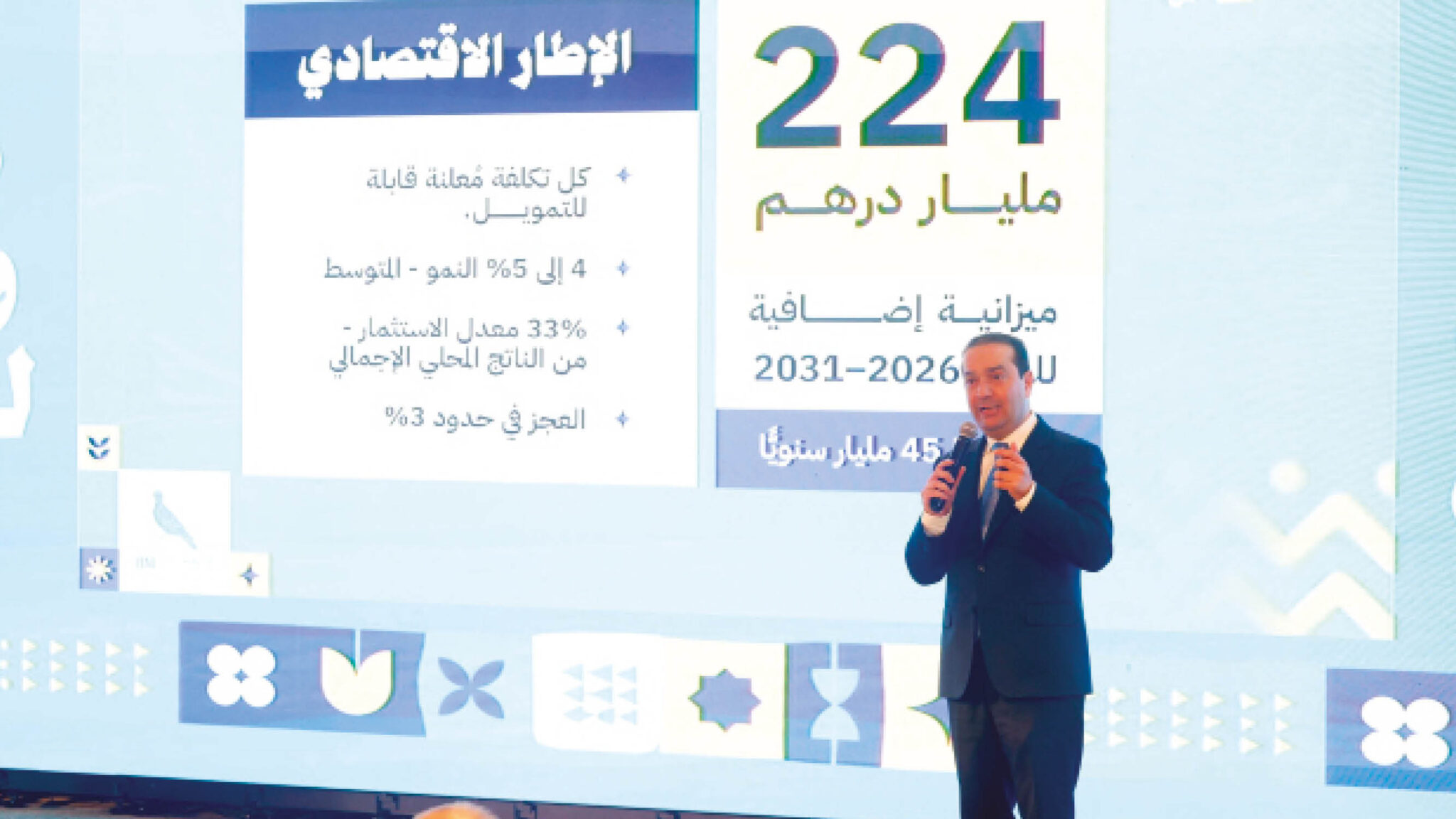
The National Rally of Independents officially presented its 2026–2031 electoral programme on Tuesday, September 8, in Rabat.
“It is the first party to have announced its vision for the next five years, a month and a half ago, under the slogan ‘Dignity and Opportunities for All’,” Mohamed Chaouki, president of the RNI, emphasized from the outset.
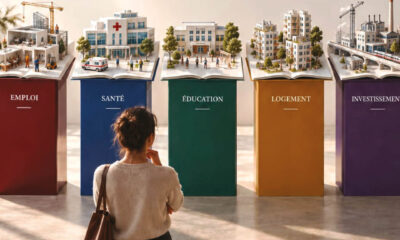
The party’s ambition is therefore that of a Morocco of opportunities, in the broadest sense: quality education and healthcare, sustainable employment, decent housing, investment and entrepreneurship, social protection, as well as women’s inclusion and the social economy.
This orientation is the result of a broad participatory process that brought together different components of society across the Kingdom’s twelve regions and opened itself up to the views and expectations of Moroccans living abroad.
“It stems from a civic trajectory focused on the field, listening to citizens and proximity to Moroccans, throughout the country.”
Through this programme, the Independents intend to pursue the structural reforms undertaken to sustainably protect the purchasing power of the middle class and poor and vulnerable families, strengthen access to quality public services throughout the country, achieve economic inclusion and promote job creation.
Rather than claiming to act directly on prices, the party makes improving incomes the main lever for strengthening purchasing power.
Four pillars have been identified: the social component, savings, wages and education.
In addition to continuing the direct social assistance mechanism, whose amount would increase from 500 to 1,350 DH, the party intends to index this mechanism to inflation.
Four million families are concerned, representing nearly 12 million Moroccans, including 5.5 million children. This assistance should not stop once the beneficiary obtains a job.
On the contrary, it should continue for the following twelve months. The RNI is also committed to maintaining support for butane gas.
State-Supported Savings
Alongside this, the party plans to encourage the creation of savings with a dual purpose—precaution and investment—for workers in the informal sector, by providing a public contribution of 25%.
At the same time, wage increases should not stop with the achievements of the government during the current term. In other words, the SMIG will be raised to 5,000 DH, compared with 3,422 DH currently, 3,110 DH in 2023 and 2,028 DH in 2021.
It should be noted that this measure will affect nearly 3 million Moroccans whose salary does not exceed 4,000 DH per month, representing two-thirds of employees in the formal sector.
While the vulnerable class, long left on the sidelines of many programmes, is a priority for the Independents, the middle class is not being overlooked and is also receiving sustained attention in the RNI’s programme.
A tax credit of up to 5,000 DH per year per child is therefore planned, in order to contribute to covering school fees. “This measure is no more a contradiction with the government’s efforts to improve and upgrade public schools than it is support for families whose children are enrolled in the private system,” Chaouki explains.
And this is where the party’s entire approach lies: moving from a logic of assistance to a logic of autonomy, while consolidating the achievements of the social state.
Beyond improving incomes, the party of the Dove is counting on guaranteeing quality public services: water, energy, education and healthcare.
Its future actions do not represent a break with its previous commitments, but rather form part of a smooth and effective continuity.
The programme therefore aims to achieve universal access to water by 2030, facilitate the self-production of solar electricity for households without an initial contribution, with the possibility of selling the surplus produced, and maintain preferential electricity pricing for the most vulnerable groups.
At the same time, the nationwide rollout of pioneering schools, halving school dropout rates, increasing the number of universities from 12 to 27, and creating universities in four regions that have so far lacked this infrastructure—Drâa-Tafilalet, Guelmim-Oued Noun, Laâyoune-Sakia El Hamra and Dakhla-Oued Eddahab—represent measures on which the party is already relying to strengthen access to education and reduce territorial disparities.
In healthcare, the RNI places its action under the slogan of healthcare accessible to all, with a roadmap designed to strengthen local healthcare provision and reduce territorial disparities.
It includes the nationwide rollout of GSTs by 2027, increasing medical density to 45 healthcare professionals per 10,000 inhabitants by 2030, and deploying 5,000 healthcare workers responsible for providing primary care services in rural areas, in addition to the gradual introduction of third-party payment and the revision of medicine prices and reimbursement arrangements.
Employment is another major pillar of the RNI programme, which aims to reduce unemployment and create one million new jobs across several sectors considered to have strong potential.
Industry is expected to contribute 300,000 jobs, digitalization 250,000, agriculture 150,000, and tourism, services and activities related to the World Cup 300,000.
The proposed mechanism is not limited to job creation. The RNI also intends to strengthen entrepreneurship through State-guaranteed productive loan funds, aimed in particular at very small businesses, project developers and self-employed workers.
Ultimately, the party’s three commitments and 12 measures are certainly part of the continuity of public policies, but beyond that, they aim to deepen the social state by successfully moving toward active support that leads every Moroccan toward autonomy and dignity.
An Additional Budget of 45 Billion Dirhams per Year
The economic framework underlying the implementation of the RNI’s vision has also been carefully studied.
The party estimates that 224 billion dirhams can be mobilized over the 2026–2031 period to finance all the announced measures, representing an average of nearly 45 billion dirhams per year.
The Independents place this budgetary effort within a macroeconomic scenario based on average annual growth of between 4% and 5% by 2030, an investment rate maintained at around 33% of GDP and a budget deficit contained at approximately 3%.
The equation therefore consists of financing the programme’s commitments while preserving the major macroeconomic balances.