Business
2026 Legislative Elections: Ask for the Programme
Between two legislative elections, the parties’ programmes have evolved and gained maturity. Gone are the vague promises, grandiose commitments and hollow slogans. Not all parties, but some are offering a genuine government business plan. The RNI is the pioneer.

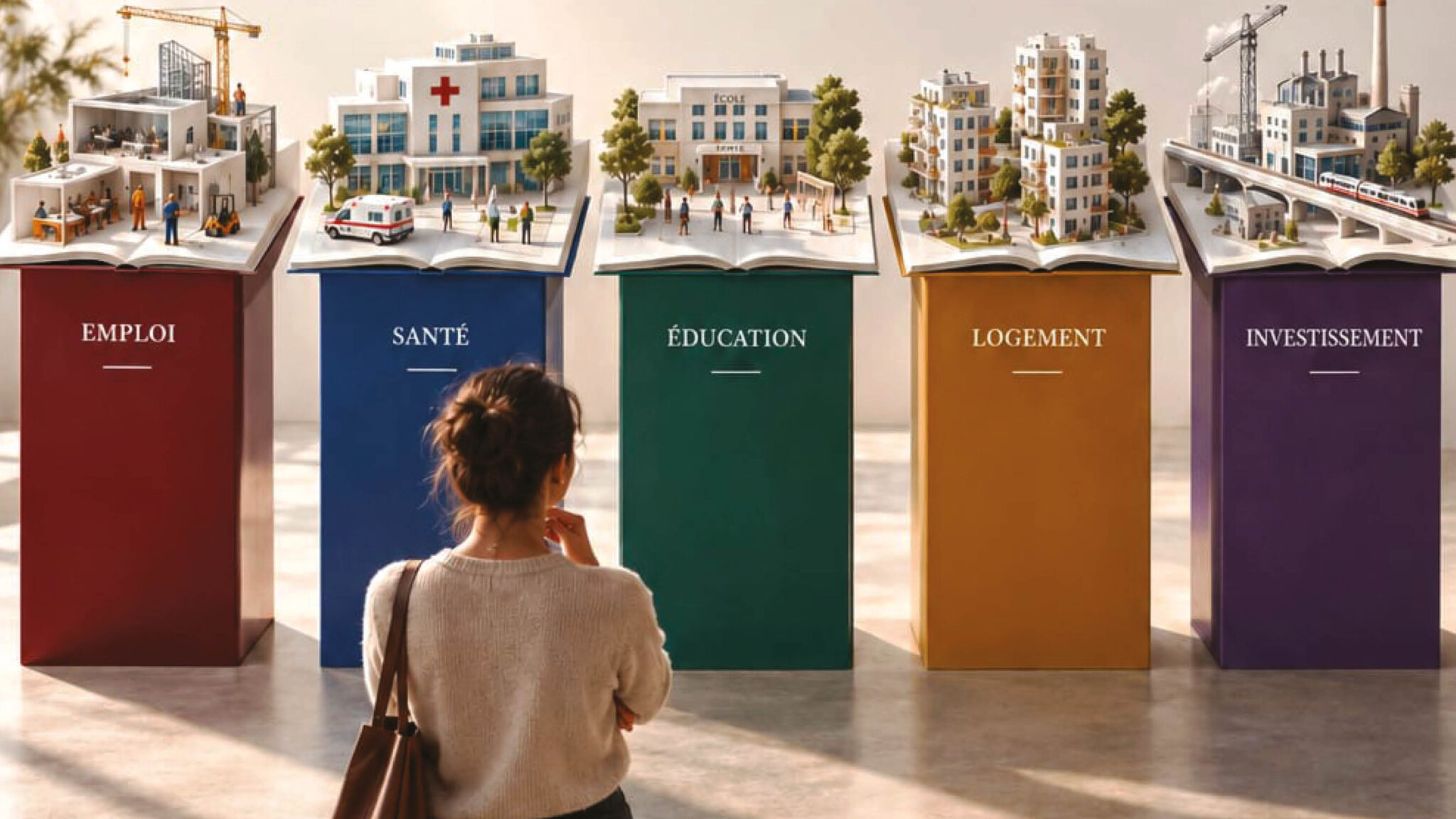
Despite everything that can be said about them, Morocco’s political parties have gained maturity in many respects.
To convince voters, the language has changed radically. It is no longer “vote for this or that candidate,” although this logic still persists, but rather “vote for the programme.”
And when it comes to programmes, our political parties, at least the most credible and prominent ones, have not held back when it comes to promises, “measures” and “priorities,” some of which may seem more far-fetched and eccentric than others.
But the fact remains. Today, in 2026, party programmes are much more quantified and much more focused on income, purchasing power, employment and public services than they were in 2021, to take that year alone as a reference.
This leads one political analyst to say that “today we are facing a new generation of electoral programmes, and we must acknowledge that some parties have made efforts to develop this aspect of electoral practice.
What is striking is that these are operational programmes that break with the general and abstract: they are based on a choice of priorities, with precise objectives and targeted groups, a direct financial impact and measurable returns.”
He also acknowledges that “Aziz Akhannouch is the founder of this programmatic school in 2021. He is the one who launched this new generation of electoral programmes and designed this qualitative leap in the programmatic contract with voters.”
Five political parties were proposing a programme to emerge from the crisis, with recommendations on how to transform the economic and institutional model.
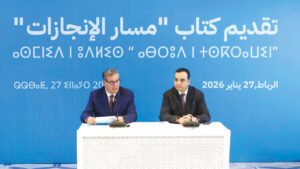
Morocco had just emerged from a major debate on its New Development Model. The RNI, for its part, was already proposing a clearer offer: 25 measures and 5 major commitments. Namely: social protection, healthcare, employment, education and administration.
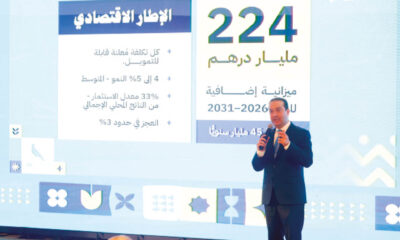
It already had something rather distinctive at the time: it provided an overall cost of 275 billion DH over five years, or around 55 billion per year. Five years later, it has become a reality.
The electoral programme is gradually moving from a catalogue of measures toward a government business plan. The logic of impact and results is now firmly embedded in the parties’ mindset.
One Party, One Pioneer
In this change in scale, in which most political parties are now fully engaged, one party and one political leader—the RNI of Aziz Akhannouch—have played a major role.
In April 2019, more than two years before the September 8, 2021 legislative elections, the RNI launched an unprecedented campaign. A unique operation in which communication worked in both directions, but more often from the bottom up.
The “100 Cities, 100 Days” initiative was a turning point. It was no longer the party’s bodies, officials and think tanks that crafted the electoral programme, but citizens, whose needs, expectations and proposals formed its backbone.
The initiative was expanded in 2020 with another equally unprecedented initiative: a public debate platform open to the public on a number of themes (maba3d-corona.com).
Six years later, the PJD launched a similar platform to finalize its programme. The Akhannouch method had worked well. From citizens’ expectations, three priorities were identified: healthcare, education and employment.
The needs are clear, and the way to meet them and the necessary funding are precise. The RNI had little difficulty convincing its majority partners to include them in the government programme.
This unprecedented experience showed that political parties can develop clear programmes, with precise objectives and financing and management mechanisms allowing them to be implemented.
The programmes being presented today to voters by the main political parties practically all follow this logic.
In these programmes, another component is, so to speak, particularly striking: financing. In 2021, when the outgoing government took office, Morocco was in crisis.
After emerging from Covid, a long period of drought had just begun and the Russia-Ukraine war had broken out. All the indicators were in the red.
The emergency situation was dominant. This did not prevent the government from successively launching the nationwide rollout of AMO, direct social assistance, aid programmes to mitigate the impact of drought and rising prices of raw materials, agricultural and energy products, an emergency water programme, the reform of healthcare and public education, and social dialogue at a cost never seen before.
All this while leaving, upon its departure, all the indicators on the macroeconomic dashboard in the green. FDI, foreign-exchange reserves, growth, public debt levels, inflation, unemployment… the figures speak for themselves. The parties’ programmes confirm the improvement.
These Projects Are Not Waiting for the Elections
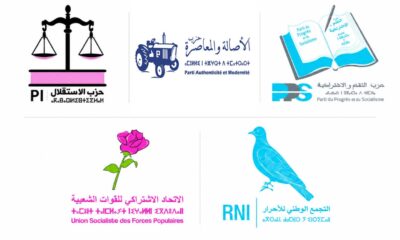
When PAM, USFP, Istiqlal and PPS now propose programmes involving hundreds of billions of dirhams in funding (350 billion DH for PAM, 575 according to PPS), it is because they know that the next government can count on a comfortable economic situation inherited from the outgoing government.
After all, if, following ten years of disastrous management by the PJD, Aziz Akhannouch’s RNI, as the leader of the majority, was able to help bring the country out of a crisis situation and raise it to the ranks of emerging economies, nothing is easier than continuing the momentum, starting from a much better situation.
When PAM, PPS and Istiqlal, to name only these three, promise today to create one million jobs over five years, it is because the Akhannouch government has almost achieved this, with 850,000 non-agricultural jobs created between 2021 and 2025.
Above all, this is because the same government launched a dedicated employment promotion roadmap, which is still underway, with a budget of 14 billion DH allocated under the 2025 Finance Law.
At the same time, another programme was launched with a 2030 deadline, whose objective is to raise the female employment rate to 30% (women account for 75% of NEETs).
Thus, when a party puts forward measures to integrate these NEETs, whom PAM estimates at 2.9 million people, it is targeting a population in which three out of four are young women.
When the same party promises a revision of personal income tax (IR), the scale of which is moreover debatable, and USFP does the same, albeit in a more moderate manner, both are starting from a reality: the tax reform carried out over the past five years has produced results.
Overall revenues jumped by 74% between 2021 and 2025. According to the DGI, corporate income tax (IS) increased by 110%, exceeding 100 billion DH in revenue for the first time.
IR increased by only 47%—with wage increases resulting from social dialogue and the recovery in employment playing a major role—but it now accounts for only 24% of total revenues.
Behind this achievement is one principle: “More revenue, less tax pressure.” The recipe: control and governance. When several parties rely on growth in their programmes to finance a wide range of measures, once again, it is because the path has already been laid out.
A new Investment Charter, new industrial ecosystems in the take-off phase, infrastructure projects under construction, two major deep-water ports nearing completion, upgrading industrialization and advanced agriculture gradually freeing itself from dependence on rainfall thanks to the desalination programme—all of this means that, despite cyclical uncertainties, growth is there.
Here again, when it took office, the outgoing government had promised 5% growth. Promise kept, and the glass ceiling broken.
Dividends of Exceptional Management
What an informed observer will note at first glance is that while the RNI fully embraces the record of the outgoing government, its two partners, PAM, increasingly openly, and Istiqlal, to a lesser extent, tend to distance themselves from it.
Another noteworthy fact, which follows directly from this, is that while the same RNI is proposing an electoral programme that continues the outgoing government’s action, the other two majority members have chosen a break or, at least, a change in direction, while capitalizing on certain programmes launched by (or under) the same Executive.
When political parties talk about job creation, they fail to specify that a programme with a budget of 14 billion DH has already been launched.
When they talk about improving hydraulic infrastructure, desalination and dams, they pretend to ignore that a vast priority project worth more than 115 billion DH has already been launched and runs until 2027, as part of the National Water Plan (2020–2050).
When they commit to reducing territorial and social disparities, they completely overlook the Integrated Territorial Development Programme (PDTI), a massive project with a budget of 210 billion dirhams that is being rolled out over a period of eight years.
The same can be said of the parties’ promises concerning the healthcare sector, whose reform roadmap is nearing completion, with most GSTs having already held their first board meeting, while university hospitals (CHU), regional hospitals (CHR) and other health centres and psychiatric hospitals (National Mental Health Plan 2030, 17 hospitals, 4 billion DH) are gradually coming into service.
This is happening while medical faculties, practically one in each region, have for the most part already begun their programmes. The same can be said of education, where two recently enacted laws complete the reform, both in basic and higher education.
The same applies to promises concerning pension reform: negotiations are already well advanced, and it would not be relevant to start everything from scratch.
PPS simply proposes holding national conferences, even though public institutions, BAM and ACAPS foremost among them, continue to issue warning signals about the precarious state of pension funds.
Projects that have already been included for years in the Generation Green strategy (2020–2030), one of whose objectives is the emergence of a rural middle class, the ongoing reform of wholesale markets, as well as regulations governing the direct sale of agricultural products, also find their echo, in the form of measures, in the programmes of certain parties.
The same applies to the direct social assistance programme, AMO, and housing assistance, particularly the component aimed at the middle class.
These same programmes are counting on dividends in the form of growth points generated by new investment-related legislation, economic activities in their early stages, such as the battery industry, green hydrogen, the defence industry, shipbuilding and railway industries, the tech industry, as well as mature sectors such as renewable energy.
In the End, We Keep the Best
Where the RNI, for example, proposes improving purchasing power by generating income (reselling surplus electricity produced, value-generating savings, a tracking system for seasonal workers…), some parties, including PAM, but also USFP and PPS, position themselves in favour of social redistribution of state revenues.
Abolition of the RSU index and universalization of an allowance of 1,000 DH, an unemployment benefit of 7,500 DH, a minimum retirement pension of 3,000 DH, a 20% increase in salaries…
While the RNI commits to improving purchasing power, including that of disadvantaged social groups, by introducing a mobile RSU index to address rising inflation, others talk about price caps, the creation of public commercial entities, eliminating intermediaries and fighting economic rents.
None of these measures can, in a changing geopolitical context, guarantee the availability of inputs and raw materials, the stability of energy-product prices and transport costs, or even protect against climate-related fluctuations, a genuine driver of inflation and rising consumer prices.
Improving purchasing power does not mean an excessive increase in salaries either (+20% according to the USPF), which can produce the opposite result, namely an increase in prices resulting from higher demand and therefore inflation.
Where PAM, for example, proposes making direct assistance permanent and uniform by removing the threshold, the RNI considers direct social assistance to be one of the levers for consolidating the social state.
It wants to transform assistance into permanent income-security mechanisms. Assistance becomes a tool for economic empowerment and escaping precariousness.
Ultimately, there is one reality that no one ignores: the next government, like those that preceded it, will be a coalition government.
In the government programme resulting from the September 23 legislative elections, on the basis of which it will appear before Parliament for the vote of confidence, we will undoubtedly find measures included in the electoral offerings of the parties that will form the future majority.
But these will be more realistic, more down-to-earth measures, and more consistent with the major projects already underway in the Kingdom.