Kingdom
Abdessamad Alhyan: “The Regulatory Framework Has Clearly Become More Extensive and Improved”
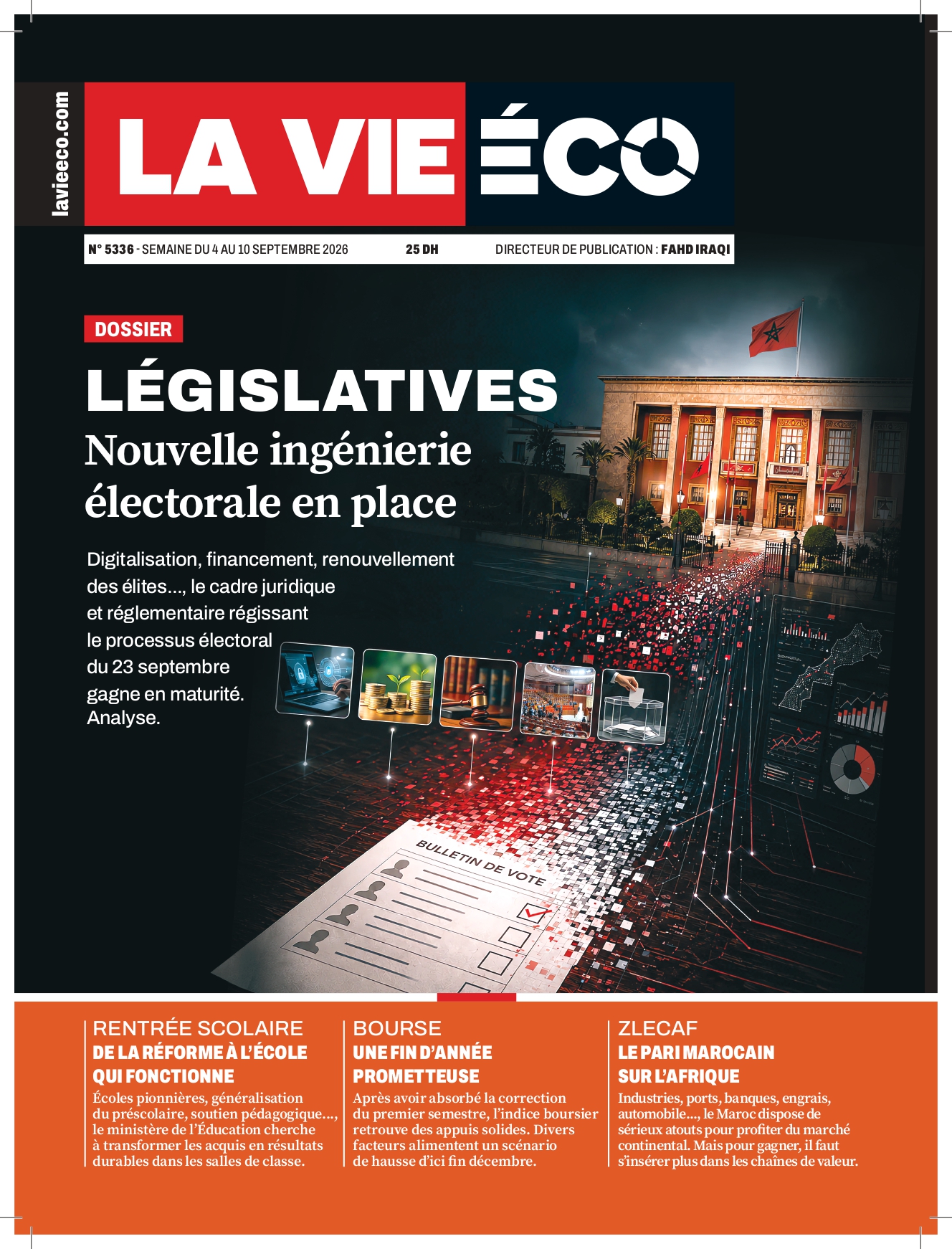
The 2011 election marked a turning point in electoral practice in Morocco. The 2016 and 2021 elections confirmed the regularity of the electoral process, with fewer disputes and greater transparency and political pluralism. The upcoming legislative elections raise new challenges.

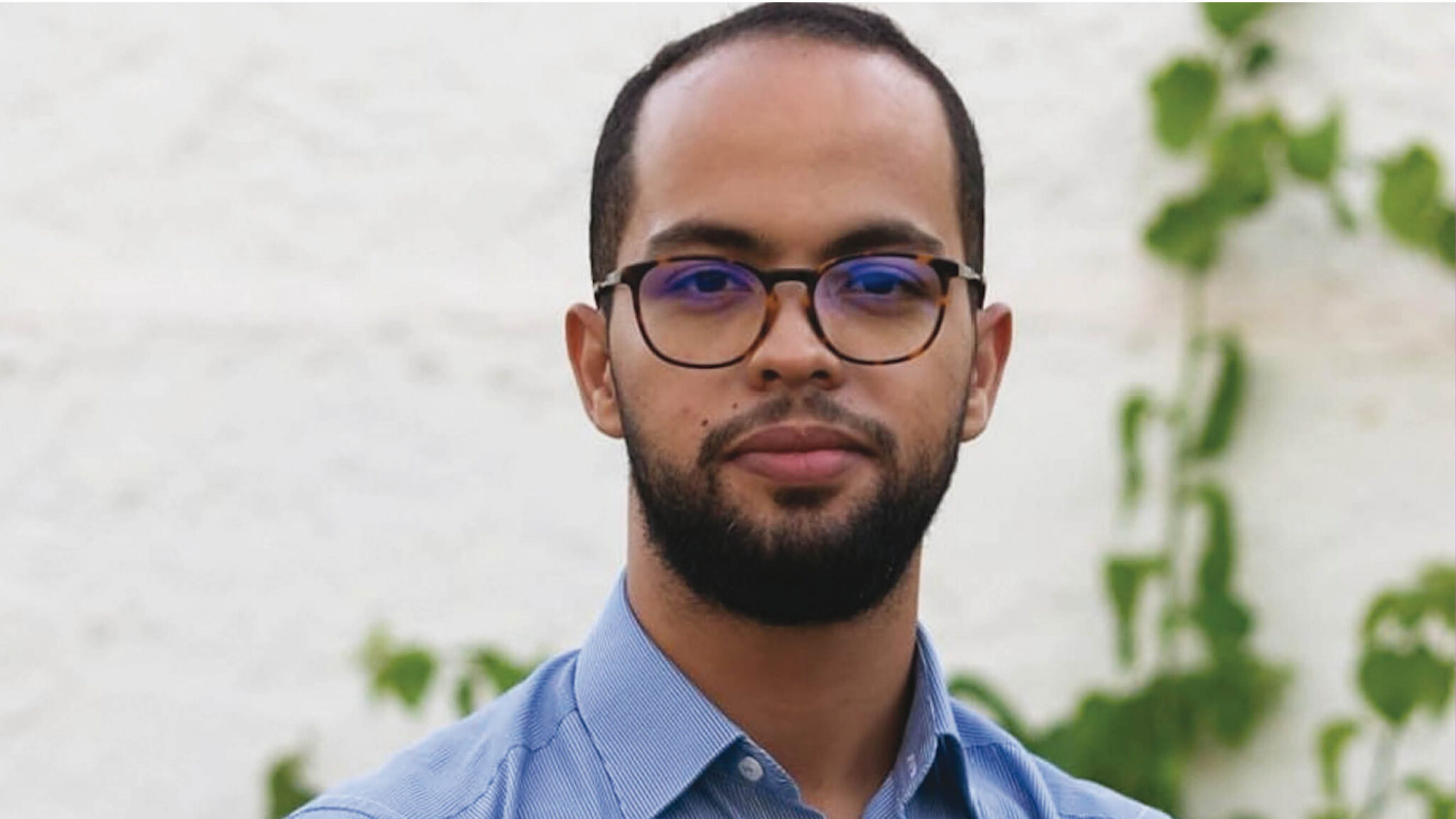
Abdessamad Alhyan is a young civil society actor, as well as a senior consultant at Forvis Mazars, interested in projects of a social, political and societal nature.
Since October 2024, he has been president of the Tariq Ibnou Ziyad Initiative (TIZI). The NGO has been closely monitoring the evolution of the national political landscape for several years. This year, to encourage young people to participate in the electoral process, it is supporting around one hundred prospective independent candidates.
In view of the new legal and regulatory framework adopted, how do you see the evolution of electoral transparency?
The trajectory is generally positive, and this must be honestly acknowledged. Throughout this period of electoral observation and civic engagement through TIZI, we have witnessed a real and gradual improvement in the governance framework for elections.
The 2011 election marked a turning point, driven by constitutional dynamics and citizen pressure. The 2016 and 2021 elections confirmed the trend: fewer disputes over the overall results, greater pluralism in party representation and a growing role for civil society as an observer.
That said, we have always refused easy self-congratulation. Nevertheless, structural challenges persist: political money, phenomena of clientelism in certain territories, and the low participation rate, particularly among young people, with only 33.6% of 18–24-year-olds registered on the electoral lists in 2021.
This is not a problem of transparency in the technical sense of the term, but a problem of legitimacy and strengthening the democratic process that no one can ignore.
Do the latest legislative texts strengthen the credibility of the election?
The regulatory framework has clearly become more extensive and improved. Several advances deserve to be highlighted.
First, the provisions relating to campaign financing and the transparency of campaign accounts constitute a real step forward, even if their effective oversight remains open to improvement.
Next, independent observation mechanisms have been gradually strengthened, giving civil society organizations a greater role.
What we expect, however, is that these texts will genuinely be applied with the same rigor in major cities as in remote rural areas. The law is good when it is the same for everyone.
This is where the real challenge still lies. From our position at TIZI, we also believe that a systematic electoral education mechanism is still lacking, not only for candidates and political actors, but also for citizens.
In your opinion, can digitalization serve as a lever for electoral transparency and participation?
Without a doubt, and I deeply believe in it. Digitalization is a powerful lever under two conditions: that it be inclusive and secure.
Inclusive first, because digitizing electoral lists or the submission of candidacies without supporting populations with low digital literacy, particularly in rural and mountainous areas, risks creating a new democratic divide. Transparency must not produce silent exclusion.
Secure next, because any dematerialization exposes systems to risks of manipulation, cyberattacks or disinformation about procedures.
Clear safeguards and robust governance of the systems put in place are needed.
That being said, if these conditions are met, the benefits will be considerable: traceability, reduced errors, faster processing and easier access for citizens. This is a direction that TIZI fully supports.
What are the main other changes in the regulatory framework for the 2026 legislative elections?
Beyond the digital aspect, we are seeing changes that seem to me particularly structuring for 2026.
What strikes me first is the pace. In barely five weeks, from early March to early April, several successive government councils produced a body of texts that constitutes the densest electoral reform since 2011.
The election date set as early as March 5, the officialization of the digital submission of candidacies, the redesign of the ballot paper to improve its readability, the regulation of digital campaign expenses for the first time—each text contributes its part.
But the measure that seems to me the most audacious is the mechanism relating to public support.
Each seat won by a young person under 35, a person with a disability or a Moroccan residing abroad is now valued six times over in the calculation of the public subsidy paid to the party.
What I take away from this, fundamentally, is that the legislator has understood that political behavior is not changed through declarations of intent. It is changed by modifying incentives.
That said, I must remain clear-eyed: a text is worth only as much as its application. It is on the ground and in polling stations in rural areas that the credibility of an election is truly determined. And that is where we will continue to be present.
The last point, and perhaps the most unprecedented, concerns the provisions specific to young candidates under 35. This is an issue on which TIZI has worked extensively, and on which I would like to dwell further.
Do the provisions for young people under 35 encourage the rejuvenation of Parliament?
This is a question that directly concerns me, since it is precisely at the heart of the AMAL 2026 project that we conducted with the Moroccan Leadership Institute and the Heinrich Böll Foundation.
My nuanced answer is as follows: the provisions are necessary, but not sufficient. Incentives for young people to stand as candidates, whether quotas on lists, facilitated financing or simplified procedures, create opportunities.
But an opportunity without preparation remains a missed opportunity.
This is precisely the diagnosis that led to the creation of AMAL 2026: we trained 100 young people under 35, one third of whom were women, giving them the concrete tools to be competent candidates, not merely symbolic candidates.
The traveling caravan that we deployed in five cities across the Kingdom follows this logic: the right of access is not enough; there must be a real capacity to exercise it.
For Parliament to truly become younger, three things are needed simultaneously: texts that open the way, political parties that embrace generational renewal, and an active civil society that prepares the next generation.
To combat fake news and the influence of social networks, are the provisions currently in place sufficient?
In all honesty, I think not. Here is why: texts can prohibit, sanction and regulate. But social networks operate at a speed that the law cannot follow in real time.
A false piece of information going viral on the morning of an election can cause irreparable damage before a judge has time to rule. We have seen this in many countries.
What is needed alongside legal provisions, and this is where civil society has an irreplaceable role, is a culture of critical thinking rooted in the population. This is something that can be learned, cultivated and passed on.
Media education, training in information verification, awareness of manipulation mechanisms: these are the real democratic immunities that no one can steal or hack.
Citizens must be supported through every possible mechanism to resist the temptations of disinformation and build a relationship of trust with political actors.
Because in the end, the best protection against fake news is an informed citizen who knows how to distinguish truth from falsehood, and an honest candidate who refuses to instrumentalize disinformation even when it would benefit them.