Influences
The RNI Intensifies Its Communication Meetings
After a brief summer break, the National Rally of Independents (RNI) is returning to its usual pace and multiplying local meetings with citizens across the Kingdom. On the agenda: a review of achievements, an explanation of the electoral program, and the presentation of candidates.

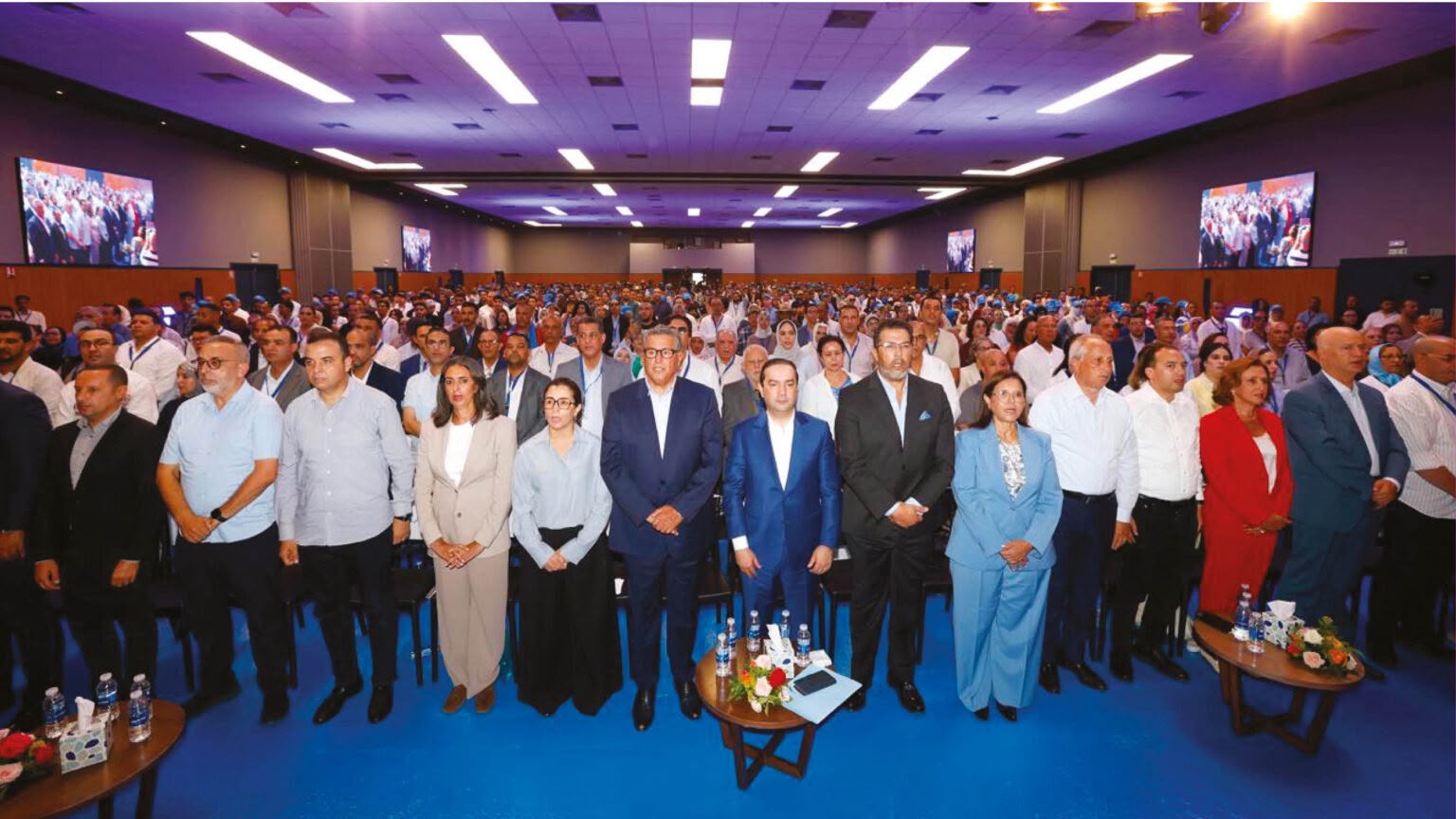
The last weekend of August perfectly illustrates the vitality of the National Rally of Independents’ (RNI) grassroots political organization.
In barely twenty-four hours, numerous party leaders took turns appearing at three major rallies, held respectively in Oujda, Agadir, and then Kariat Ba Mohamed in Fez, thus confirming the RNI’s determination to cover the entire national territory and establish a direct and continuous connection with citizens.
At the head of this operation is the former president of the political party, Aziz Akhannouch, whose presence continues to give this type of gathering additional prominence and visibility, without overshadowing the RNI’s new president, Mohamed Chaouki, who seems to be settling with increasing ease into his role as leader of the Kingdom’s leading political force.
This complementarity between the party’s former and new helmsmen reflects an openly assumed continuity and a transition carried out smoothly at the top of the organization.
In the capital of the Oriental region, Chaouki was keen to emphasize that this major gathering “is another opportunity to demonstrate the party’s ability to take on the new electoral challenge.”
The RNI’s new strongman also made a point of recalling, with a certain pride, that his political formation “was the first to unveil its program, so that it could be debated with citizens.”
And he hammered home, with the conviction of a leader intent on establishing his action over the long term: “We firmly believe that politics, in its noblest sense, remains a confrontation of ideas and not of people.”
This statement of principle is accompanied, implicitly, by a barely veiled criticism of certain competing political formations, as Chaouki deplores the fact that “some parties resort to methods that discredit political action” as a whole.
A Clear and Achievable Program
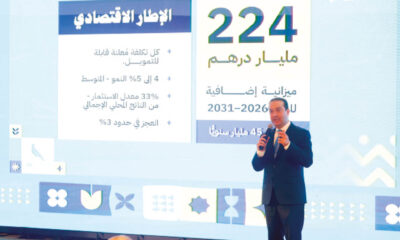
“Dignity and Opportunity for All”: this is the title of the program that the RNI intends to defend for the 2026–2031 term, and which, unsurprisingly, served as the common thread running through the various speeches during the Agadir meeting.
Fatim-Zahra Amor, a member of the party’s political bureau and Minister of Tourism, Handicrafts and Social and Solidarity Economy, thus sought to recall the three main pillars of this ambitious roadmap: protecting citizens’ purchasing power through a mechanism for indexing social assistance; territorial equity in terms of access to and quality of public services, in order to reduce disparities between regions; and finally, economic inclusion, with the stated objective of creating one million jobs by 2030.
Set out in twelve concrete and clearly stated measures, this program aims to be both easy for public opinion to understand and achievable in practice, with the RNI having already had the opportunity, during the five-year term now coming to an end, to demonstrate its ability to transform campaign commitments into effective public policies.
This credibility acquired on the ground constitutes, in the eyes of the party’s leaders, a decisive asset in view of the upcoming legislative elections.
A Concrete and Tangible Record
The achievements of the party, which led the outgoing government, have regularly been presented in detail during the meetings that the RNI has continuously organized across the country, and they continue today to feature prominently in the speeches of its leaders.
As Mustapha Baitas insists, “evading responsibility and accountability benefits no one, neither the party nor the citizens it intends to serve.” According to him, “the first concrete expression of the values and ethics of a political party is to fully assume its responsibilities.”
The RNI political bureau member and government spokesperson believes, with a touch of legitimate pride, that “the record is concrete and directly perceptible to citizens,” highlighting several major projects completed during the term that has just elapsed: the generalization of health coverage, which represents one of the most significant social achievements of recent years; the launch of direct social assistance, intended to support the most vulnerable households; as well as the salary increases granted as part of the social dialogue, the result of continuous consultation with social partners.
“These projects are important markers of the action undertaken during this term and must be taken into account in the overall assessment of the government’s record,” insists the RNI leader.
Ambitions Focused on the Future
Building on this record, which it proudly claims, the party of the Dove has great ambitions for the upcoming legislative elections, particularly since its program deliberately builds on the continuity of reforms already initiated, whether in employment, water management, social protection, or the officialization of the Amazigh language.
This logic of continuity, rather than rupture, appears to constitute the very foundation of the RNI’s electoral strategy, which is betting on the stability and credibility of its actions rather than on new and untested promises.
At the end of this period of intense mobilization, it will ultimately be up to citizens, the sole judges in the final instance, to assess the various political experiences against the yardstick of actual achievements and commitments genuinely fulfilled, before making their decision, fully informed, in the privacy of the voting booth.
An electoral deadline that the RNI is visibly approaching with confidence, carried by a grassroots momentum that it intends to maintain until the vote.
Agadir Changes Face Under the Akhannouch Administration
Aziz Akhannouch took advantage of the meeting organized in the capital of the Souss region to put on his hat as president of the Agadir Communal Council. In his capacity as mayor, he presented an assessment of the major projects undertaken in the city during his current term.
Addressing the assembled party activists, he stated: “Agadir has undergone a profound transformation in recent years, driven by the major projects undertaken under the impetus of His Majesty King Mohammed VI.
We have succeeded in making the royal vision a reality in this city.” The mayor detailed the main drivers of this urban transformation: the urban development program, endowed with more than two billion dirhams, as well as the 2022–2027 communal action plan, intended to reduce disparities between neighborhoods through nearly one billion dirhams mobilized for urban rehabilitation.
Among the projects cited were improvements to mobility infrastructure, the redevelopment of public spaces, as well as the development of cultural, sports, social and healthcare facilities, in various neighborhoods where the road network, public lighting, sports fields and green spaces have been strengthened.
All of these achievements, according to Aziz Akhannouch, are primarily aimed at opening up disadvantaged areas and sustainably transforming the image of the Souss capital.