Kingdom
RNI: An Extraordinary Congress—In Both Form and Substance
The National Rally of Independents (RNI) is changing its president, setting a very high bar for internal democracy. The transition congress was also an opportunity to look back on the entire journey the party has made under the leadership of Aziz Akhannouch.

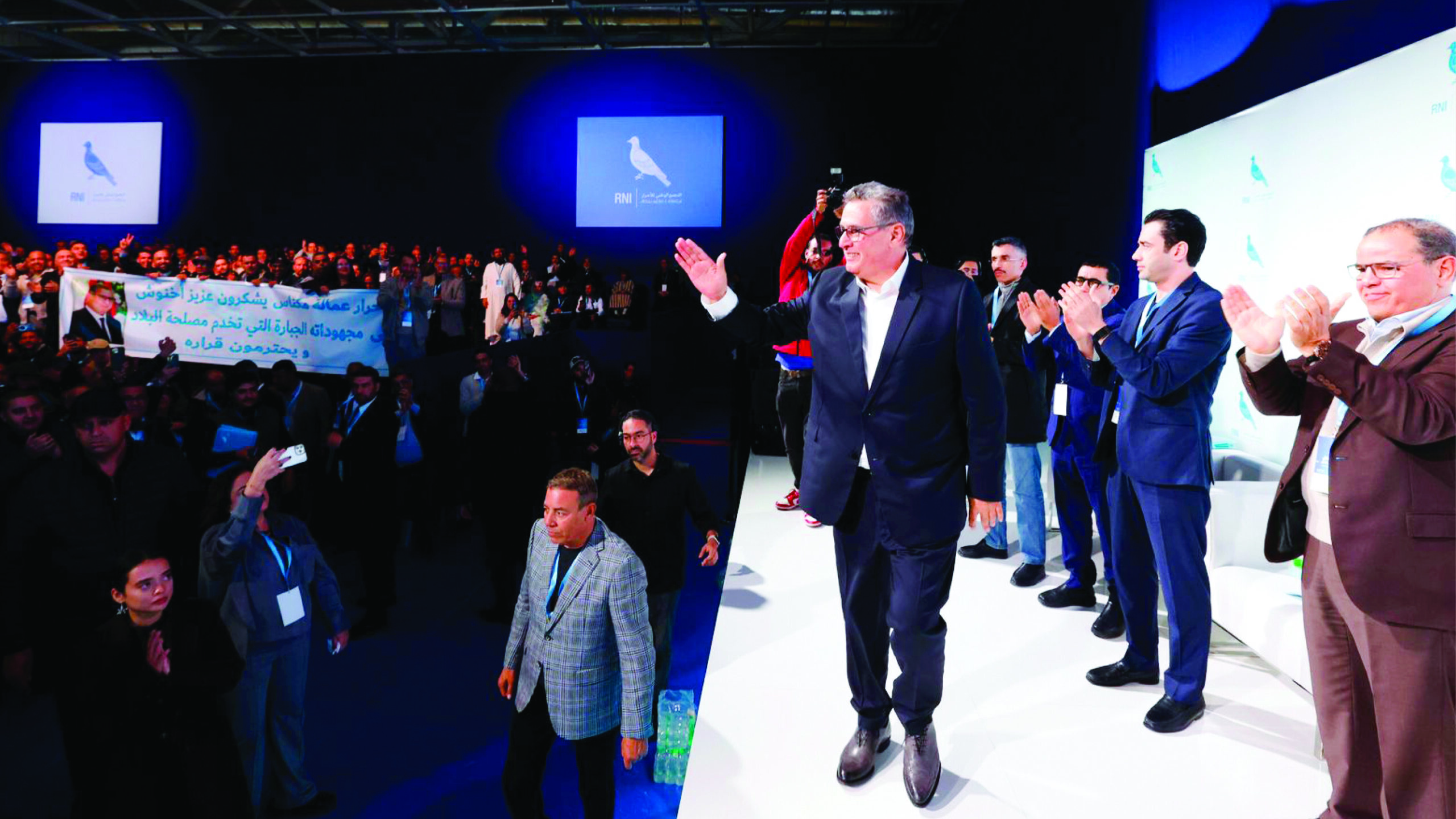
February 7, 2026 will inevitably remain a historic date for the National Rally of Independents (RNI). Aziz Akhannouch officially hands over the baton at the party’s Extraordinary Congress, held that day in El Jadida.
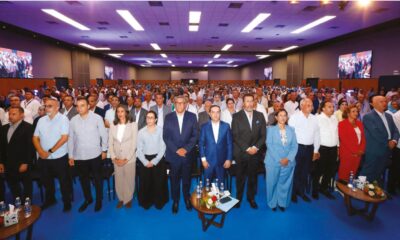
Some 2,500 congress delegates came to pay tribute to the president who has transformed the party over the past ten years. Many of them also remember that famous 6th Party Congress, held at the same venue, which propelled the party into a new dimension under Akhannouch’s presidency.
It was a way of expressing their deep gratitude for his leadership, which gave the RNI an unprecedented institutional stature, based in particular on organizational strength and the structural solidity of its governing bodies.
Paving the way for a new generation
The president’s very choice to forgo a third term illustrates institutional maturity, strengthening a culture of democratic rotation in leadership and reaffirming the solidity of the RNI’s structure and its ability to manage transitions with confidence and responsibility.
“The strength of a party is not measured by how long its members remain in power, but by its capacity for renewal and continuity,” Aziz Akhannouch reminded the Congress from the podium, stressing that term limits were a deliberate choice and a principle reflecting a firm conviction that the party must stay in step with its time and evolve in line with society’s aspirations.
“Leadership is a temporary responsibility, not a permanent privilege,” added the man who made the RNI a new model on the partisan landscape. “A model that fosters a dynamic political life, a model that restores the full value of serious party work and renews trust between politics and society,” the party leader insisted.
The outgoing president also emphasized that this is in no way a withdrawal from responsibility, but rather a “peaceful and responsible transition that paves the way for a new generation of leaders, renews the spirit of political action, and injects new momentum into the party, within a shared and unified vision toward a promising future.”
Akhannouch also urged RNI activists and leaders to rally behind his successor, Mohamed Chaouki, the sole candidate for the presidency.
“I have full confidence in his ability to lead the party responsibly and by consensus during the next phase. It is the duty of all of us, without exception, to support him. I am convinced that we will all unite around the new leadership with the same convictions, the same commitments, and the same faith in the party’s project and mission,” Akhannouch concluded.
Ensuring lasting performance
For his part, the new president, Mohamed Chaouki, said his election reflects a collective commitment to serious, sustained political work, placing the national interest above all else.
He stressed that “the party is not a fleeting entity, but a key player in the Kingdom’s major transformations, guided by the enlightened vision of His Majesty King Mohammed VI.” He also affirmed full support for the government and its reform programs, led with foresight and wisdom by Aziz Akhannouch.
“The experience of the current government is not limited to administrative management, but embodies a political ideology aimed at consolidating the foundations of a social state through bold decisions and effective reforms, with a direct impact on the lives of Moroccan citizens,” he emphasized.
Chaouki also noted that the government, under Aziz Akhannouch’s leadership, did not sidestep difficulties when conditions deteriorated, nor did it flee complex challenges. On the contrary, it confronted them, made decisions, and fully assumed its responsibilities—thereby strengthening citizens’ trust in a party that says what it does and does what it can.
Chaouki describes this period of Akhannouch’s presidency as an era of “agharass agharass,” in which the party’s foundations were firmly anchored, resting on an asserted democratic and social identity. The emphasis was placed on the quality of organization, good governance, efficient management, and prioritizing development.
All of these efforts are part of an overall strategy that values continuity—an essential element for consolidating institutions and ensuring the sustainability of the party’s performance. For all participants, this extraordinary congress also marks a new stage in the RNI’s journey, in a particular national and societal context.
All the more so since Akhannouch’s decision ushers in a new approach both within the RNI and across the party-political landscape, given that it carries a strong symbolic weight and democratic values, contributing to anchoring a culture of leadership alternation at the head of political parties. An approach that makes Akhannouch’s term a model of internal democratic practice.
A party that has been transformed
In his final speech in El Jadida, Aziz Akhannouch retraced the path the party has taken since 2016, when he assumed its leadership—a time when confidence had been shaken, calling into question the relevance and role of politics in society.
“That is why we set ourselves to building a party that speaks the language of young people—a party that understands their expectations, listens to their aspirations, gives them the trust and space they need, and fully equips them to act—convinced that investing in people is the foundation of every successful and lasting political project,” Akhannouch said.
As a result, 19 parallel organizations were created to mentor and train elites and to integrate young talents and women, while strengthening the party’s presence within various professional groupings.
Akhannouch’s term also marked a break with centralized and authoritarian practices in favor of strengthening internal democracy through participatory mechanisms.
This approach encourages genuine member involvement and ensures more transparent and representative decision-making, as evidenced by the success of the party’s various regional tours—from the “Path of Trust” to the “Path of Achievements,” as well as the “100 Cities Tour”…
Under Akhannouch, a culture of long-term planning replaced opportunistic, short-term management, making it possible to build a political organization capable of lasting and renewing itself.
Today, the number of members, parliamentarians, and local councilors is not a mere statistic, but a concrete indicator of the party’s organizational effectiveness, which is now positioning itself as the country’s leading political force.