Kingdom
Head of Government: What If It Were Him/Her?
One month away from an election presented as one of the most hotly contested of the past decade, the question of who will succeed Aziz Akhannouch at the head of government is already on everyone’s mind. A lineup of potential contenders for the position within the favored parties.

A constitutional reminder is necessary first. Article 47 of the Basic Law is unambiguous: “The King appoints the Head of Government from within the party that comes first in the elections to the House of Representatives.”
Established in 2011 as a decisive break with the monarch’s former discretionary prerogative, this provision had the effect of strictly making the formation of the Executive dependent on the verdict of the ballot box. It is therefore electoral arithmetic that will ultimately determine the next occupant of the Méchouar, the office adjoining the Royal Palace where the Head of Government sits.
Yet, when examining the balance of power, three political formations — and only three — currently appear capable of claiming victory in the legislative elections of September 23: the National Rally of Independents (RNI), the Authenticity and Modernity Party (PAM), and the Istiqlal Party.
Unless there is an electoral earthquake, the battle for the Premiership should therefore be confined to three formations, all of them members of the outgoing majority.
This configuration deserves attention, as it reflects a singularity of the current national political moment: the three main competitors are precisely those who, under the leadership of Aziz Akhannouch, have jointly administered the country within the same governing coalition since 2021 and together delivered a record that many consider unprecedented.
This observation implicitly argues for the triumph of one of these three components and gives the September 23 election the character of an implicit referendum on the action of the outgoing majority: each of the three formations can legitimately claim credit for it in order to better establish its own claim.
In substance, this governmental legacy is not lacking in arguments. Macroeconomic management considered solid in a context marked by successive crises, spectacular growth momentum, substantial investment in new promising sectors, the near-completion of the universalization of social protection and medical coverage, the resumption of social dialogue and the gradual improvement of purchasing power, fundamental reforms in education, health and justice: in most economic as well as social fields, the achievements being highlighted are substantial.
They already appear in the preamble to the programs presented by the three parties and occupy a prominent place in the campaign speeches currently being refined within their respective leadership structures, a sign that the government’s record will undoubtedly constitute the central axis of the electoral argument shared by this outgoing majority.
An Equation That Goes Beyond the Leader Alone
The RNI, PAM and Istiqlal trio therefore possesses genuine assets — a government record to highlight, consolidated territorial roots, and their respective campaign momentum — on which to bet, without too much risk, that one of these three formations will win the largest number of seats on September 23.
It is therefore from within its ranks that the Sovereign will be able to appoint the Head of Government for the 2026–2031 term. A notable feature of this election: the possibility of appointment is no longer limited solely to the historical leaders of each party, given the governance context experienced by these three formations.
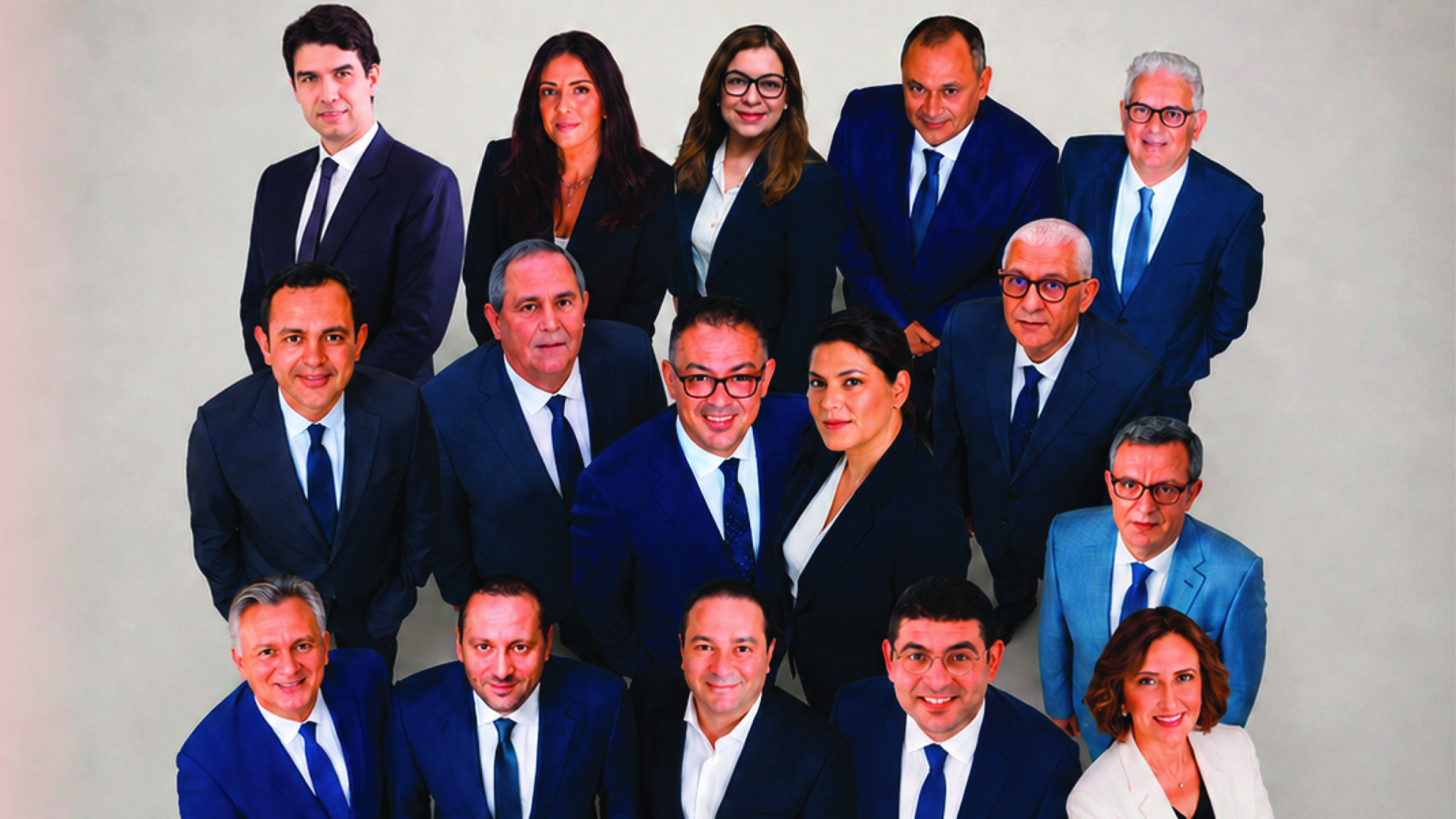
Without ruling out the natural candidacy of the leaders currently in office, who are considered credible contenders, the exercise here consists of broadening the focus, in order to assess each formation’s ability to present, from within its own ranks, a plurality of profiles genuinely capable of assuming responsibility for leading the Executive for the next five years.
In short, this means scrutinizing the leading cadres of each party: young cadres in the making, experienced figures, without forgetting female representation, whose weight continues to grow within the state apparatus.
Three Talent Pools, Three Recruitment Logics
It is precisely on this ground that the three parties differ most clearly, revealing, by contrast, significantly different recruitment and internal structuring logics. The RNI appears, in this respect, to possess a comparative advantage that is difficult to dispute.
For a decade, Aziz Akhannouch has made attracting talent one of the structural pillars of his action at the head of the Dove Party, seeking out, in the business world, profiles foreign to the traditional logic of party structures.
A strategy long perceived as a risk-taking move, but whose result is now obvious: the party has no fewer than half a dozen personalities capable of claiming the Headship of Government, proof of a depth of bench that owes less to chance than to a deliberate choice to diversify profiles.
On the PAM side, by contrast, the narrowness of the pool of potential candidates already appears to be a defining feature of this sequence, as illustrated by the call-up of Fouzi Lekjaa, whose career remains primarily associated with the world of football and budget administration rather than with electoral or partisan legitimacy built over time.
A choice that implicitly resembles an admission: that of a persistent difficulty in bringing forward, from within the party apparatus itself, a candidacy that is both natural and consensual for the position.
The situation is hardly more favorable on the Istiqlal side, where the potential lineup appears even narrower, and where the selection logic seems to be governed more by personal, or even dynastic, proximities than by a plurality of genuinely autonomous trajectories.
A configuration that ultimately raises questions about the ability of the Balance Party to put forward a sufficiently unifying candidacy capable, if necessary, of embodying its entire electoral base.
And what if, then, we were to discover, party by party, the potential list of candidates…