Business
PLF 2027: A Budgetary Roadmap Already Clearly Defined
The outgoing government is setting out the main budgetary milestones with which the next team will have to work. They reconcile the continuation of major projects, the financing of the social state, and the preservation of public finance balances.

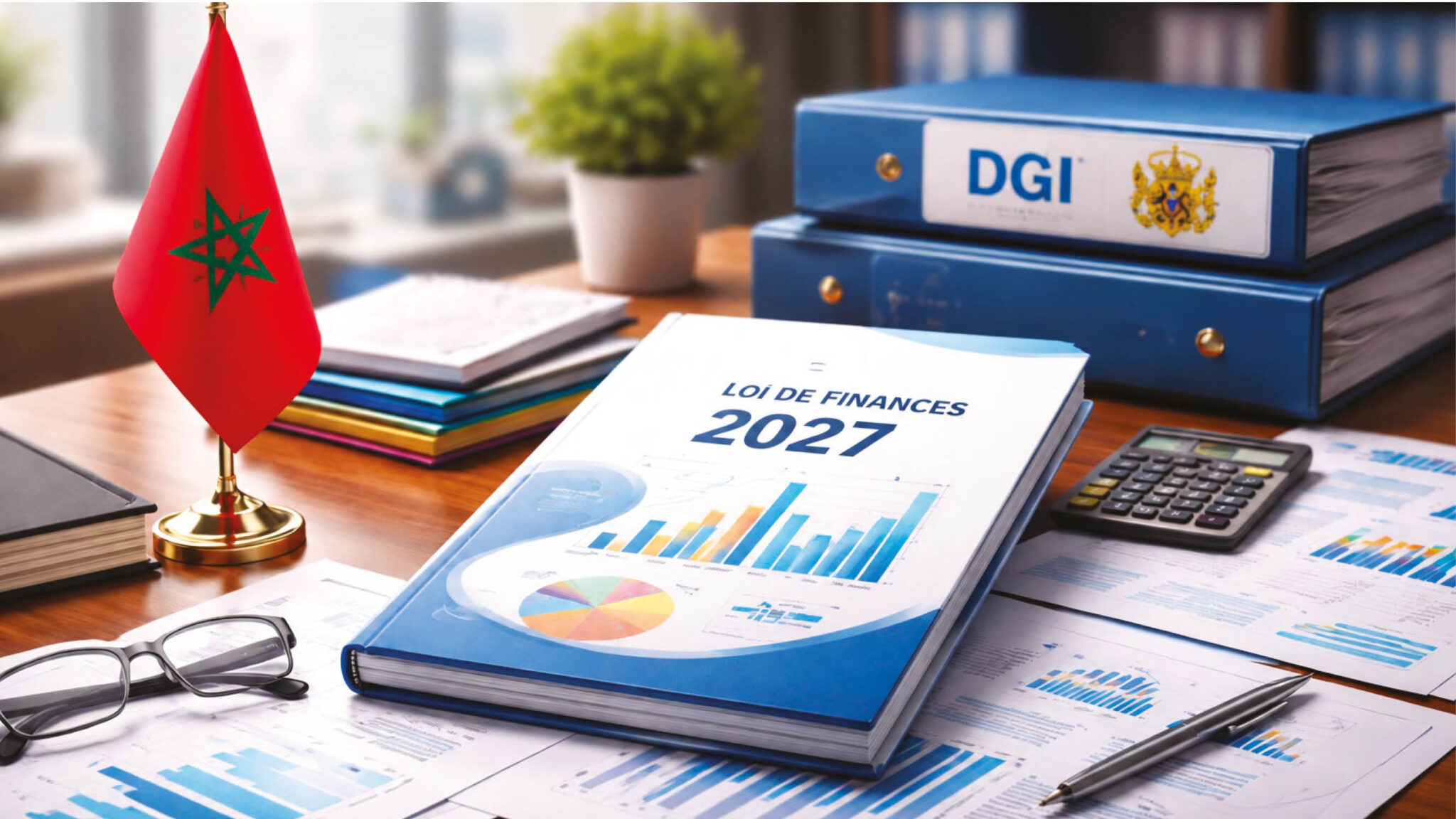
The 2027 Finance Bill is being prepared. In a context of governmental transition, the preparation of the 2027 PLF is one of the last major files being handled by Aziz Akhannouch’s team before it switches to “day-to-day affairs” mode, pending the appointment of the next Executive.
Priorities have been established beforehand and are part of the continuity of the projects undertaken under the royal impetus.
Consolidating economic gains in order to strengthen Morocco’s position among emerging economies remains one of the top priorities.
In addition to strengthening road infrastructure, the government intends to continue the railway investment program through 2030, which aims to consolidate the network’s performance through the extension of the high-speed rail line along the Kenitra-Marrakech axis, the establishment of the RER in the Casablanca-Settat, Rabat-Salé-Kénitra and Marrakech-Safi regions, as well as strengthening connectivity between rail and air transport.
It also aims to continue developing airport capacities by strengthening passenger-handling capacity, competitiveness, as well as the fleet of Royal Air Maroc.
The orientations of the 2027 PLF also focus on reducing social and territorial disparities. The government has already mobilized a budget envelope estimated at MAD 210 billion for the implementation of programs over a period of eight years, thus extending beyond a single legislative term.
Upstream, a multidimensional territorial assessment is planned, making it possible to define priority projects for each prefecture or province. This will have to be accompanied by the establishment of committees to monitor and evaluate the implementation of the programs.
In addition to these guidelines comes the continuation of the implementation of structural reforms related to the social state. All these actions will be implemented while taking into account an important imperative: preserving the balance of public finances.
The tone has already been set through the 2027-2029 three-year budget programming. It therefore provides for reducing the budget deficit to reach 3% of GDP and reducing the debt ratio to 63% of GDP.
This will have to be achieved through the rationalization of operating expenditure, by optimizing all expenses (water, electricity, transport, travel, accommodation, etc.), improving the efficiency of investment expenditure, with priority given to the implementation of strategic projects, as well as controlling personnel expenditure.
The government thus emphasizes the favorable prospects for the national economy over the 2027-2029 period, despite an international environment marked by persistent uncertainties linked to geopolitical tensions, risks of trade fragmentation and disruptions to supply chains.
It is therefore counting on average annual growth of 4.2% over this period, driven by the good performance of the agricultural sector and the continued remarkable dynamism of non-agricultural activities.
Key stages of the future Finance Law
It should be noted that the preparation of the Finance Law follows a specific timetable. It is between September and October that the PLF text is finalized.
During this phase, ministerial departments submit their proposals, which will be examined by the budget and arbitration committees, before moving on to the preparation stage of the PLF, which is submitted no later than October 20.
This is followed by the successive examination and voting on the bill by the two chambers of Parliament, culminating in the final vote and promulgation of the Finance Law before December 31, with a view to its application on January 1.
But before that, work on preparing the PLF begins as early as March. The Head of Government invites, by circular, authorizing officers to prepare their proposals for three-year budget programming, accompanied by performance objectives and indicators.
The main outlines of the PLF are thus presented to the Government Council in July, and then before a Council of Ministers.
The ground is therefore already mapped out for the next government. The 2027 PLF, prepared by the outgoing Executive, largely sets the budgetary framework within which the next government team will have to take action.
Between the continuation of major projects, the financing of the social state, and maintaining the trajectory of reducing the deficit and debt, the room for maneuver has already been largely defined.
World Cup 2030: The 2027 PLF adapts the tax framework
The contours of tax policy are being clarified. The 2027 PLF provides for incorporating into Moroccan tax law the guarantees granted to FIFA as part of the organization of the 2030 World Cup.
These are aimed in particular at neutralizing the tax impact of transactions carried out by FIFA and its partners and concern corporate income tax (IS), personal income tax (IR), VAT, as well as registration duties.
A simplified administrative procedure is also being considered to facilitate their reporting obligations and the processing of their tax requests related to the competition and associated events.
At the same time, the PLF intends to continue adapting and stabilizing tax rules resulting from previous reforms, in order to remove remaining constraints and improve the business environment, investment and employment.