Business
Taxation: Parties Reveal Their Cards
Lower income tax, tax credits, exemptions granted to SMEs or increased taxation of rents: the parties are proposing distinct tax orientations. Behind the announced benefits lies a decisive question: how can the revenues necessary to finance the welfare state and public investment be preserved?

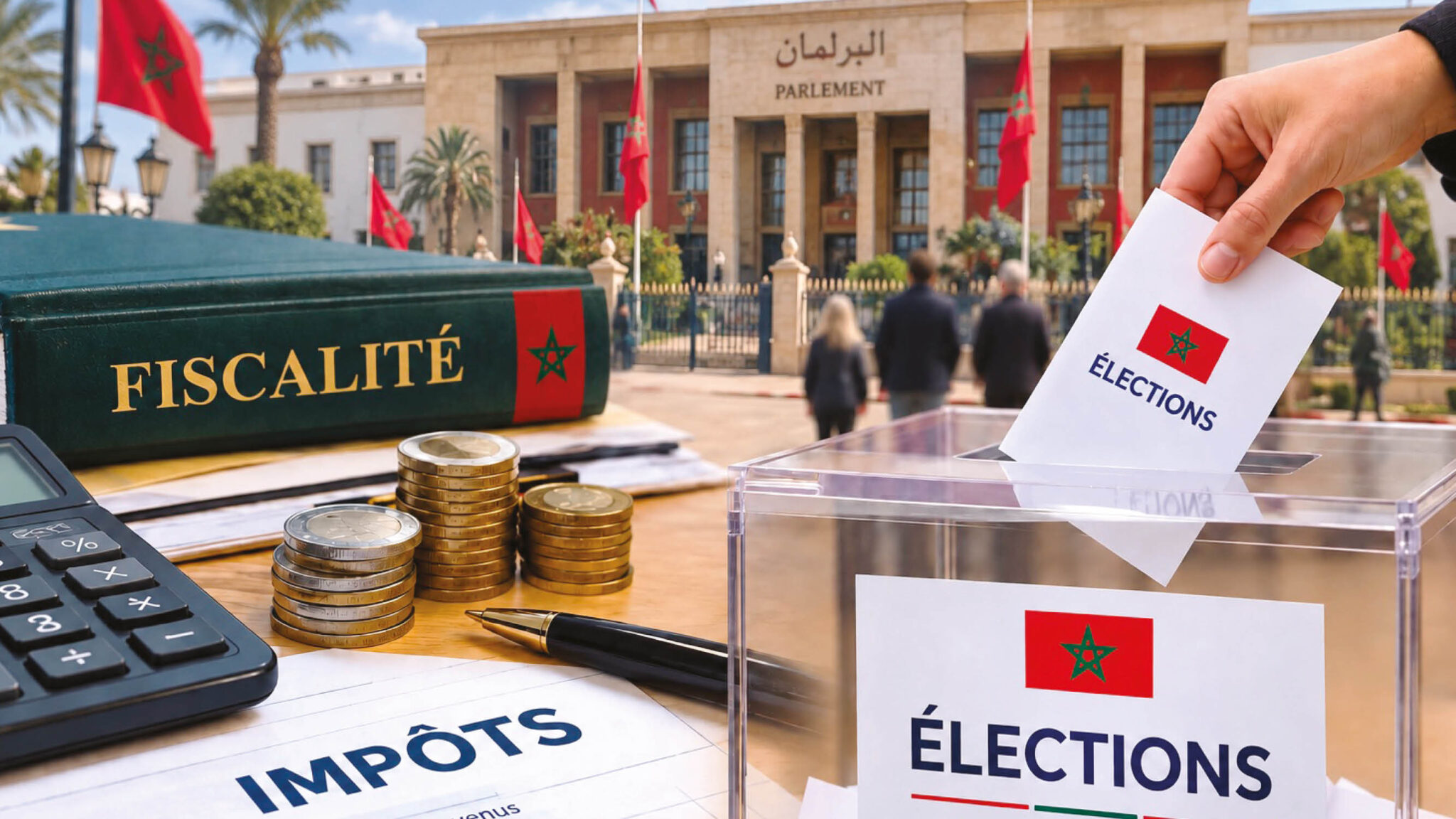
Long confined to technical debates, taxation is moving to the center of the campaign. The parties want to make it an instrument for purchasing power, job creation, business support and redistribution.
But their proposals do not benefit the same taxpayers and are not based on the same trade-offs.
The PAM advocates a spectacular reduction in income tax. The Istiqlal favors increased taxation of rent-seeking situations. The USFP wants to ease the burden on employees while broadening the tax base.
The RNI is adopting a more targeted approach, while the PPS is counting on a massive mobilization of new revenues.
RNI: Target Rather Than Overhaul
Unlike the formations promising a general overhaul of tax rates, the RNI favors targeted tax instruments. Its flagship proposal consists of granting a tax credit of up to 5,000 dirhams per child per year for private-school tuition fees.
The measure primarily targets middle-class families, whose budgets are heavily strained by education expenses. It has the advantage of targeting a clearly identified cost without overhauling the entire income-tax schedule.
The party is thus using taxation as a mechanism to support purchasing power, complementary to direct social assistance. Its effectiveness will nevertheless depend on the conditions of implementation.
If the credit can only be offset against tax owed, it will mainly benefit households paying a sufficient amount of income tax. Non-taxable or lightly taxed households might only benefit from it partially.
A refundable credit would broaden coverage, but would entail a higher budgetary cost.
The RNI’s approach is more broadly based on consolidating the welfare state and improving disposable income, without initiating a fiscal break likely to immediately destabilize revenues.
It offers an advantage in terms of budgetary clarity, but also raises the question of its scale: a targeted benefit can ease a specific expense without addressing the overall pressure felt by employees.
The credibility of the scheme will therefore depend on three details: the number of eligible families, the total annual cost and the terms of any possible reimbursement.
The issue of checking supporting documents will also have to be addressed to prevent the credit from benefiting fictitious or inflated expenses.
PAM: The Fiscal Shock Gamble
The PAM is presenting the most radical reform of income tax. It proposes reducing the tax schedule to three brackets: 0% for gross incomes below 15,000 dirhams, 10% between 15,000 and 46,000 dirhams, and 20% above that.
For taxable employees, the gain would be immediate. Lower deductions would increase disposable income, support consumption and reduce the gap between the labor cost borne by the company and the net income received by the employee.
The reform nevertheless raises a question of fairness. Lowering the marginal rate would provide a greater advantage, in absolute value, to higher incomes.
Non-taxable households would derive no direct benefit from it. A general reduction in income tax is therefore not necessarily the best-targeted instrument for the most vulnerable groups.
Its cost is the other unknown.
The shortfall could approach 30 billion dirhams per year. The PAM is counting on growth, consumption, the formalization of the economy and the broadening of the tax base to rebuild revenues. Yet the tax cut would be immediate, while its economic effects would remain gradual and uncertain.
The party also proposes exempting very small businesses and SMEs from corporate income tax (IS) for five years if they create at least three jobs. Linking the benefit to a measurable counterpart is relevant.
It is still necessary to ensure that the jobs are net and sustainable, and to prevent the artificial creation of structures designed to capture the exemption.
Istiqlal: Making Rents Contribute
The Istiqlal advocates a different approach. The party proposes a progressive corporate tax that could reach 40% for activities benefiting from a monopoly or economic rent situation.
The objective is to differentiate productive companies, exposed to competition, from activities generating high profits thanks to a privileged position.
The measure thus seeks to strengthen tax fairness without indiscriminately increasing pressure on all companies. Its implementation, however, promises to be complex.
The rent will have to be legally defined, the sectors concerned identified, and exceptional profits distinguished from ordinary profits. Without transparent criteria, differentiated taxation could create uncertainty and encourage discretionary decisions.
The effectiveness of the reform will also depend on controlling tax-optimization practices and profit shifting. A high rate produces little additional revenue when the tax base can be moved or artificially reduced.
USFP: Shifting the Tax Burden
The USFP intends to reduce the tax burden on employees by 10% while mobilizing additional revenues equivalent to 5% of GDP by broadening the tax base.
It also wants to make tax exemptions and subsidies granted to companies conditional on the effective creation of jobs.
The logic is to tax labor income less, as it is largely declared and deducted at source, and to make insufficiently taxed activities contribute more. The objective responds to the sense of unfairness felt by employees in the face of the weight of the informal sector and underreporting.
Mobilizing the equivalent of 5% of GDP would nevertheless represent a considerable fiscal leap. Combating tax evasion would probably not be enough. Such an increase would require massive formalization, improved collection and a review of certain tax expenditures.
The risk would then be to shift the pressure onto small activities that have recently been formalized without reaching the main sources of tax optimization. The entire difficulty will be to distinguish subsistence informality from organized fraud.
PPS: The Challenge of New Revenues
The PPS places tax fairness and the fight against rent among the financing levers of its program. It provides for 575 billion dirhams in additional expenditure over five years, financed by 622 billion in additional revenues, representing an announced cumulative surplus of 47 billion.
This presentation has the merit of comparing projected expenditure with a revenue trajectory. But projected revenue is not acquired revenue.
Its yield depends on growth, collection, broadening the tax base, reducing tax loopholes and taxpayer behavior.
The challenge will therefore be to specify what share of the 622 billion would come from new levies, combating fraud, growth or better tax administration. Without this breakdown, the figures remain difficult to test.