Kingdom
Professional Integration of Youth: Launch of the Idmaj Program for Non-Graduates
The new dynamic of the Moroccan labor market is marked by nearly 100,000 unfilled job vacancies at the end of 2025. The government has implemented a program centered on apprenticeships to raise annual placements to 100,000 beneficiaries, covering nearly 200 trades in crafts, industry, and textiles.

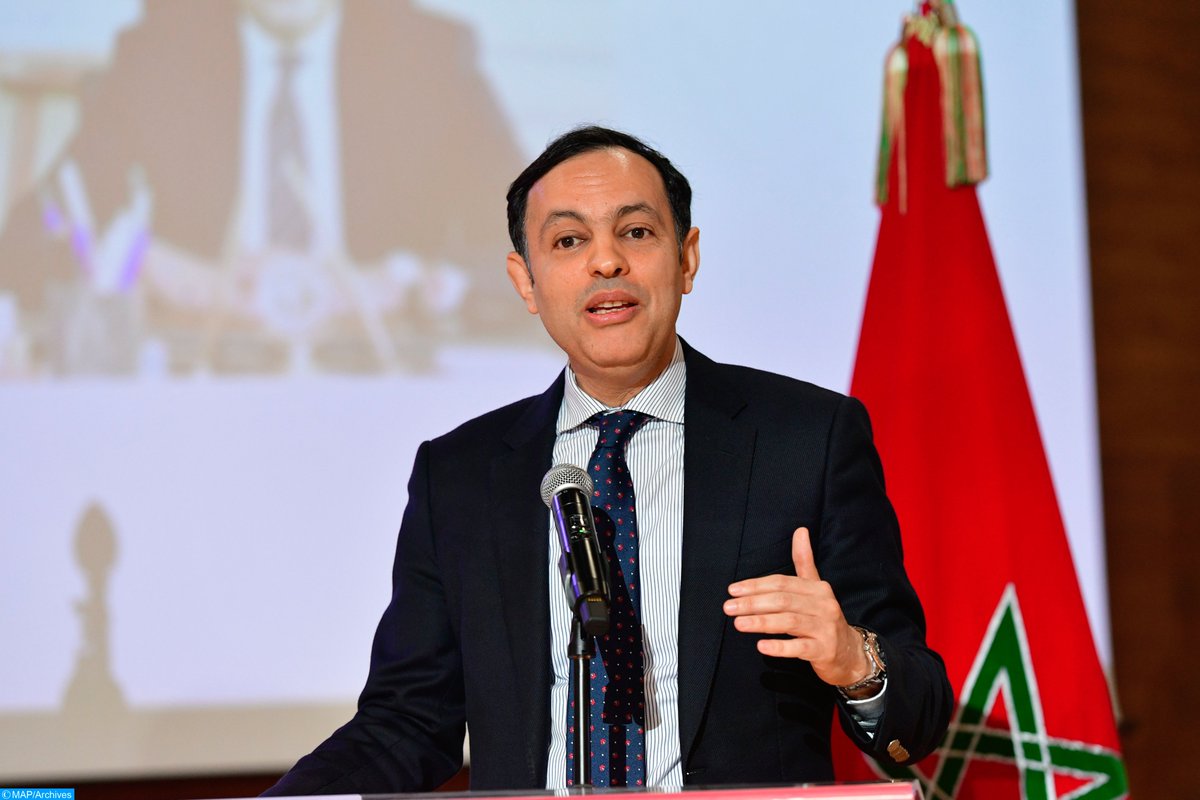
The Ministry of Economic Inclusion, Small Business, Employment, and Skills, in partnership with the National Agency for the Promotion of Employment and Skills (ANAPEC), launched, on Friday in Rabat, the Idmaj program for non-graduates.
Launched during an event chaired by the Minister of Economic Inclusion, Small Business, Employment, and Skills, Younes Sekkouri, this initiative aims to strengthen the professional integration of youth and promote equal opportunities in the labor market. Speaking on this occasion, Mr. Sekkouri highlighted the new dynamic of the Moroccan labor market, marked by nearly 100,000 unfilled job vacancies at the end of 2025.
To optimize intermediation, the Executive is deploying a rethought approach aimed at better matching local skills with the requirements of the economic fabric, he affirmed.
Addressing the case of the 900,000 non-graduate job seekers and the 280,000 youth in a situation of school dropout, the minister deemed it necessary to offer them concrete integration prospects.
Thus, he continued, the government has implemented a program focused on apprenticeships to raise annual placements to 100,000 beneficiaries, covering nearly 200 trades in crafts, industry, and textiles.
Supported by adaptation training of 3 to 6 months, these profiles will be accompanied by ANAPEC, which aims to expand its scope of action to reach 400,000 annual beneficiaries by including, notably, seasonal workers, Mr. Sekkouri announced.
Drawing on the experience of recent inclusion programs that benefited 235,000 people in the post-Covid period, the minister noted that employers observe high retention and sustained commitment from these non-graduate profiles within the company.
For his part, the Director General of ANAPEC, Abdellah Chouikh, indicated that this program enshrines the principles of equity and equal opportunity. According to him, this approach does not constitute a mere technical adjustment, but a clear strategic choice based on economic realism and the orientation of public policies towards the categories requiring the most support.
It is about offering a first professional experience to motivated youth, while providing a tailored response to companies wishing to train their human resources directly, explained Mr. Chouikh.
He, in parallel, highlighted the commitment of the national economic fabric, estimating that the initial results are encouraging, particularly with nearly 10,000 integration contracts registered by the end of February 2026.
This dynamic, he argued, will be consolidated by the partnerships concluded with several professional federations, to generate nearly 30,000 job opportunities each year in strategic sectors such as construction and public works (BTP), industry, commerce, and catering.
The ambition of this undertaking goes beyond the simple establishment of an additional mechanism to establish a new generation of more inclusive employment policies in line with the needs of the national economy, emphasized the DG of ANAPEC.
Through this initiative, the Moroccan company asserts itself not only as a space of production, but also as a true place of training, expertise transfer, and socio-economic integration, noted Mr. Chouikh.
This program aims to promote the professional integration of non-graduate youth by offering them the opportunity to acquire a first professional experience within a company, while benefiting from structured support.
At the end of this meeting, several partnership agreements were signed with the represented professional federations, thus enacting the effective deployment of this new integration mechanism in the field.