Business
GRP: The Valve of Hydraulic Infrastructure
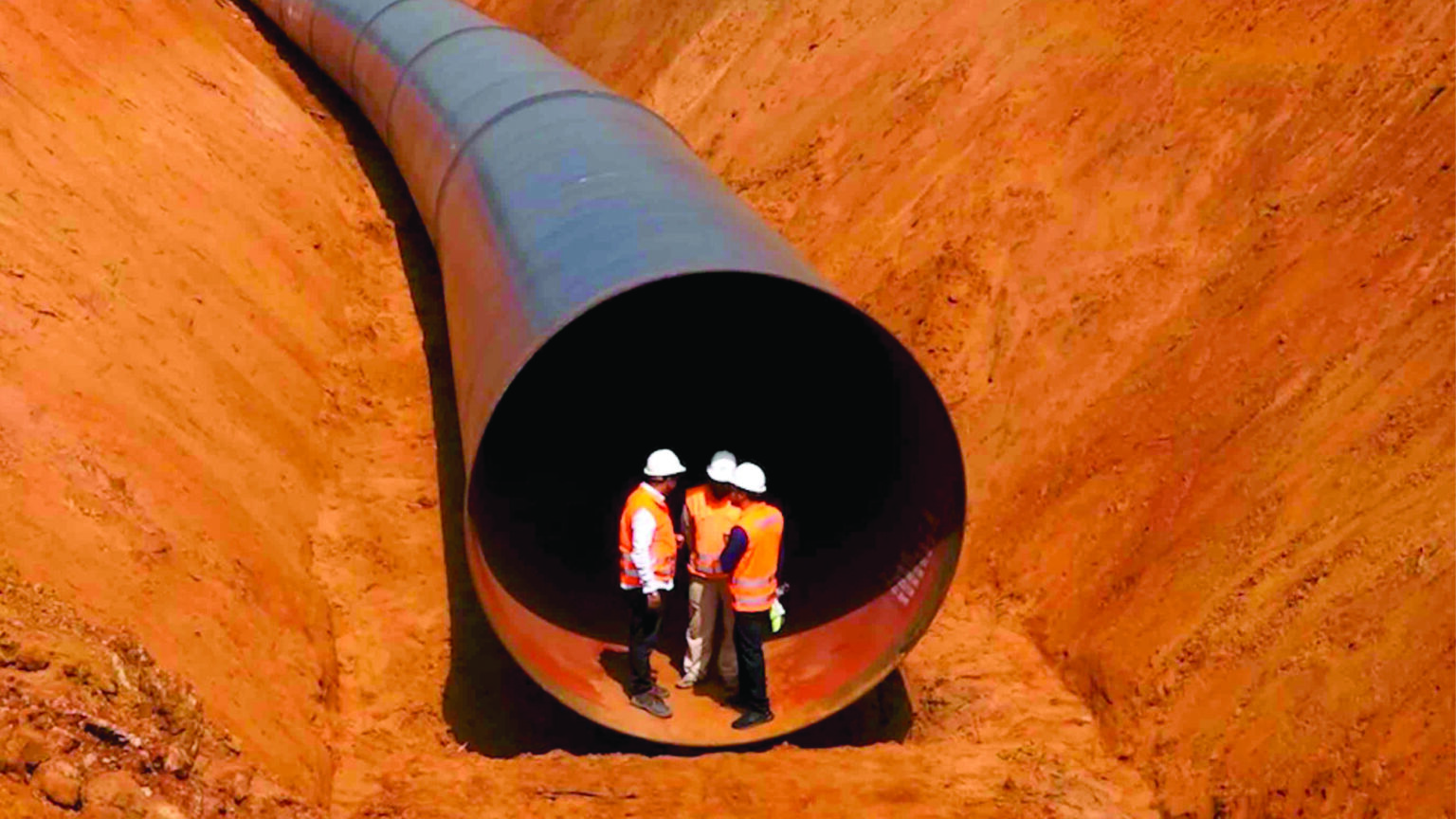
Driven by the surge in hydraulic investments, Morocco’s glass-fibre-reinforced polyester (GRP) pipe industry is moving up a gear. Recent investments by Amiblu Maroc and Plastima mark the emergence of a strategic industry serving the Kingdom’s water sovereignty.

When Morocco’s major water investments are mentioned, dams, desalination plants and “water highways” naturally come to mind. Much less attention is paid to the kilometres of pipelines connecting these infrastructures.
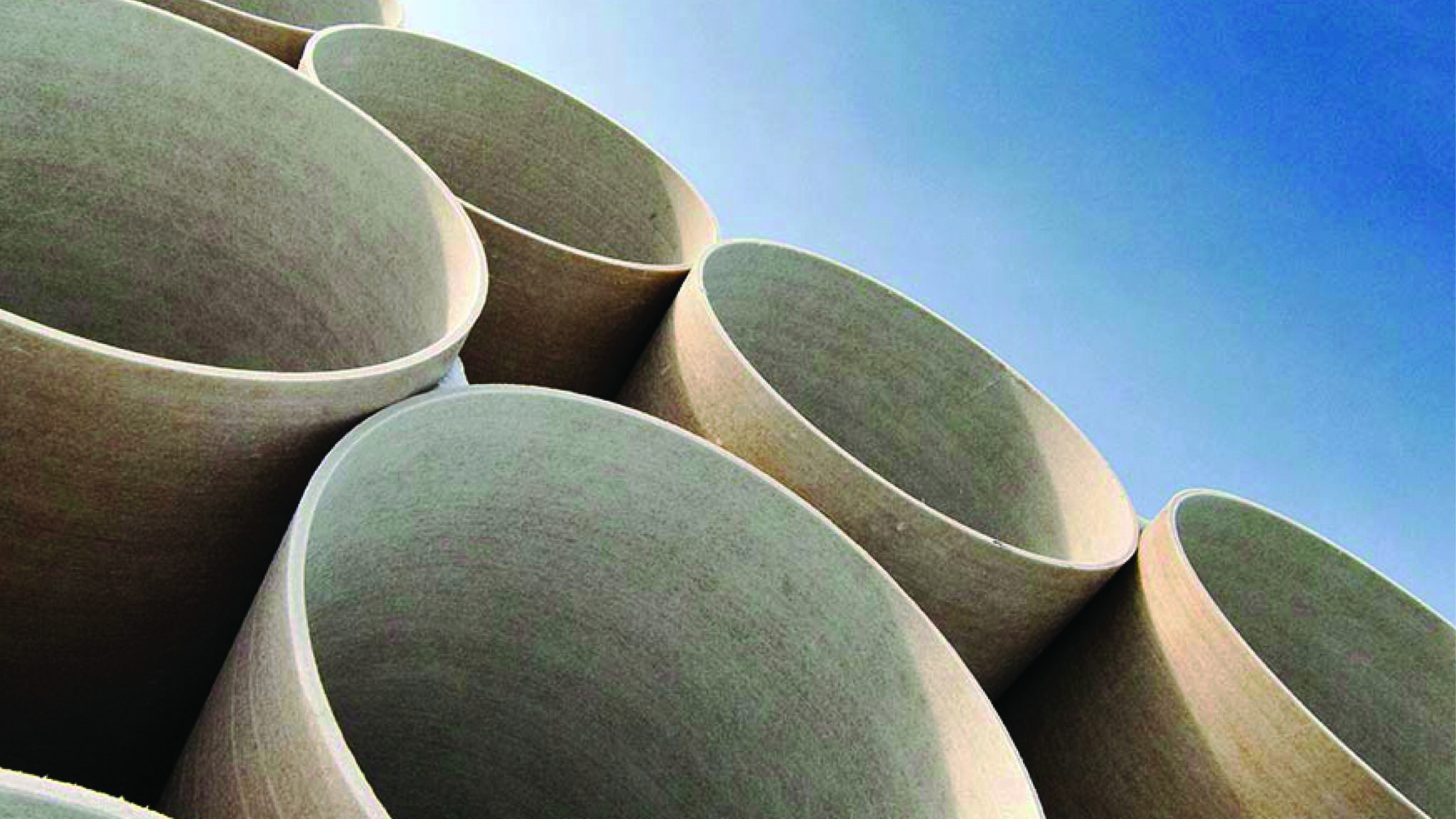
Yet these pipelines are an essential link in the national water security strategy. Without them, it would be impossible to transport desalinated water, connect hydraulic basins or supply agricultural areas. This momentum is now driving an industry that remains little known to the general public: that of glass-fibre-reinforced polyester (GRP) pipes.
In less than two months, two industrial investments exceeding 210 million dirhams (MDH) have illustrated the change of scale taking place in this sector. The largest is that of Amiblu Maroc.
At the end of June, the Moroccan subsidiary of the global leader in GRP pipelines inaugurated a third production line at its Nouaceur site, involving an investment of 160 MDH.
Thanks to this expansion, the plant, considered “the largest in Africa” in this specialty, is increasing its annual capacity to 650–660 kilometres of pipelines, or 150 additional kilometres, while increasing its maximum manufacturing diameter to DN3200 and its production of special fittings by 50%.
Present in Morocco since 2007 under its former name Amitech Maroc, the company claims more than 5,000 kilometres of networks installed across more than 220 projects covering drinking water, irrigation, sanitation and industry.
“The arrival of GRP thus marked a real break in the water sector, to the point that we can speak of a before and an after the introduction of GRP pipelines in Morocco”? says Omar Benyahia, Managing Director of Amiblu Maroc.
According to him, the success of this technology is based on several advantages: excellent resistance to corrosion, a service life exceeding fifty years and an optimized overall cost throughout the life cycle of the infrastructure. “Our ambition is to supply more than 20 million people across the national territory with drinking water and water for agricultural use by 2030,” he reveals.
Plastima Changes Scale
A few weeks earlier, the Plastima Group had also announced its entry into this market with the inauguration of FlowPipe, a new industrial unit located in Mohammedia. Developed as part of an agreement signed with the State at the end of 2024, the project required an investment of 52 million dirhams.
The plant is starting with a production capacity of approximately 200 kilometres of pipes per year, which is expected to gradually increase in order to meet growing demand. Beyond simple diversification, FlowPipe marks the plastics manufacturer’s entry into the segment of very large-diameter pipelines intended for hydraulic infrastructure, with pipes capable of withstanding pressures of up to 32 bar.
“Producing this technology locally enables us to effectively support major national project owners, strengthen the Kingdom’s industrial sovereignty and provide a local service that meets the requirements of strategic projects,” explains Moh Hicham, Director of Pipeline Development at Plastima.
The executive also highlights the technological choices made by FlowPipe. “We chose to invest in a very high-level manufacturing technology as well as internationally recognized technical solutions, particularly Full Face Coupling sleeves, which offer an excellent track record in terms of reliability and durability,” he continues.
Beyond the two inaugurations, these investments above all reflect the emergence of a genuine industrial sector that is expected to support the Kingdom’s ambitions in terms of water security, while strengthening local production of high-value technological solutions.
The Drivers of a Rapidly Expanding Market
If industrial players are investing in GRP today, it is above all because the market is experiencing unprecedented acceleration. Faced with water stress, the Kingdom is multiplying major structural projects: desalination plants, inter-basin transfers, modernization of drinking water networks, expansion of irrigated areas and construction of new dams.
The 2026 Finance Law illustrates the scale of this effort. Out of a total envelope of 73 billion dirhams (MMDH) allocated to public investment, 18.3 billion are dedicated to the water and meteorology sector, representing a quarter of the programmed allocations. Studies are not being left behind either: nearly half of the 2.6 MMDH planned are dedicated to them.
Among the main drivers is the development of “water highways.” Following the successful interconnection between the Sebou and Bouregreg basins, Morocco is accelerating projects connecting the Oum Er-Rbia, Tensift and Bouregreg basins in order to transfer resources from surplus regions to areas experiencing shortages.
These projects require hundreds of kilometres of large-diameter pipelines, a segment in which Amiblu Maroc and Plastima are now positioning themselves.
Desalination is another major driver. The future plants planned in Casablanca, Rabat, Tangier, Essaouira, Dakhla, Guelmim, Souss-Massa and the Oriental region will operate in particularly corrosive environments, where pipelines must combine chemical resistance, durability and hydraulic performance.
By 2030, the Kingdom aims to produce 1.7 billion cubic metres of desalinated water, covering approximately 60% of national needs. Irrigation also represents a major outlet.
The continuation of the Génération Green programme, with the modernization of networks and the widespread adoption of pressurized irrigation, is increasing the need for pipelines capable of transporting large volumes of water over long distances.
Beyond water, GRP is gradually finding its place in industry, particularly in the mining and chemical sectors, notably in projects carried out by the OCP Group.
“We are seeing growing demand in industry, particularly in the mining, chemical and energy sectors, where the properties of GRP are perfectly suited to the most demanding environments,” confirms Benyahia. Projects related to renewable energy, green hydrogen and ammonia should also open up new opportunities in the medium term.
A Technology in Full Expansion
Nevertheless, industrial players are careful not to present GRP as the sole solution to market needs. “There is no universal material. Each technology has its own field of application,” Moh points out. GRP is attractive because of its resistance to corrosion, low roughness, light weight and service life, all of which make it a particularly suitable solution for large-diameter pipelines.
However, other materials remain fully relevant depending on the technical constraints of the infrastructure. “For certain distribution networks or small diameters, industry PVC or HDPE also provide particularly high-performing solutions,” he continues. The same observation applies to the Managing Director of Amiblu Maroc.
“Steel remains particularly suitable for very high pressures, above 32 bar, and for high temperatures of 150°C. Concrete meets certain gravity-fed or very low-pressure applications.” He concludes: “The material best suited to the technical constraints of each project must be chosen.”
Beyond industrial capacity, the two industrial players identify another challenge: skills. “The development of skills in design, installation and maintenance will also help accelerate its adoption in the Moroccan market,” says Moh. This is precisely the objective pursued by Amiblu Maroc with the creation of its GRP Academy. “Our priority is to invest in skills as much as in equipment,” says Benyahia.
Presented as “a world first based on a 100% Moroccan initiative,” this academy will welcome engineers, engineering firms, construction companies, project owners and operators, in order to disseminate best practices in the design, installation and operation of networks.
The Director of Pipeline Development at Plastima also believes that market development will depend on better dissemination of knowledge about this technology among project owners, engineering firms and construction companies.
The two industrial players are convinced that GRP will occupy an increasingly important position in the Kingdom by 2030, particularly in large-diameter pipelines, where its technical performance meets the requirements of major hydraulic infrastructure. The challenge now is to structure a genuine industrial sector in order to turn it into a lever for industrial sovereignty.
Local Integration: A Major Challenge for the Sector
Although GRP pipes are now manufactured in Morocco, their production still relies heavily on imported raw materials.
Thermosetting polyester resins, which form the matrix of the pipe, as well as glass fibre, the main reinforcing component, come mainly from international suppliers, particularly in China and Europe.
This dependence exposes industrial players to fluctuations in raw material prices, transportation costs and tensions across supply chains.
Nevertheless, manufacturers intend to gradually strengthen the local anchoring of this industry. “Our ambition is to progressively strengthen the integration of the value chain, develop national skills and consolidate genuine industrial know-how around GRP,” says Moh, Director of Pipeline Development at Plastima.
Amiblu Maroc has the same ambition. “Our objective is to continue developing local skills, ensure technology transfer and expand our ecosystem in order to further increase the value created in Morocco,” emphasizes Benyahia.
Beyond production capacity, both industrial players see local integration as a strategic lever for building a more competitive Moroccan composites industry that is less dependent on imports.
Africa: The Next Growth Driver
Industrial players are already looking beyond the borders. The infrastructure deficit in sub-Saharan Africa, growing needs for drinking water, irrigation and sanitation, as well as the opportunities offered by the African Continental Free Trade Area (AfCFTA), are opening up new prospects for Moroccan pipeline manufacturers.
Amiblu Maroc, which already exports part of its production, particularly to Senegal, Mauritania and Côte d’Ivoire, intends to accelerate this development by relying on Moroccan expertise and the technological strength of the Amiblu Group, according to Benyahia. At Plastima, the strategy is similar.
The company intends to support the development of Africa’s hydraulic infrastructure by building on the Kingdom’s strengths. “The continent is experiencing strong momentum in the development of hydraulic infrastructure, and Morocco today has genuine industrial legitimacy to support this evolution,” says Moh.
For both industrial players, the Kingdom’s geographical position, the growing strength of its industry, its know-how in hydraulic infrastructure and its logistical performance give it strong advantages to establish itself as a regional production and export platform for GRP pipelines destined for the continent.