Kingdom
Mohamed Chaouki: “Akhannouch has left behind a party with exemplary governance”
Succession to Akhannouch, preparation of the RNI’s programme, renewal of leadership, openness to new profiles, and closeness to local territories… The RNI’s new leading figure intends to defend the record of the country’s leading political force, refine its vision, and approach the upcoming legislative elections with the same ambition as in 2021.

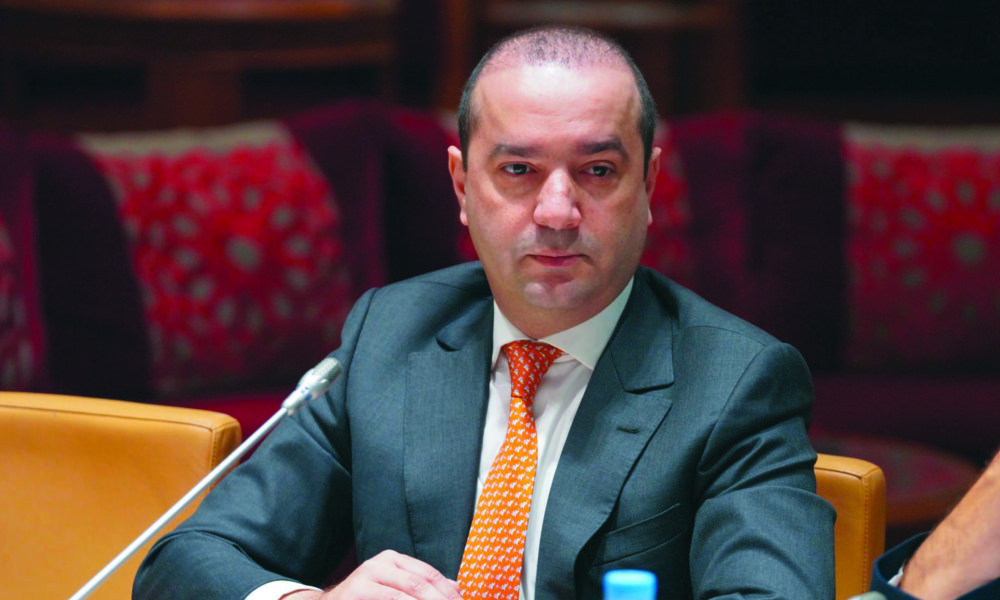
Three months after his election as president of the National Rally of Independents (RNI), Mohamed Chaouki offers his reading of the first challenges of a mandate placed under the banner of continuity.
Heir to a structured organisation and a strengthened territorial base built under the leadership of Aziz Akhannouch, he frames his responsibility as one driven by conviction and loyalty to a collective dynamic rather than personal ambition. As the next electoral deadlines approach, he affirms the cohesion of the majority while also embracing the RNI’s own ambitions.
Three months after your election as head of the RNI, did you expect such a demanding role?
When one commits to politics—whether as a national representative, a provincial coordinator, a regional coordinator, or a member of a party’s political bureau—one does not fully grasp the extent of the responsibility that lies ahead, but one prepares for it.
These first three months fall within a logic of continuity: continuity of my personal commitment and continuity of the vision set out by Aziz Akhannouch for the RNI. Our party is structured, equipped with a clear vision, strong institutions, and a wide territorial base. My mission is therefore to consolidate these achievements and bring them greater coherence.
Yes, this responsibility is demanding, especially when succeeding a president who is as unifying and charismatic as Aziz Akhannouch.
Succeeding Aziz Akhannouch is a bold decision. What led you to take that step?
When I joined the RNI in 2018, I did not imagine that I would one day become the party’s president. I joined out of conviction, not ambition—the conviction to work for my locality of Marmoucha, my province of Boulemane, and my region of Fès‑Meknès, within a political organisation that carries a clear vision and method of action.
Calculative political ambition was far from my mind. Responsibilities are not measured by their intensity, but by their usefulness. This one stems from collective trust—from party members and from the party leadership, headed by Aziz Akhannouch.
When figures such as Nadia Fettah Alaoui, Anis Birou, Mohamed Boussaïd, Rachid Talbi Alami, or Amina Benkhadra place their trust in you, you must assume your responsibilities. It was therefore not a choice, but a duty.
Were these personalities the ones who encouraged you to accept?
It was both collective trust and a collective decision. I aligned myself with this dynamic. That trust committed me, and at that point, it was no longer a matter of choice.
Did this decision cause friction among other figures within the party?
I do not believe so. What matters is ensuring continuity without denying the past—that is the strength of major political parties.
You often speak of continuity. Yet one of your first decisions, during the political bureau of 7 February, was to change the party’s central leadership. Isn’t that a form of rupture?
“Rupture” is a rather strong term.
Mustapha Baïtas had long expressed his wish to step down from his role at the head of the central leadership, well before the extraordinary congress. Younes Abchir, who succeeded him, had been his deputy for several years. There is therefore no rupture, but rather a carefully considered continuity and loyalty to the party’s trajectory, both at the level of the presidency and the central leadership.
Let us return to your parliamentary career. How did you support the government’s action, both within the Finance Committee and as head of the parliamentary group?
I was honoured to chair both the Finance Committee and the RNI parliamentary group. These were two different but highly enriching experiences.
Within the Finance Committee, the work is demanding, often carried out quietly, and sometimes misunderstood: it consists of assessing the impact of Finance Laws on macroeconomic balances, purchasing power, and the State’s revenues and expenditures. Within the parliamentary group, the focus is more on expressing political positions and ensuring the coherence of MPs’ actions.
The RNI has never sought to create noise. We have prioritised serious, structured work, both in monitoring public policies and in legislative activity, while projecting a coherent image of the group. We have had an impact on numerous texts, notably the Finance Laws, the Investment Charter, and the organic law on the right to strike.
We not only supported the government’s reforms, but also contributed to improving and defending them.
The RNI group has often faced attacks from the opposition. How do you assess its work during this legislative term?
There has been everything: institutional seriousness and a sense of responsibility, but also excess, falsehoods, and populism. Nevertheless, we have worked with opposition groups when their proposals were constructive, particularly during debates on the Finance Laws.
How do you assess the government’s record?
It cannot be judged without taking the context into account: an unfavourable geopolitical environment, a slowdown in major global economic engines (the United States, China, Europe), and severe climatic constraints, such as drought and floods.
In this difficult environment, the record is exceptional. It rests on coherence, a clear vision, and a defined course, inspired by the enlightened vision of His Majesty the King: economic sovereignty and the strengthening of the social welfare system.
On sovereignty: water highways, energy sovereignty (with Morocco’s green hydrogen offering), food sovereignty, and the development of “Made in Morocco”.
On the social level, the figures speak for themselves: 52 billion dirhams in direct social assistance, State coverage of health insurance contributions, 46 billion dirhams committed through social dialogue, and 380 billion in public investment. At the macroeconomic level: average GDP growth of 4.5%, inflation at 0.8%, a budget deficit reduced to 3%, and public debt standing at 67% of GDP. This reflects a resilient and emerging economy capable of financing a coherent social policy.
What are the main priority issues for your parliamentary group during this final session of the legislature?
What remains are primarily technical matters: the law on the National Press Council, as well as reforms of justice, administration, health, and education.
These are not measures that will profoundly transform the daily lives of Moroccans during this session, but rather continue the implementation of broader reforms.
Do major reforms such as the Labour Code or pensions have a chance of being completed?
Some amendments to the Labour Code are underway. For major reforms, time may be lacking. However, serious and rigorous work is being carried out on pension reform. The health of pension schemes has relatively improved thanks to reduced implicit debt and increased longevity.
Are you now the head of the majority as RNI president?
No. The majority’s charter is clear: the Head of Government is the head of the majority, and he will continue to fully exercise this role. It should be emphasised that this majority has shown remarkable cohesion and effectiveness throughout the mandate.
When will this body meet?
We will meet very soon. The aim is to coordinate the work of the majority, both in Parliament and within the government, for the final months of this mandate. Naturally, each political party within the majority has its own ambitions for the upcoming legislative elections.
That is only natural. What is important is to highlight that we have had a particularly fruitful collective experience, characterised by remarkable cohesion, exemplary coordination, intense work, and a true sense of results. I welcome this collaboration and sincerely hope that it can be renewed within a future majority.
Isn’t a certain fragmentation already emerging, with each party going its own way?
As I mentioned, each party legitimately has its ambitions. As far as the RNI is concerned, we are already working on developing our electoral programme, the main outlines of which will be finalised in the coming weeks.
We have carried out extensive listening and dialogue with our parallel organisations in order to gather the aspirations of different segments of society—doctors, engineers, students, and other socio‑professional categories. These contributions will significantly enrich our programme.
Where do you stand in preparing the electoral programme and candidates?
We are also well advanced in this regard. However, the current political moment must primarily be devoted to presenting and explaining the government’s record, which we consider exceptional. It reflects a major transformation of our economy, marked by the courageous implementation of long‑awaited reforms.
Moroccans can be proud of a now well‑established social protection system and of an emerging and resilient economy. Of course, expectations remain and challenges persist. We recognise that we have sometimes lacked speed in implementation; time has been the main constraint of this mandate. We have not always been able to immediately translate all reforms into concrete measures visible in everyday life.
That is why we are now committed to explaining this record with clarity and transparency. We will then refine our programme by making the necessary adjustments. We will engage with citizens honestly to present our renewed vision. I trust in the discernment of Moroccans: they already perceive the ongoing transformations, the gradual improvement in their living conditions, and the significant progress in sectors such as health and education.
Will Moroccan voters therefore vote mainly on the basis of record and programme?
I would remind you that Moroccans already voted in 2021 for programmes. The RNI’s programme, like those of other parties, resulted from a wide process of consultations and roadshows across the entire country.
We had identified citizens’ key concerns: unemployment, health, education, and the quality of education for their children. We worked with determination. The reforms undertaken were of great scope, and transformation is now well underway in many areas.
We have indeed encountered difficulties, which we fully assume. We will make the necessary adjustments. Time was the primary challenge facing this government, which is why we are seeking a renewed mandate from Moroccan voters.
What about candidate selection?
Aziz Akhannouch has left the RNI a strong party, with agile structures and exemplary governance. Candidate selection, both for legislative and municipal elections, is entrusted to a national committee. For municipal elections, we also rely on regional committees. This national committee works daily to finalise the lists for the upcoming September legislative elections.
Some anticipated major departures after the handover from Aziz Akhannouch. What is the situation?
I can state this clearly: there have been no departures.
And in terms of recruitment?
The RNI continues to recruit actively, welcoming new members every day who share our convictions. Those who distinguish themselves may naturally be supported in their candidacies.
Can we expect a renewal of the party’s elites?
There will be significant renewal in our lists, while ensuring broad and faithful representation of Moroccan society, with a stronger presence of women and young people in local constituencies. This is the culture of the RNI.
Those who speculated about possible destabilisation after Aziz Akhannouch’s departure misunderstand the party’s internal reality. We have solid structures, a very extensive territorial base, and governance that is both robust and agile. Over these three months, we have strengthened the coherence of these structures and preserved team cohesion on the ground.
I personally carried out a tour of all twelve regions immediately after my election. We also launched the initiative “The Voice of the Future”, a series of citizen meetings organised by our parallel organisations. I am currently undertaking a provincial tour that will take me to 70 provinces in the coming weeks, in order to explain the government’s and the party’s record, before presenting our programme.
Does the ambition remain to come first in the next legislative elections?
Absolutely. I fully assume this responsibility at the head of the RNI with clarity, determination, and boldness. I know the strength of my party and the quality of its structures.
We will approach these elections with the same ambition as in 2021, supported by exceptional activists, convinced that Morocco is undergoing a profound transformation and confident in the country’s future under the enlightened vision of His Majesty the King. We will propose serious, ambitious, and achievable public policies.