Business
Mbarka Bouaida: “The ambition is to create a GON H2 Valley”
The mandate of the president of the Guelmim-Oued Noun Regional Council is marked by the launch of structuring projects. Through her management, the former Secretary of State does not hesitate to bring advanced regionalization to life.

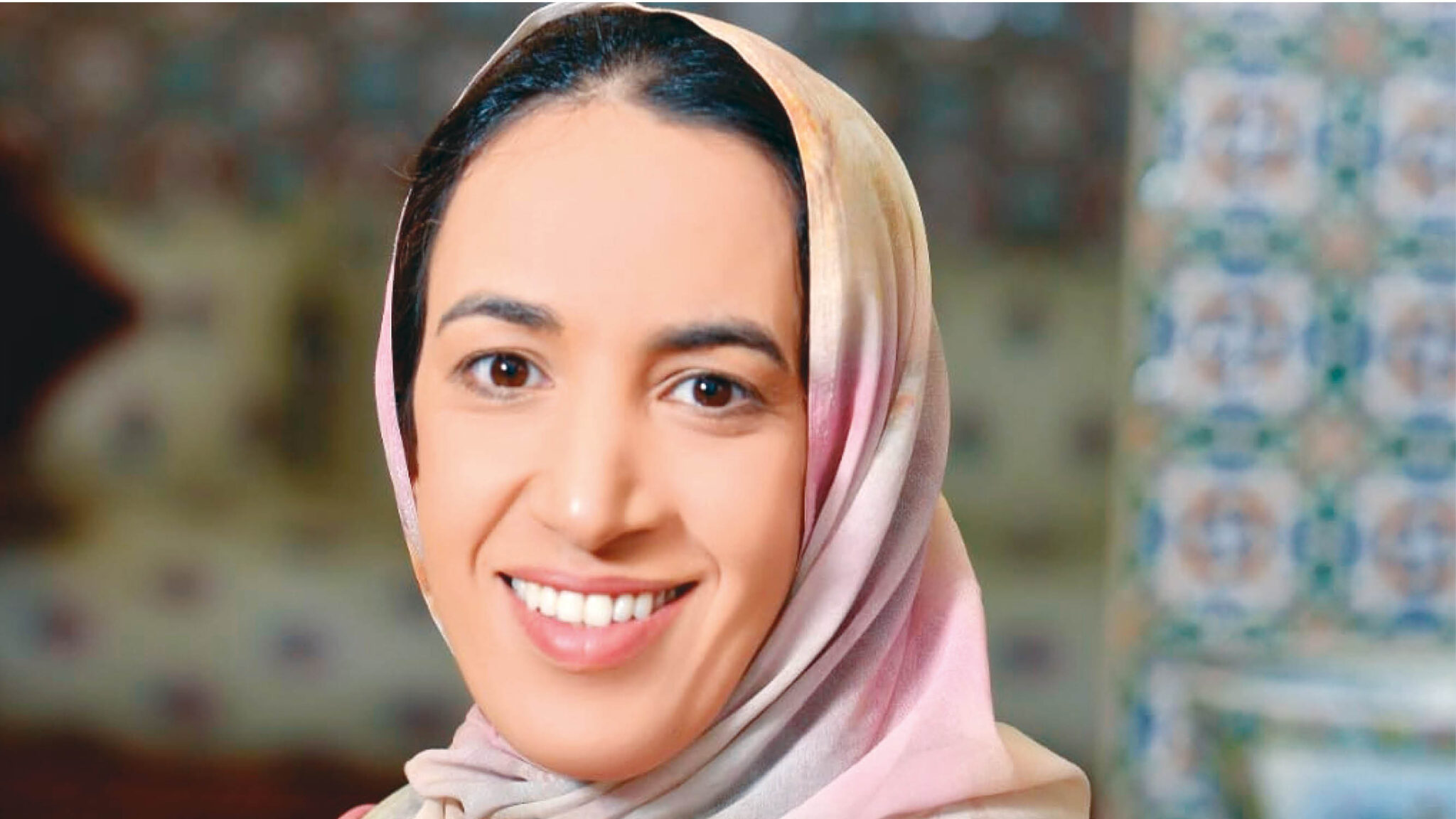
In ten years, the face of the region has completely changed. From renewable energies to industry, including agriculture, tourism, and the blue economy, dozens of projects have been launched in recent years. Here is an update from the president of the Guelmim-Oued Noun Regional Council.
You are the first, or at least one of the first, to have signed a program contract with the State. Where do things stand today?
Indeed, we were among the first regions to sign a program contract with the State, already in 2021. This first State-region contract amounts to 5.5 billion dirhams for 37 projects. Almost all are structuring projects that complemented the work underway under the roadmap initiated by the PDI.
And today, we just voted on the second program contract, which is currently under validation and approval by the competent authorities (i.e., the Ministry of the Interior). I must say we did not wait for the validation of this second contract to start working.
Thus, we began by signing major agreements on road infrastructure with the Ministry of Equipment, urban upgrading with the Ministry of Housing and the Ministry of the Interior, and education with the Ministry of National Education. The latter covers two parts:
The first concerns the generalization of pioneering schools and the second the modernization of all auxiliary sports infrastructure and more, including media libraries, libraries, etc.
We also signed an agreement with all provincial councils to fully cover the need (100%) for school transport with the purchase of necessary buses.
Of course, this is part of the entire dynamic that the region has experienced, which started five years earlier, in 2016, with the launch of the New Development Model for the Southern provinces, signed before His Majesty the King in February of the same year, with an initial investment endowment of 77 billion dirhams.
Can you tell us about what has been undertaken under this program?
In fact, the program is called the PDI, Integrated Development Program for the Southern provinces.
Naturally, the Guelmim-Oued Noun region had its share of this program involving very large structuring projects, notably the expressway that has just been completed, the famous Fask dam with 80 million cubic meters capacity, the Guelmim international airport, and of course health infrastructure, especially the regional hospital center that was recently upgraded to a university hospital (CHU) with the construction of the medical faculty, in addition to the Sidi Ifni regional hospital center.
This is in addition to other projects that are also part of this PDI and concern education and culture. Particularly on infrastructure, a lot of work was needed regarding schools, high schools, colleges, and cultural centers. There was also a final component about green belts, or environmental protection of the region.
This royal program triggered a real dynamic within the southern regions, including Guelmim-Oued Noun. It is the decisive turning point that has changed and continues to change the situation in the Southern provinces.
Under this PDI, in 2020, we were the first region to approve its regional development program, which led to the signature of the first regional-State program contract.
What has been achieved so far?
In the first program contract, the most important aspect concerns the desalination plant. We consider it a structuring project for the city of Tan-Tan.
In reality, two plants, one in El Ouatia and the other at Plage Blanche.
The Tan-Tan desalination plant is one of the major projects at the national level. Feasibility studies, conducted by the Ministry of Agriculture, have long been completed.
The national strategic decision was to start with the Tan-Tan desalination plant. And I believe that in the latest agreement Morocco signed with the United Arab Emirates, this plant is indeed part of the deal with Taqa, which will be responsible for realizing this project, whose feasibility studies are practically finalized.
Moreover, its capacity has been revised upwards. Initially, a medium-sized plant with a capacity of 40 to 60 million cubic meters was planned, but it is now increasing to 120 million cubic meters.
It will cover both drinking water needs and irrigate an area initially planned for 5,000 hectares in Tan-Tan and 5,000 hectares in Guelmim.
There are also several other components, especially the urban upgrading of the four cities in the four provinces of the region (Guelmim, Sidi Ifni, Tan-Tan, and Assa-Zag) and the upgrading of the two ports of Tan-Tan and Sidi Ifni.
Where do you stand concretely with this program?
We have started upgrading the ports. First, the port of Sidi Ifni, which we have practically finalized, mainly to better accommodate artisanal fishing. The port of Tan-Tan upgrade is underway.
It should be noted that this is already a first in Morocco’s advanced regionalization process. Such projects do not formally fall under the regions’ authority.
Nevertheless, for us, these infrastructures are essential for developing the regional economy. It is a priority for us—even if not necessarily at the central level—and it was essential to get involved to have a direct impact on the turnover of these two ports, which should ultimately positively influence the region’s economic growth.
What about other aspects?
The second aspect, urban upgrading, has already started. It is part of the first program contract (2021-2023), with a budget of 300 million dirhams. It is also nearing completion.
We began with a major façade renovation project. This was the first choice supported by authorities and urban municipalities. Other works include upgrading under-equipped neighborhoods, main roads, and axes.
Regarding higher education, this issue was long delayed, but with the current team leading the ministry, we are accelerating progress.
This does not depend on the region, as the ministry of Higher Education holds the project management. Nevertheless, the idea was to create a true university hub that could legitimately support the creation of a university in Guelmim-Oued Noun.
A university in Guelmim?
Yes, I hope this project will happen. It seems the real hurdle, the land issue, was recently resolved by the Higher Education Ministry. One of the biggest development barriers in the region is urban land, especially in Guelmim, the capital.
Now, the ministry has acquired the land, the project is moving ahead, and we recently held a meeting with the new leadership of the Ibn Zohr University of Agadir. In any case, I believe the project will launch soon.
The project is fully justified by local demand and by the number of students from the region studying elsewhere, in Agadir, Marrakech, Laâyoune, and beyond.
It is also justified by the region’s geographic situation, which could be very attractive even for students from other areas. So I think it will be a highly anticipated and structuring project for the region.
Has the region launched other regional development plans?
Yes, during this term, we also voted on a new regional development plan worth 11.7 billion dirhams with around 96 projects. The idea was to work on two bases.
First, to say that we always work in partnership, establishing structured contractual partnerships.
Second, to tackle issues head-on and say: it is a genuine concern for the region and must be handled comprehensively.
Thus, we signed several important and strategic agreements. The first with the Ministry of Equipment to complete all the road networks required by the region. This agreement is worth 2.2 billion dirhams.
We also signed another agreement with the Ministry of the Interior and the Ministry of Housing, which we called the “Urgent Program for Urban Upgrading.” It has a budget of 300 million dirhams and complements the first agreement.
This sectorial contractualization approach allows us to address problems thoroughly and across the entire regional territory. For education, in addition to the generalization of school transport and pioneering schools, we did the same for preschool education.
We signed an agreement with the National Preschool Foundation to rapidly generalize preschool across the region. Overall, the National Education agreement covers nearly 600 million dirhams.
The same applies to culture, with a 312 million dirhams agreement concerning cultural centers, cultural activities, socio-cultural centers in communes, youth centers, etc.
Are other ministries involved?
Indeed, we concluded another agreement with the Ministry of Health for a budget of 450 million dirhams. We decided that two nearby hospital centers should be built in key emerging and economically important centers, such as El Ouatia.
This commune houses the Tan-Tan port, which is very important. The other is Mirleft, with huge tourism potential. We plan to build these two hospital centers.
As part of this agreement, there is also a substantial budget for the Ministry of Health to partner with local authorities regionally to hire doctors and meet medical staffing needs.
The agreement also provides for specific actions, such as medical caravans, especially in rural areas.
The region also intervenes through this contractualization mechanism in various other areas, including scientific guidance for students and the awarding of scholarships, notably for engineering schools.
Within this framework, the Regional Council recently voted for the creation of an “École 1337.” For us, these are intrinsic human development levers to prepare our students for tomorrow’s major projects launched in the region, particularly renewable energies and green hydrogen.
In short, this emergency program has a budget of 1.2 billion dirhams for the four provinces, allocated according to each one’s needs. It was signed in July 2024.
Today, in October, we have already started implementing this plan, with nearly 25% of funds engaged. The region needs significant catch-up, and this plan will help achieve it.
Catching up will also prepare the region for major projects we strongly believe in, especially green hydrogen. This shows a chain of programs, small and large actions forming a value chain that will enable us to be ready to host these great projects, a pride for us as a region, for Morocco, and for the continent.
Speaking of green hydrogen, can Guelmim-Oued Noun be considered a full-scale national laboratory, a test region?
Absolutely. The region is a laboratory and test ground for the entire national industry. That’s why we decided to speed up all ongoing projects. In truth, we work in good coordination with all partners.
We’re also setting the necessary foundations for good governance. Through the Regional Project Execution Agency (AREP), we are finalizing a regional development company project dedicated to planning.
Incidentally, we have already created a Tourism SDR, which will begin work shortly. These governance mechanisms are considered very important at the Regional Council level. They will both accelerate ongoing project execution and carry future projects.
Returning to green hydrogen, we have integrated into our vision and all our documents an idea we hope to realize soon: to create a GON H2 Valley, a kind of Silicon Valley dedicated to the region.
The idea is to have a zone welcoming test projects related to green hydrogen, upstream and downstream, within an integrated economy. The project should be realized in Tan-Tan, where we are building a 65-hectare economic activity zone. A small part could be dedicated to this GON H2 Valley, which I hope will come to life very soon.
In the same format used with other partners in other sectors, we have also set a contractual framework with the Ministry of Industry and Trade to create four economic activity zones in the region.
Preliminary studies, including feasibility and vocation studies (to define each zone’s purpose), have been completed. We started with El Ouatia and Guelmim zones.
What is the impact of all these projects on citizens’ daily lives? What has changed in basic regional indicators?
The most tangible and felt impact has been on the road network, especially rural roads. There has been a huge difference in travel time and safety, starting with the expressway.
Travel time between Agadir and Guelmim dropped from three hours to two hours, with fewer risks of accidents and the comfort an expressway offers. Also, in rural areas, the entire road network constructed has helped reduce distances.
That is where demand was strongest, and we responded with projects, some still being finalized. This is where the real impact is felt regarding opening up isolated areas and connecting them to drinking water and electricity networks.
Speaking of water, it has always been a key issue, especially in a Saharan zone. Is it still a problem?
Water is a very important subject. It is the top priority. The region has approached it in a particular way. Of course, there is the national plan and its local implementation over the last 18 to 24 months.
In Guelmim-Oued Noun, the Regional Project Execution Agency is currently building dams and supervising drinking water connections. So, it is a very important topic, and we have high achievement rates.
Again, the impact is direct on the population. On macroeconomic indicators, regional GDP growth is positive and going in the right direction.
The population’s daily life will improve as these projects are completed. Meanwhile, we have also tackled basic infrastructure projects, like slaughterhouses, swimming pools, and neighborhood playgrounds, many already largely completed.
We want to offer citizens a new living framework thanks to these investments’ impact
We started with major projects but simultaneously work on smaller projects that may not require much money but consume much energy due to land and budget issues. These have real impacts and are essential to citizens’ daily life.
We work hard on these as well. Differences are already visible. Two years ago, the average accepted number of students from the region at UM6P was barely two.
Today, it is 14-15, which is already significant. And we are building, which is very important.
You have launched projects in industry, tourism, and agriculture simultaneously. Is the region changing its vocation, assuming it had one?
It is a strategy where these three sectors converge towards a common goal. When preparing our regional development plan, we asked: Where do we want to go?
We decided to become the international capital of green hydrogen, meaning hosting the maximum integrated projects.
We want the region to be an active player that produces renewable energy value-added for citizens, not just a passive energy producer. Talking about an integrated economy means upstream green hydrogen industry aspects.
There is desalination, and we mentioned a station project independent of this one but which will likely serve green H2 production.
We also mentioned an essential project in the green hydrogen roadmap: the new Tan-Tan port. I stress the importance of this project.
One cannot claim to be tomorrow an international capital of green hydrogen without complete infrastructure.
We have everything to have the necessary infrastructure to reduce distances and interconnect cities (Guelmim, Assa-Zag, Sidi Ifni) for maximum benefit from this energy production.
The Tan-Tan port fits perfectly into His Majesty the King’s royal vision of making Morocco a maritime platform with key ports like Tanger Med, Nador West Med, and Dakhla-Atlantique.
We cannot ignore the need for a new port infrastructure dedicated to renewable energies and related trade. It will change the vocation not only of the region but also of all southern Morocco.
Today, we speak of renewable energy, green hydrogen, and activity zones that can host upstream and downstream production. Tomorrow, industries wanting to use green hydrogen can set up next to production sites.
What about the other two sectors?
We also want to establish sustainable agriculture bases in Guelmim-Oued Noun. We already have great sustainable agriculture experiences to strengthen and generalize.
That is why we call for expanding irrigation perimeters included in desalination station projects.
We also focus on tourism. That is why we created the Tourism SDR. It is very important because there is enormous potential, unfortunately underexploited.
Today, the region deserves to fully enter the national dynamic in tourism. A governance mechanism must steer these tourism projects.
Obviously, maritime fishing also needs port upgrading. We launched aquaculture plans in Sidi Ifni and Tan-Tan. We aim to develop maritime transformation as well.
Transforming fishery resources, not just harvesting, is key because we want to create added value.
Morocco is achieving great things in sport. What is planned in the region?
This is important. The region has 240 kilometers of coastline, which is significant. With the Royal Moroccan Surf & Bodyboard Federation, we are building two surfing sites in Tan-Tan and Sidi Ifni.
The goal is to train many young people in surfing and include the sport in regional dynamics, as in other Moroccan beaches.
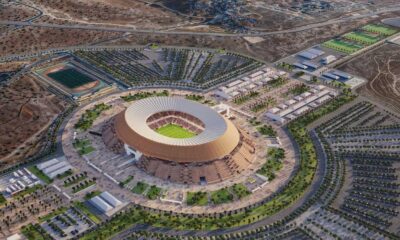
For football, we support all regional teams to encourage progress. We signed agreements with the FRMF and the Ministry of National Education to build an international-standard stadium.
We hope this stadium will back up major stadiums, hosting training camps and more.
In your opinion, what has changed over the last 50 years?
There are undeniable changes over the last 50 years. The most evident is that we now have real cities in the Sahara.
We must also acknowledge that the integrated development program for the Southern provinces covers less than ten years but brought a qualitative leap in governance, will, and public investment that completely transformed these regions.
People who lived here 50 years ago and are still alive recognize this. The region is well connected and well equipped infrastructurally. Many things have changed.
I remember we lacked potable water for a long time; sometimes only salty water was available, sometimes none at all. Today, most households are connected. This is a huge change.
Nothing done in 50 years here was accomplished in centuries before. It deserves recognition. We must applaud all work done by Morocco as a whole, by all the nation’s forces led by His Majesty the King.
Frankly, it is a beautiful dynamic. Now, everything is under construction—some projects finished, others on the way—but the vision and trajectory and governance mechanisms are all well defined.