Influences
OCP Foundation: A 2025 review under the sign of lasting impact
With nearly 96,000 beneficiaries, 256 projects deployed in 16 countries, and a strategy structured around education, sustainable agriculture, entrepreneurship, and research, the OCP Foundation continues to change scale. Its 2025 activity report highlights an approach based on human capital, partnerships, and the pursuit of lasting impact on territories.

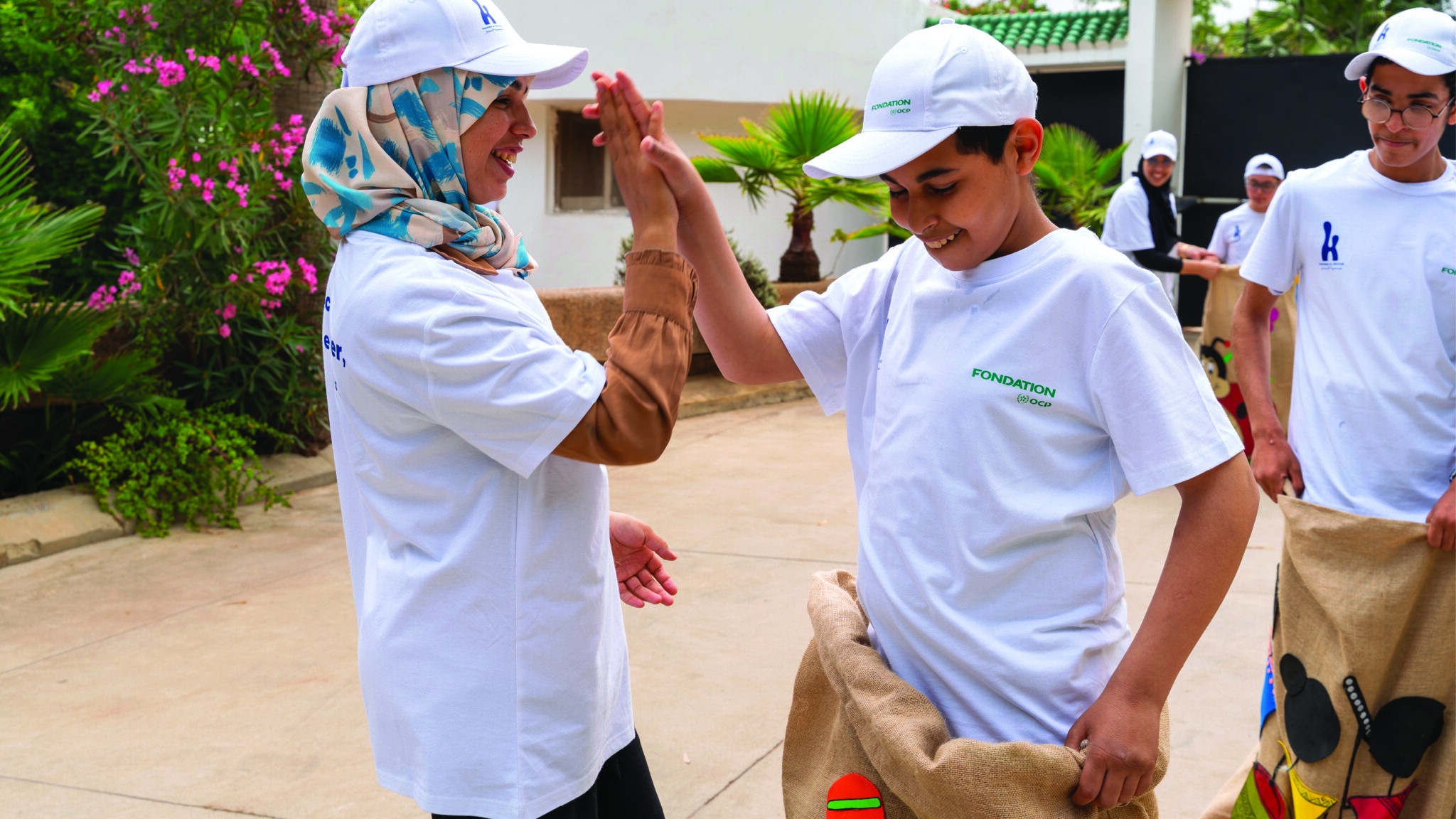
The OCP Foundation’s 2025 activity report is not limited to an inventory of achievements. It presents a vision in which each program is part of a trajectory of sustainable transformation.
The idea is clearly stated: “Sustainable transformation does not come from multiplying initiatives”, but from their coherence, their complementarity, and their ability to produce lasting effects on territories.
This philosophy runs through all of the Foundation’s actions. In his editorial, the chairman and CEO of the OCP Group, Mostafa Terrab, recalls that “Morocco’s greatest wealth is its women and men. Everything starts with human capital and everything returns to it”. This conviction guides the Foundation’s strategy, which says it sought in 2025 to turn “collective energy into a coherent trajectory”, making each project and each partnership a lever for skills development, learning, and innovation.
This approach is aligned with the group’s strategic orientations, in line with national priorities and the challenges of Africa’s transformation.
The report also highlights the alignment of all programs with the United Nations Sustainable Development Goals (SDGs) and ESG criteria, used as a framework for management, evaluation, and accountability.
An action growing in scale
The indicators presented reflect the scale-up underway at the Foundation. In 2025, it says it supported 95,731 beneficiaries in 16 countries across three continents, 60% of them women. Its action took shape through the implementation of 256 projects, carried out with 116 institutional partners.
Among the target groups supported, 5,611 people in vulnerable situations benefited from comprehensive support combining care, psychosocial assistance, access to education, and pathways fostering autonomy and social inclusion.
The Foundation relies on a team of 67 employees. Over the year, 5,181 people received training, and 1,016 cooperatives and associations were supported in order to strengthen local ecosystem capacities.
Beyond these results, the Foundation emphasizes an evolution in the way it intervenes. Recognized as a public-interest organization since 2012, it says it favors lasting transformations rather than one-off actions, with the ambition of “activating” the capacities of territories and turning experiments into reproducible models.
Four priorities for territories
The report is organized around four main areas of intervention. The first is education, considered the main lever for developing human capital.
The year 2025 was notably marked by the conclusion of the second phase of the Parallel Schools program, participation in the African Congress on Educational Equity, completion of studies on BTS tracks, as well as several initiatives dedicated to women’s economic empowerment.
The Foundation also highlights the national diagnostic of BTS programs, the restructuring of training, and the accreditation of a new track in electromechanical and hydromechanical maintenance.
The Massarat program continued, while 4,059 excellence scholarships were awarded, 58% of them to young women in four excellence institutions.
The second priority is agriculture and climate. The Foundation continued its programs in favor of more resilient agriculture through ecosystem restoration, regenerative agriculture, soil analysis, community resilience projects, and support for farmers toward more sustainable practices.
The report also mentions initiatives related to agricultural carbon credits as well as several international distinctions obtained in 2025. Entrepreneurship is the third pillar.
The Moroccan Retail Tech Builder (MRTB) program, developed with the Ministry of Industry and Trade and Mohammed VI Polytechnic University (UM6P), supported a first cohort of 31 start-ups. Building on this experience, the program is entering a new phase with the goal of supporting 300 start-ups over three years, while expanding its scope to Trade, in addition to Retail Tech.
The document also reviews the strengthening of the Moussanada Solidarité Program, the continuation of the Community Week Accelerator, and actions supporting territorial innovation.
As for the Social Experience Program, it mobilized 437 students and 115 associations and enabled the development of 134 projects, including 34 completed in 2025. Finally, research and innovation complete this framework.
The Foundation highlights the launch of the DevTech25 Fund, a new program to strengthen national research, as well as the consolidation of the National Support Program for Research, Development, and Innovation.
This relies on 24 funds, 35 institutional partners, more than 160 beneficiaries, 1,760 training sessions delivered to 231 teacher-researchers, and 16 structuring projects. Its portfolio now includes 147 projects, 62 of which have already been completed.
Partnerships and innovation
Beyond the programs themselves, the Foundation makes partnerships a central lever of its strategy. Its model is based on co-construction with public institutions, universities, research centers, companies, associations, and local communities.
At the heart of this ecosystem is notably Mohammed VI Polytechnic University (UM6P), presented as a strategic partner for turning knowledge into concrete solutions.
Act4Community and SBU+ also help bring territorial initiatives, research, and the needs of the OCP Group closer together.
This logic is also reflected in cross-cutting actions focused on structuring ecosystems, financing sustainable models, capacity building, territorial governance, knowledge dissemination, digital innovation, and the gradual integration of artificial intelligence into the programs.
The report finally looks ahead to 2030 with a roadmap built around five priorities: placing communities at the center of economic, social, and environmental impact; strengthening partnerships; making knowledge an accelerator of innovation; promoting pioneering models in education, entrepreneurship, agriculture, climate, and research; while developing a more agile organization driven by digitalization, artificial intelligence, and the “Servant Leadership” model.
For the OCP Foundation, the strategy is meant to evolve through learning. An ambition summarized in the report: to build transformations that are lasting, measurable, and capable of strengthening, in the long term, the autonomy of territories.