International
Morocco–EIB: Half a century of cooperation and billions of euros
The European Investment Bank, which has carried out several operations in Morocco amounting to more than €12 billion, is a leading financier of the Kingdom. The details.

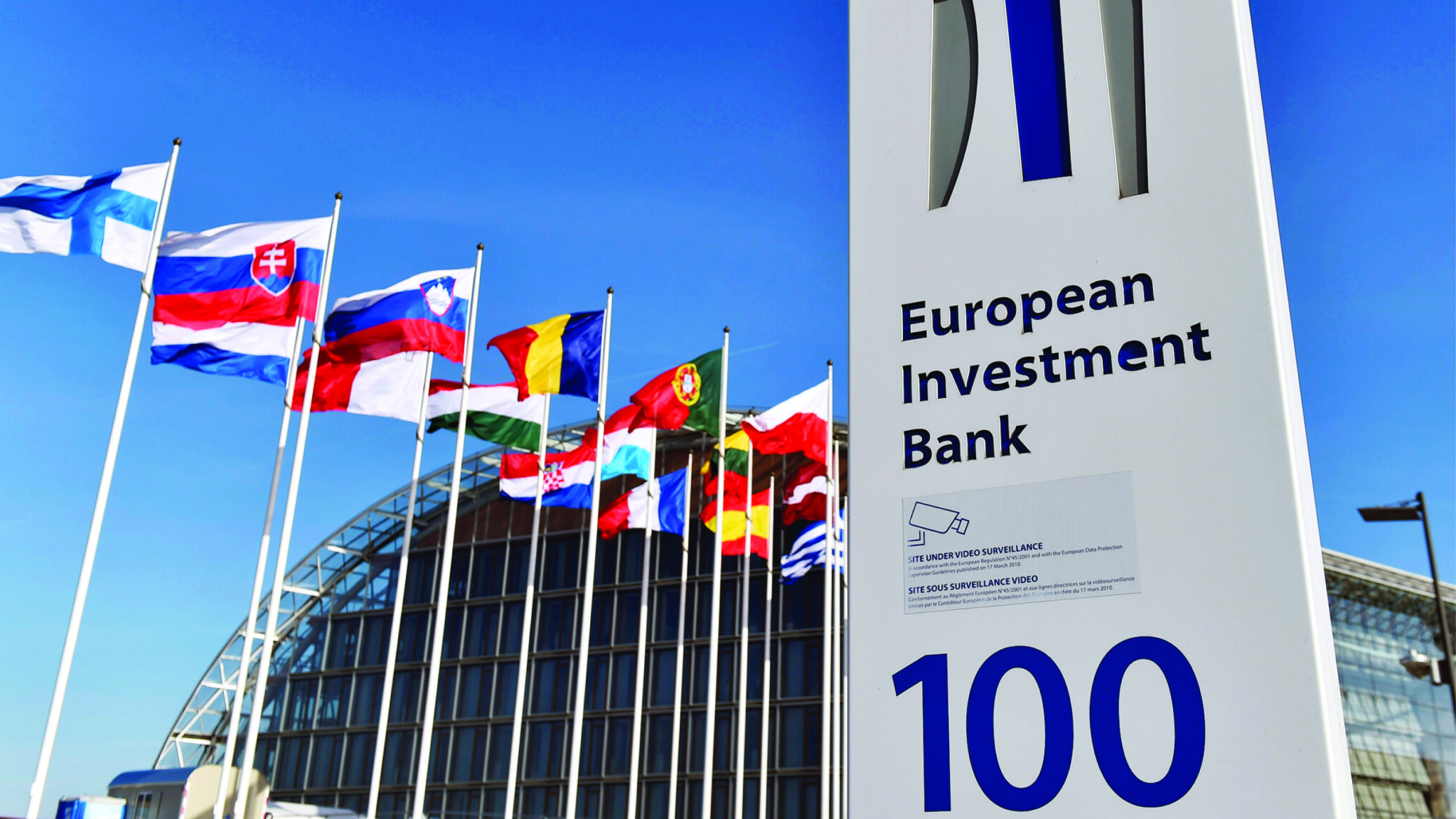
The bilateral partnership between Morocco and the European Investment Bank (EIB) is marked by its exemplary durability. Moreover, the figures clearly demonstrate the density of cooperation between the two partners, which has existed since 1979 — nearly half a century (exactly 47 years).
The EIB has invested more than €12 billion in Morocco across several strategic sectors, including energy security, innovation and education.
The European funder is also involved in financing a cluster of major projects, namely the Tanger Med port, the Noor solar complex in Ouarzazate, the Euro-Mediterranean University of Fez and the Medusa submarine fibre-optic cable.
By comparison, the African Development Bank (AfDB), operating in Morocco since 1978, reports more than 150 operations in different sectors, with financing of $15 billion.
That said, beyond the diversity of the European funder’s portfolio and the importance of its financial commitments in the Kingdom, current events also provide a legitimate reason to look more closely at the EIB’s operations in Morocco. Indeed, the recent visit to the country by its president, Nadia Calviño, reflects the strong interest the financial institution places on Morocco.
An ambitious objective
In fact, the European Union’s financing institution plans to mobilise more than €700 million of investments for Morocco during 2026.
Other data that reinforce the upward trend of the EIB’s commitments in the Kingdom: its financing at the national level has tripled over the past five years.
Furthermore, according to the funder — which has financed projects outside the EU that supply 5 million households with clean energy — the rising trajectory of its financing in Morocco partly reflects the convergence of priorities between the country and the European Union, notably in developing resilient infrastructures, modernising transport networks, supporting the private sector, and strengthening education and schooling in rural areas (particularly for girls).
In short, the EIB’s aim is to support Morocco’s economic transformation through the energy transition, industrial competitiveness, private-sector support, network resilience and economic integration with Europe.
€365m for ONCF and ADM
The most recent news related to Morocco and the EIB is the signing in Rabat of financing agreements worth €365 million intended to strengthen the resilience and safety of the country’s road and rail networks.
In detail, the first agreement foresees a €50 million loan from the European Investment Bank, complemented by a €15 million grant from the European Union, to finance the rehabilitation of the Office National des Chemins de Fer (ONCF) rail network, which has embarked on a large-scale plan to modernise rail equipment and infrastructure.
The second agreement concerns a €300 million loan granted to the National Motorways Company of Morocco (ADM) to support a motorway resilience project.
Overall, these agreements aim to improve mobility, strengthen infrastructure resilience and, above all, generate benefits for citizens and businesses. They are also expected to contribute to better regional integration and to strengthening economic links between Europe and Africa.
2025: A record year
In Morocco, 2025 was a pivotal year for EIB operations, which mobilised loans, technical assistance, grants and European guarantees to financially support a host of concrete national projects.
Through EIB Global (the structure dedicated to operations outside the EU), the European bank signed €740 million of financings in Morocco in 2025.
This represents the largest amount since 2012. Concretely, the financings granted by the EIB to Morocco in 2025 were mainly distributed across three sectors, notably under the “Global Gateway” Initiative, the European Union’s strategy to mobilise sustainable investments in strategic infrastructure.
As a reminder, in the water sector the European funder granted €70 million to ONEE—Water Branch under Morocco’s National Programme for Drinking Water Supply and Irrigation (2020–2027).
This financing was for the modernisation of drinking-water production and transport infrastructure.
In the energy sector, the EIB provided a €170 million loan to ONEE—Electricity Branch for strengthening and modernising the national electricity transmission network.
This operation aims to support the integration of new renewable capacities and to increase the resilience and capacity of the national grid to carry the electricity produced.
Another notable fact from last year: the foreign financial institution allocated €500 million to post-earthquake reconstruction in the regions affected by the 8 September 2023 tremor.
These funds, which constitute the second tranche of the overall €1 billion programme, concern the rehabilitation of road infrastructure, educational establishments and health facilities.
€210 million disbursed
EIB disbursements in Morocco reached €210 million in 2025. The public and private sectors received €180 million and €30 million respectively.
By way of example, these disbursements include financing for the Banque Populaire group, provided under the EU programme for trade and competitiveness, aimed at strengthening export value chains in three key sectors for Morocco: automotive, textiles and agri-food.
This support is particularly timely given that these three sectors are among Morocco’s main export drivers, and the country is one of the top beneficiaries of European financing in the Middle East and North Africa (MENA) region.
Ultimately, it should be noted that the EIB is a long-standing, leading partner of Morocco which, over the past twenty-five years, has worked to accelerate its economic and social development.