Kingdom
LGV Kenitra–Marrakech: 104 Million Dirhams to Connect Substations to the Electrical Grid
Before high‑speed trainsets race between Kenitra and Marrakech, another project is taking place behind the scenes. ONCF is launching a call for tenders worth 104 million dirhams to connect three substations to the 225 kV grid. A technical but decisive step to power the next generation of Morocco’s high‑speed train.

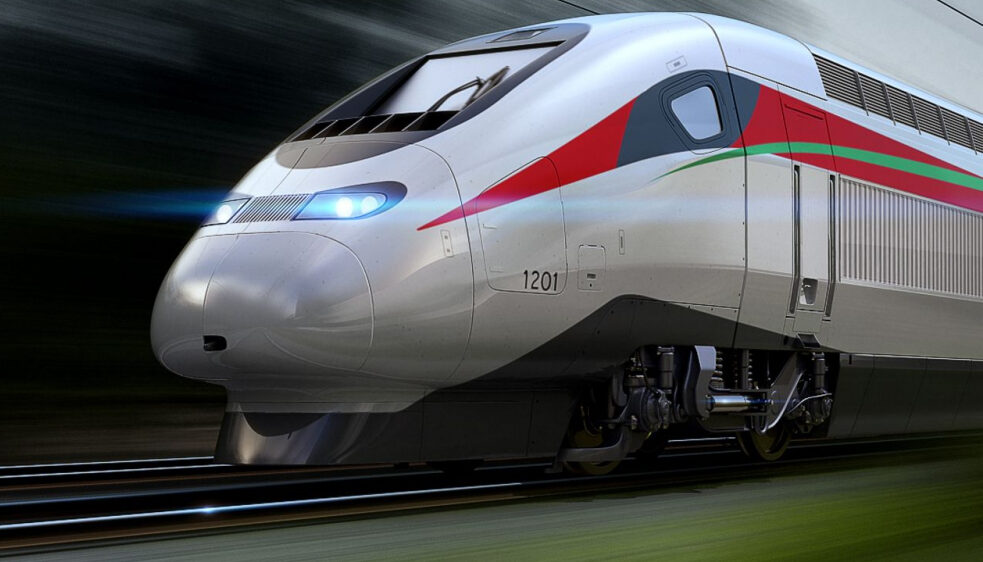
Behind the scenes of Morocco’s future high‑speed train (TGV), a discreet but decisive project is taking shape. The National Railway Office (ONCF) has just launched a call for tenders to connect three electrical substations to the high‑voltage grid as part of the Kenitra–Marrakech High‑Speed Line project. Behind this technical contract, estimated at 104 million dirhams, lies a crucial step to power the future railway infrastructure that will extend high‑speed rail toward the center of the country.
The objective of the contract is to connect three railway substations to the 225 kV network operated by the National Office of Electricity and Drinking Water (ONEE). This operation will ensure the electrical supply for the installations of the high‑speed line, whose operation relies on a heavy and continuous energy infrastructure.
In concrete terms, the work involves creating several overhead high‑voltage power lines linking the future railway substations to already existing electrical stations. Thus, on the Benslimane side, a 225 kV line of about 16 km will have to be built from the Benslimane II station in order to supply substation No. 3. In the Settat region, two overhead lines of about 18 km each will be constructed to connect substation No. 4 to the city’s 225/60 kV station. Finally, in Benguerir, two other lines of about 19 km each will connect substation No. 5 to the local electrical station.
However, the project is not limited to building new lines. Some existing infrastructure will also have to be adapted to accommodate this new system. In Benslimane, for example, a section of a single‑circuit line will be replaced by a double‑circuit line over about two kilometers. Likewise, in Benguerir, certain power lines will have to be relocated over nearly 500 meters in order to free the space needed to connect the future substation.
The schedule set by the specifications remains relatively tight. The contract provides for an overall execution period of 14 months starting from the service order that officially launches the work. This timeframe includes not only the construction of the electrical lines but also the commissioning of the installations and the complete dismantling of the worksite, a step that precedes the provisional acceptance of the project.
Although these works remain largely invisible to the general public, they nonetheless constitute a central piece of the technical system of the high‑speed line. Electrical substations play a key role in the operation of the high‑speed rail network. They make it possible to transform and transmit electricity from the national grid to railway installations in order to power the trains, signaling systems, and safety equipment.
In fact, the electrical connection appears to be an essential step in the construction of the future Kenitra–Marrakech line, which is intended to extend the country’s first high‑speed line, the Tangier–Kenitra High‑Speed Line inaugurated in 2018. While the rails and stations represent the visible part of the project, an entire energy infrastructure is being deployed in parallel to allow trains to run at high speed.
In other words, before the trainsets race at more than 300 km/h between the kingdom’s major cities, the energy that will move them must first be installed. And that begins, long before the trains themselves, with kilometers of electrical lines stretched out in the shadow of the future TGV.