Business
Industrial Area Development : Where Does Morocco Stand ?
The developed industrial land covers a total area of approximately 14,500 hectares, spread over more than 157 zones. This asset will be strengthened by other ongoing and planned projects, covering a total area of about 5,500 hectares. Here is an overview.

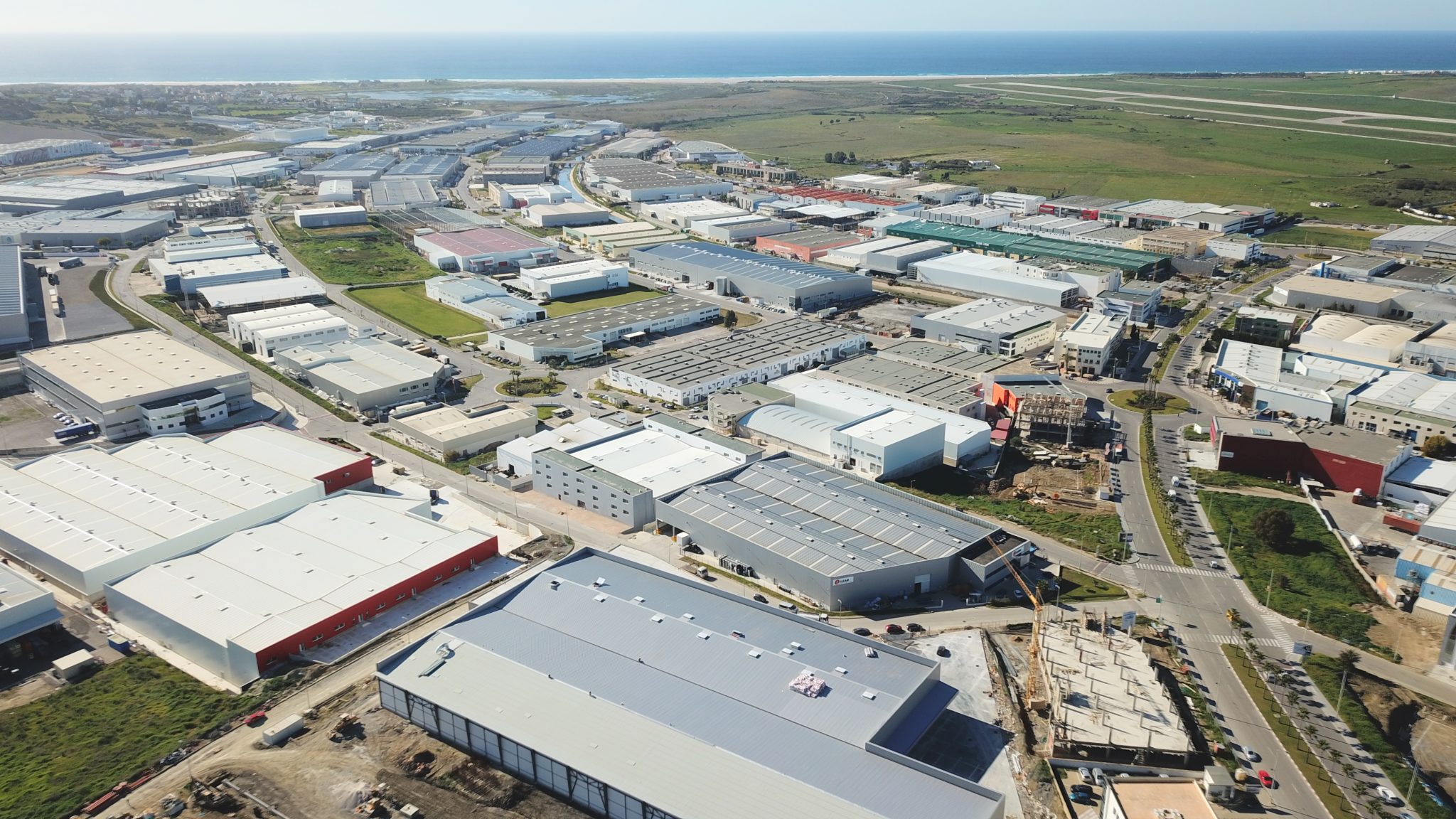
Improving companies’ access to industrial land and infrastructure is at the heart of the Kingdom’s industrial strategy, which positions industry as a powerful lever for emergence.
Indeed, the Ministry of Industry and Commerce frequently reminds that industrial zones play a crucial role in Morocco’s economic and social development, in attracting national and foreign investments, and in export growth.
That said, after several years of implementing industrial strategies, it is legitimate to review Morocco’s performance in developing industrial parks. Beyond what already exists, this exercise also helps to define the portfolio of the latest generation industrial zones under development (projects).
Another important question raised by the topic is: in a context where optimizing public spending is necessary, how is the development of ongoing industrial zones financed?
5,500 Additional Hectares
Asked by “La Vie éco,” Ryad Mezzour’s department provided key answers related to the establishment of industrial parks, now governed by law 102-21, effective early 2023.
The Ministry of Industry and Commerce is clear: the national developed industrial land covers a total area of about 14,500 hectares across more than 157 zones.
According to the ministry, this asset will be reinforced by other projects under development covering 2,400 hectares, plus planned projects over the next five years, estimated at an additional 3,100 hectares.
In other words, industrial land will be increased over the coming years by a total of 5,500 hectares. These efforts aim, among other things, to provide the country with diversified industrial land offers, covering all regions.
This enables different territories to meet the needs of national and international investors.
In line with this, the implementation of industrial zone projects becomes an essential challenge, especially since industrial infrastructure helps reduce territorial disparities.
This is done through reasonable and fair distribution of sustainable industrial zones across the national territory, according to the strengths and specificities of each region.
16 Billion MAD Invested since 2021
Regarding investments over the past five years, it is important to note that since October 2021, the Ministry of Industry and Commerce has supported 64 projects for creating and rehabilitating industrial zones, with a total investment of over 16 billion MAD.
To pool efforts in investment and fund mobilization, and to optimally realize industrial parks, the institution collaborates with many partners, including developers, regional and local councils, and authorities.
Moreover, it supports public and private sector industrial zone project holders through calls for expressions of interest (AMI), to benefit from technical and financial support, notably under Fonzid (Sustainable Industrial Zones Fund).
To give an idea of scale, this financial vehicle grants subsidies that can reach 50% of the total investment amount, capped at 30 million MAD for creation or expansion projects and 20 million MAD for rehabilitation projects.
Modernized Legal Framework
There are significant differences between industrial parks created about twenty years ago and those established more recently, especially since 2010.
Our source explains that newly created industrial zones and industrial acceleration zones are better equipped and generally have an operational management body ensuring management and maintenance.
Some older industrial zones still require upgrades. To maintain and improve their attractiveness, the Ministry of Industry and Commerce and its partners are working to rehabilitate these infrastructures.
Furthermore, regarding planning, marketing, management, and enhancement of industrial parks, one of the most significant advancements in recent years has been the adaptation and modernization of the legislative and regulatory framework related to industrial parks.
Recall that law 102-21 regarding industrial zones (published in the official bulletin in February 2023) and its implementing texts provide for establishing a national plan setting Morocco’s strategic guidelines for industrial land planning.
Additionally, the law requires a general development regulation defining the requirements, standards, and technical specifics related to the development, growth, and marketing of these zones.
Other provisions of the legislative framework include establishing a general management regulation by the developer, which specifies the rules applied for management and maintenance of the industrial zone.
Finally, the law also provides for internal regulations that define rules investors must follow to ensure proper operation of the zone and maintain a favorable environment for all zone users.
Model Zone Inaugurated in Second Half of 2025
In Morocco, one of the latest industrial parks inaugurated (end of July 2025), representing the era of modern industrial infrastructure, is Ahl Loughlam (Sidi Bernoussi), spread over 10 hectares.
Resulting from a partnership between the supervising ministry, the Casablanca-Settat region, Chaabi capital-investment, Millennium Challenge Corporation (MCC), and the Leather Industries Federation (Fedic), this next-generation industrial site mobilized nearly 250 million MAD in investments.
Based on a rental business model (50 ready-to-use industrial units and 40 developable land lots), the industrial park dedicated to the leather and textile sector is a national sustainability model, designed to house a sorting center for waste generated by various industrial units.