Kingdom
In Morocco, Conservatories Are Singing Out Of Tune
Behind the walls of these institutions, the music often sounds off-key: lack of resources, precarious teachers, outdated manuals—the score of culture is being played in a minor key. The Bouznika Forum exposed the flaws of an exhausted cultural system.

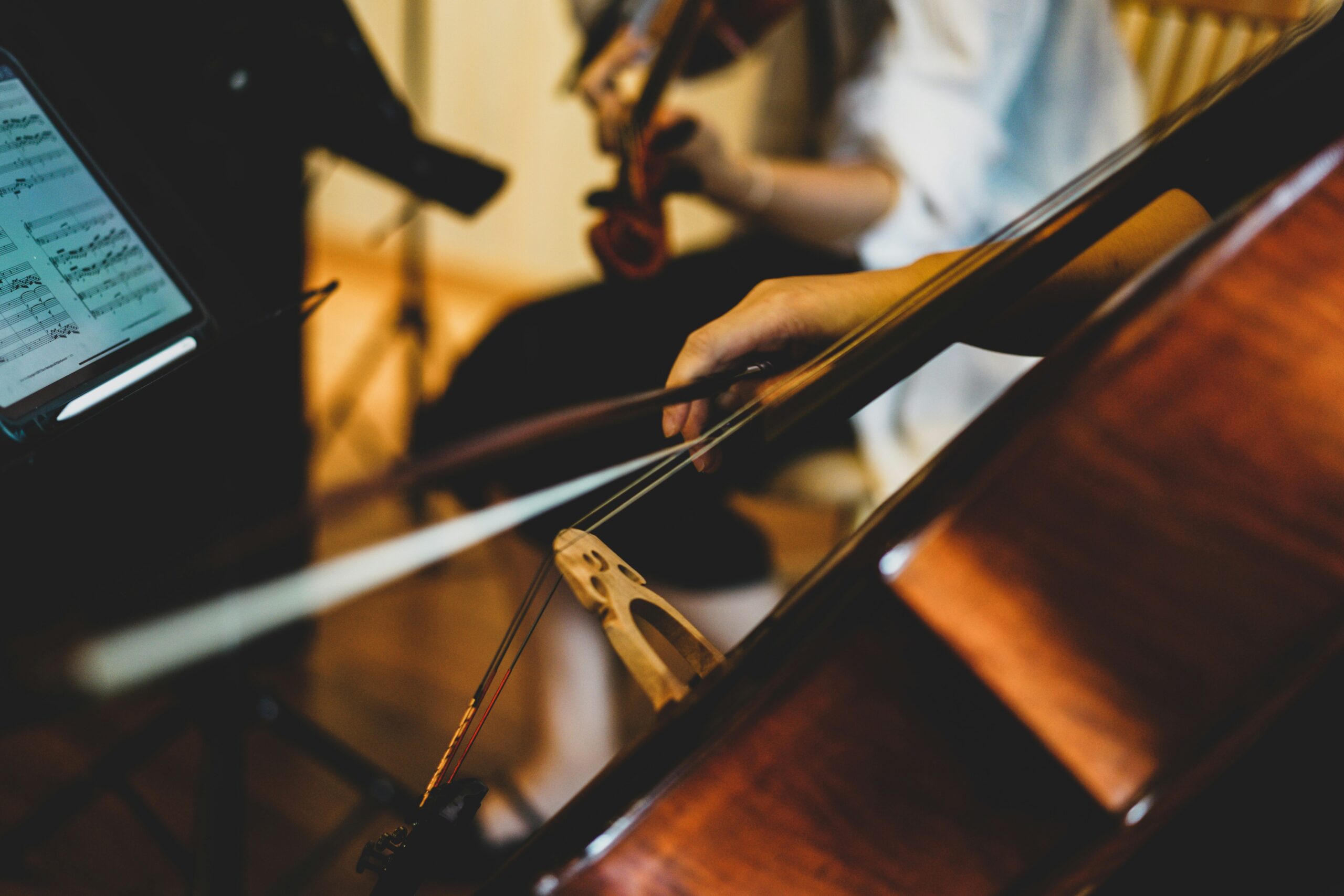
In Morocco, music and dance are not improvised: they are codified, subsidized, and deployed under the benevolent oversight of the Department of Culture, attached to the Ministry of Youth, Culture, and Communication.
The latter oversees a sprawling network of regional and local conservatories, and even a national jewel in Rabat, the Conservatory of Music and Choreographic Arts, a showcase for art that oscillates between tradition and modernity.
But beware, the picture is not entirely in a major key: some institutions are entrusted to local authorities through hesitant partnerships, and join the orchestra of private institutions, these small entrepreneurial groups that fill the gaps in the public system.
This whole ensemble is meticulously organized, in accordance with Decree No. 2-19-1078, promulgated on 23 Rajab 1441 (February 26, 2020), which outlines the framework for artistic training meant to shape musicians, dancers, and collective choreographies.
The stated mission? To prepare the next generation for careers in performing arts, while keeping an eye on Morocco’s vocation: this mythical crossroads of civilizations, where Africa, the Arab world, and Europe brush against, clash, and enrich each other in a mix of Andalusian modes, Gnawa rhythms, and contemporary steps.
On paper, it is idyllic. In reality? An average of 18,000 students per year flock to these temples of notes and gestures—a figure that flatters but masks the discord. Behind the music stands, 85 tenured professors oversee the work, supported by an army of 486 part-time instructors, these intermittent keyboard and barre workers, often in precarious positions.
And the graduates? Barely 160 per year, a drop in the ocean of raw talent bubbling beyond the walls. A network of 38 institutions in total (1 national, 25 local, 12 regional), scattered from the north to the Sahara, to capture this cultural effervescence. But as often in the Kingdom, the official score struggles to keep up with the real tempo: lack of resources, peripheral deserts, and a colonial legacy that still scratches the strings.
Blues of the Conservatories
Imagine: you teach music theory to a host of passionate students, but your hourly wage? Between 60 and 120 DH, barely enough to buy a mint tea. And for the lucky ones, it’s forced e-learning, pixels versus tradition. On the occasion of the Forum of Music and Choreographic Art Conservatories, recently held in Bouznika, Moroccan teachers dropped the score.
Nearly 300 of them, from across the Kingdom, unpacked their grievances under the neon lights of the Moulay Rachid Complex. A glaring lack of music and dance teachers outside the Casablanca-Rabat axis, a colonial manual that reeks of mothballs…
This is a first, and it hits hard. Organized by the Ministry of Youth, Culture, and Communication, this forum was meant to be a collective symphony: exchanges, workshops, projections toward the future. But very quickly, the melody turned to blues. “We are intermittent performers without the performance,” says Amina, a violin teacher in Fez, her eyes distant.
At 45, she earns 80 DH an hour for sporadic lessons. “With that, I supplement my minimum wage by giving private lessons. The rest of the time? I fiddle with Zoom videos for students in Oujda or Jerada. Is this what artistic education in Morocco looks like in 2025?”
Her testimony, like that of dozens of others, resonates like an amplified echo: across all the country’s conservatories—most under ministerial oversight—permanent positions are a rare commodity. The result? Cities like Aït Melloul or Dchira El Jihadia operate at a sluggish pace, dependent on remote lessons that turn dance into virtual mime and music into compressed MP3 files.
Notes of Precarity
Precarity is the refrain. A 2023 decree did raise course instructors’ hourly compensation from 68 to 120 dirhams, a crumb in the face of soaring inflation. And the promises of increases to 200 dirhams for third-cycle degree holders?
They float in the air like a wrong note. “They talk about modernization, but with what budget? The conservatories in the interior are empty shells,” thunders Karim, deputy director of an institution in Khémisset. He manages 150 students with five part-time teachers. “In dance, it’s a catastrophe: not a single qualified choreographer within 200 km.
Kids learn hip-hop on YouTube instead of traditional ahwach. It’s a loss of collective memory.” The lack of teachers hits these forgotten regions hard, where culture is not a priority compared to unemployment and school desertification.
Artistic education, the poor parent of the system, languishes with meager budgets—while the Ministry of National Education snubs “non-essential” subjects. But the highlight of the show is the debate over the single textbook.
For decades, music theory has been taught with “one” book: that of Jules Arnaud, a colonial relic from the 1930s, full of rigid staves and Franco-French exercises. Obsolete? That’s an understatement. “It is not normal that we continue to use a single manual for teaching music theory, that of Jules Arnaud, dating from the colonial era,” fumes a forum participant, quoting word for word the heated debates in Bouznika.
For purists, it’s a chain to break: decolonize the score, integrate Arab-Andalusian modes, Gnawa rhythms, or Berber scales. “Why force our students to read music like little French children of the past? Let’s modernize, yes, but in Arabic, in Darija, with interactive apps that speak to our history,” argues Fatima, an educator in Kénitra.
On one side, the modernists: digitize, diversify, adopt open-source tools to attract youth. On the other, the decolonialists: tear out these imposed roots, rewrite music theory with a Moroccan flavor, without fear of hybridity.
Technical modernization or deep decolonization? The teachers, these precarious performers, await the answer. In the meantime, they rehearse solo, microphone in hand, hoping for an encore. What if we listened, for once, to the real symphony?