Kingdom
How to Bring Operators Closer to the Technologies of the Future
Through various innovative solutions, the National Office of Agricultural Advisory Services and Mohammed VI Polytechnic University aim to encourage operators to adopt digital tools in their agricultural practices, in order to better adapt to climate change. Details.

Faced with the water stress severely affecting Moroccan farmers, technology is emerging as an indispensable lever to adapt agricultural practices to extreme climatic conditions. This theme was widely discussed during an international conference organized on November 8th in Benguerir by the Al Moutmir Initiative.
Conscious of this challenge, the National Office of Agricultural Advisory Services (ONCA) is developing several initiatives to strengthen the resilience and productivity of smallholder farmers. As an intermediary between the Ministry of Agriculture and farmers, the Office disseminates the results of scientific research and adapts them to the real needs on the ground.
Interviewed on the sidelines of the event, the Director of Operations at ONCA, Majda Boubnan, explained to us that the Office ensures the link between laboratories and farmers, specifically targeting smallholders who often lack means and access to information.
“To facilitate the adoption of innovations, we use several transfer methods, including ‘farmer field schools’. This system consists of testing a new technology directly on a farmer’s plot, in the presence of his neighbors, so that they learn by observing and practicing in their own conditions,” she stated.
Digitalization and Smart Irrigation
No-till farming perfectly illustrates this approach, a technology stemming from research that improves yields while preserving soils through the maintenance of organic matter.
“We are also working on disseminating new varieties, particularly local ones, developed by research centers. Our role is to demonstrate their effectiveness in the field to encourage their adoption,” she added.
After the era of simply deploying drip irrigation under the Green Morocco Plan, ONCA is moving to a phase of optimized irrigation thanks to advanced digital tools.
A project in collaboration with the World Bank now sends farmers personalized recommendations via SMS or WhatsApp on when to start irrigation and the volumes of water to apply.
“This system combines data from satellite imagery, connected weather stations, and sensors installed on plots. We started in pilot areas like the Gharb and are currently deploying this approach in Souss-Massa, then in the Oriental region,” Boubnan detailed.
Practical Cases to Build Trust
Of course, the success of these innovations depends on the involvement of the main stakeholders: the farmers. Hence the importance of practical cases and visible results to build trust and foster the adoption of technologies.
“That’s why we rely on practical demonstrations and visible results on their own land or their neighbors’. This pedagogy by example is the best lever to build trust and encourage changes in practices,” the expert affirmed.
Ultimately, the final goal, according to Boubnan, is to support the settlement of farmers and allow them to live decently from their work, even in a context of drought. “When agricultural activity becomes too difficult, many migrate to large cities, where they often find themselves destitute. The objective is therefore to provide them with the means to live decently from their work and to remain in their rural environment,” she emphasized.
Asked about ONCA’s future 2026-2030 strategy, Boubnan assured that it is resolutely focused on innovation and digitalization, strengthening cooperatives, and modernizing agricultural advisory centers to meet the sector’s new challenges.
“It will be about injecting new momentum into the current strategy, accelerating digitalization, strengthening support for cooperatives, and transforming agricultural advisory centers so they can meet the sector’s new challenges.”
DICE UM6P: Advanced Technologies for Farmers
In the field of agricultural technologies, UM6P is also developing numerous digital plots through its Digital Innovation Center for Excellence (DICE).
Launched in 2022, this digital innovation center brings together several specialized laboratories covering the entire spectrum of digital transformation: artificial intelligence, embedded systems, digital fabrication (Fab Lab), Factory Lab, mechanical design and prototyping, up to small-series production.
“DICE is the result of merging several entities that already existed within the university. These laboratories were brought together to create a single center, dedicated to innovation and the production of advanced technological solutions,” summarized its Managing Director, Rafiq Alami.
One of its flagship innovations: “Daman Samad”. Developed by the deeptech startup SenseThings, it enables the traceability of fertilizer bags via smart packaging and a mobile application, which provides product information and educational content. Over one million bags have already been tracked in a single campaign.
For Alami, technology can strengthen agricultural resilience at every stage. From planning to marketing, including water management and production, “provided it is developed with farmers and field agents.”
UM6P: Strategic Projects in the Pipeline
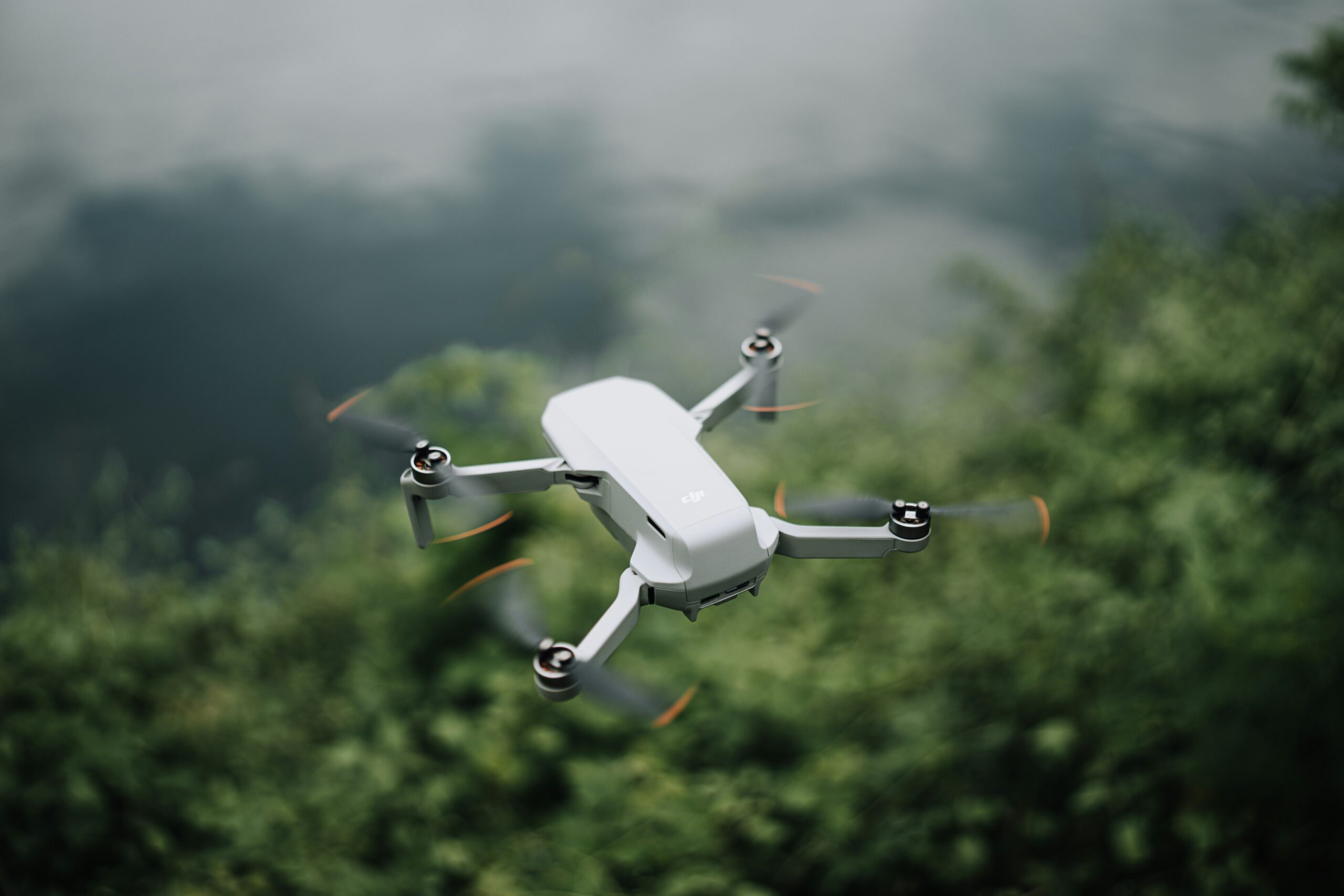
Among the ongoing projects of the Digital Innovation Center for Excellence (DICE): a no-till seeder machine, ecological monitoring solutions, sensors to measure plant water needs, as well as an innovative atmospheric water harvesting device.
Within the galaxy of UM6P startups, AgriNext is also found. By relying on IoT sensors and AI-powered analytics, the company optimizes irrigation management, which significantly improves crop yield and sustainability across smallholder farms in Africa.