Kingdom
House of Representatives: Justice Committee Approves Commercial Code Bill
This text introduces new provisions to provide the flexibility required in financial transactions, particularly among merchants, in order to strengthen legal security and improve the efficiency of the financial system.

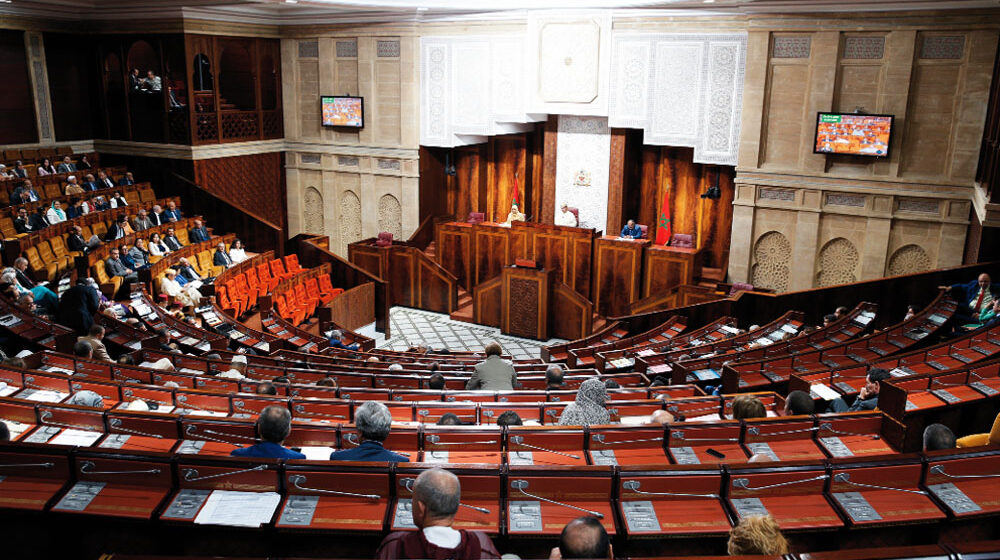
The Justice, Legislation, Human Rights and Freedoms Committee of the House of Representatives adopted on Wednesday Bill No. 71.24 amending and supplementing Law No. 15.95 forming the Commercial Code, submitted by the House of Councillors for a second reading.
The bill, which was subject to four amendments concerning two articles, received 9 affirmative votes, 5 negative votes, and zero abstentions.
Presenting the bill, the Minister of Justice, Abdellatif Ouahbi, indicated that this text aims to establish preventive justice by making the necessary data available to inform the parties involved and to strengthen the preventive role of Bank Al-Maghrib by controlling and centralizing data relating to payment incidents, as well as by returning drawn checks and bills of exchange.
The main thrusts of this legislative reform lie primarily in reducing the use of cash in financial transactions in order to increase transparency and combat money laundering and tax evasion, while generalizing the use of commercial paper, the goal being to achieve financial inclusion and economic integration, explained Mr. Ouahbi.
The bill aims to establish penal settlements in this area at all stages of the criminal procedure, including the penalty execution phase, he emphasized, specifying that “the payment or withdrawal of the complaint leads, as the case may be, to the suspension or dismissal of the public action” and that “if the payment or withdrawal occurs after the issuance of an irrevocable judicial decision, it terminates the effects of that decision.”
According to the minister, the provisions of the bill provide for the decriminalization of this offense when the acts involve spouses, ascendants, or first-degree descendants, as well as the establishment of the principle of proportionality between the gravity of the criminal act and the severity of the penalty, now set between 6 months and 3 years instead of 1 to 5 years previously.
Furthermore, he added, a distinction has been made between cases of lack of provision or failure to maintain provision and other cases, such as the forgery or counterfeiting of a check.
Mr. Ouahbi also indicated that specific rules have been established for bills of exchange drawn on a banking institution in order to increase confidence in this document by strengthening the protection of the beneficiary.
Likewise, under the new bill, the banking institution plays a positive role from the issuance of the book of bills of exchange in the prescribed form, through the obligation to verify the drawer’s status regarding payment incidents before issuing the said book, to the possibility of recovering these books in case of repeated payment incidents, he stated.