Kingdom
Hicham Benohoud, the Teacher Who Detonates “the Classroom”
Portrait
Here is a teacher who turned his “classroom” into a theater of the absurd, bound his students with tape and cardboard, and twenty-five years later, he swept the Photo Book of the Year Award at Paris Photo. Portrait of a quiet saboteur who has just gently blown up the conventional wisdom of contemporary art.

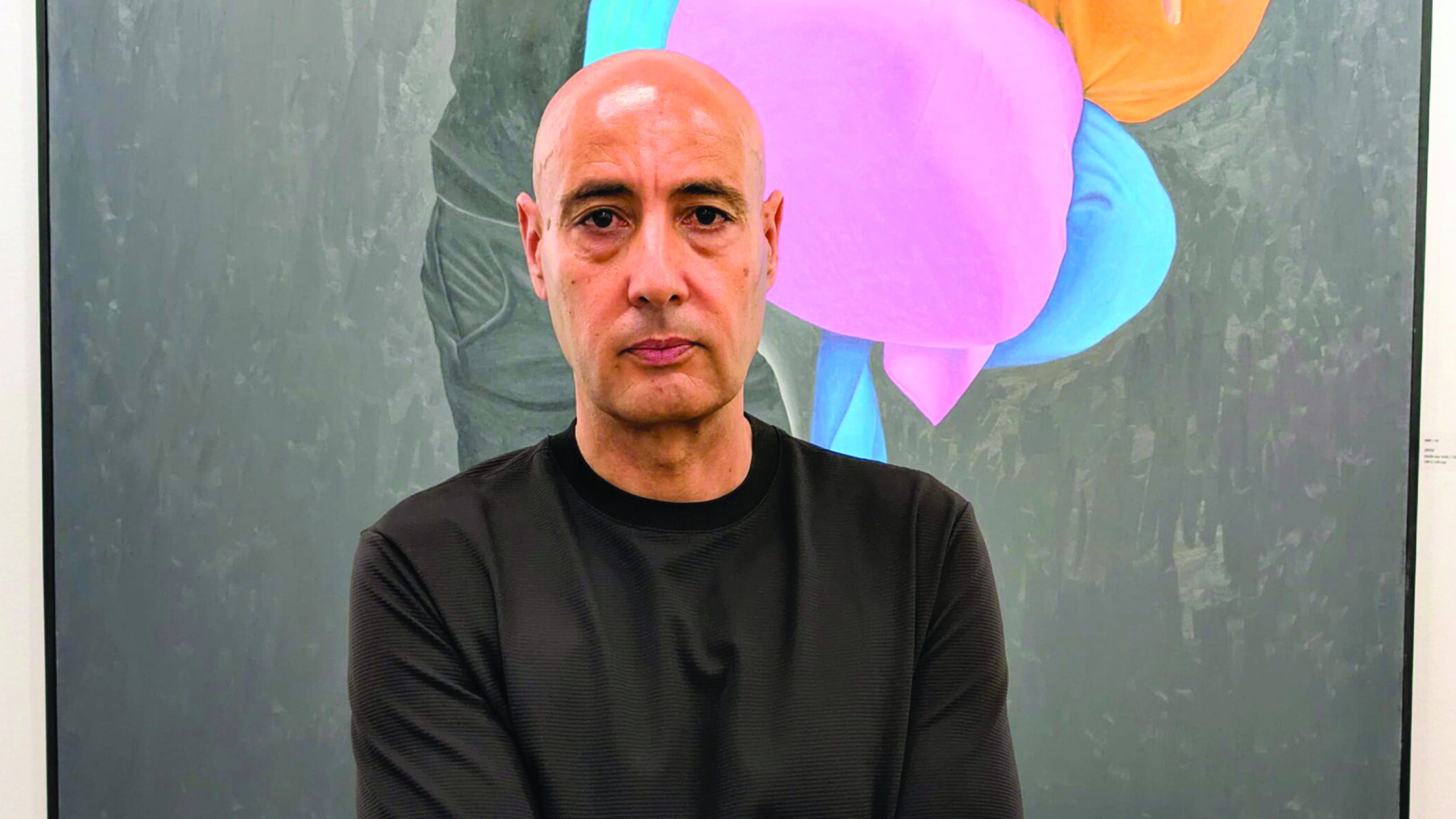
There are artists who stroke the world the right way. And then there is Hicham Benohoud, who arrives with a cutter, a roll of tape, and a ’90s school lamp to remind you that childhood, in Morocco as elsewhere, can be a dungeon disguised as a blackboard.
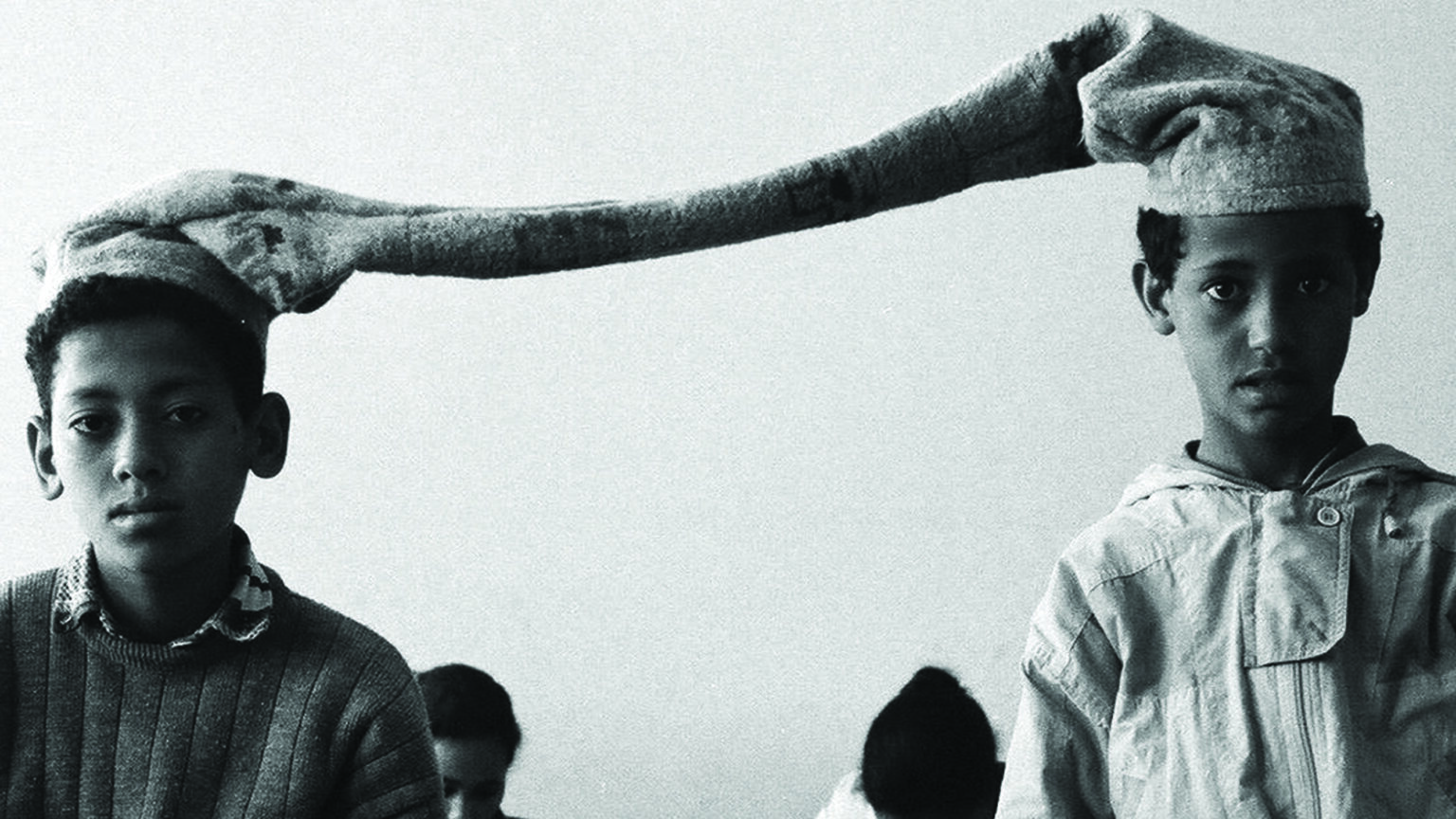
At 58, the man from Marrakech has just swept the Photo Book of the Year Award at Paris Photo–Aperture for “La salle de classe” (Loose Joints), a tome of images taken between 1994 and 2002 in a public middle school where he taught art.
Kids bound, caged in cardboard, heads stuck through a table, all under light spat out by a tired, flying-saucer lamp. Absurd, funny, chilling. Exactly the cocktail we love.
Rewind. Hicham is born in Marrakech, baccalaureate in visual arts, regional teacher training college, he’s slotted in as a teacher. Very quickly, he suffocates. “The teaching profession quickly seemed irreconcilable to me with my calling as an artist,” he admits.
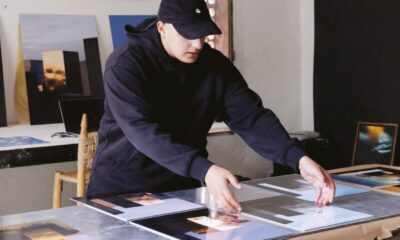
The Moroccan education system of the ’90s? A factory for docile bodies. He decides to sabotage the machine from within: a makeshift darkroom, sketches the night before, students picked at random (“I take the ones who are closest and, by my own admission, I do not look at them”).
The others continue their math exercises. The kids, they love it: finally, permission to climb on the table or lie on the floor. Christian Caujolle speaks of “a playful and existential critique of postcolonial identity.” Translation: school as a metaphor for Morocco as a whole.
Because for him, being born and living in Morocco is an improbable “experience.” “It is the country, par excellence, of contrasts and contradictions.
Even before leaving my country late (at the age of thirty-five, but I have returned since), and confronting the culture shock, I had felt a malaise since my childhood that I did not understand. Something isn’t right.
Rigidity of bodies and minds. Who can claim to hold the truth? Who can think their culture is the best? Who can accept others meddling in their private life, in their beliefs, in their intimacy? Individual freedom is lacking in our dear country.
Before seeing ‘the light of day,’ the molds are already shaped to swallow us, shape us, sculpt us, identically. They have the same shape, the same color, the same material, the same smell. Molds made in Morocco. Machined bodies. Bodies without bodies.
The body, precisely, is one of my ‘artistic’ preoccupations. I show bodies in the image of my society. Hindered bodies. It’s hardly any better in the West. It’s just different.”
In 2002, he drops everything, heads to Paris and the VU gallery. Pompidou, Tate Modern, Dakar Biennale, the whole deal. But the virus doesn’t let go of him. He moves to self-portraiture: stones on his skull, face strapped, head in a hole (“The Hole”), black silhouettes dancing against garish backgrounds (“Utopia”).
“The black of the form (the silhouette) acts like a false stain on the background. That’s what I feel in my dear country. I have always felt different from my surroundings and a stranger to my compatriots. The societal project does not suit me. I don’t see myself in it. I did not participate in its making. I endured it. I do not have the right to criticize it, to question it. I have to MAKE DO. Who can dispute it? I am merely noting the damage and taking the hit, the hits.”
Art, however, remains his hideout. “Art (he says, trembling) is my way of revealing what is not seen or what is not wanted to be seen. It is only by expressing myself that the ‘almagichimie’ operates, and even then one must have the eyes to notice it. My body or/is that of others. Better to whisper than to shout. Anyway, the voice no longer carries. Who is there to hear it?”
And when you talk to him about power in the image: “Expressing myself as I do surprises even me. I cannot manage to get enough distance despite my thirty years of agitation. Power relations are both exercised and reversed. Who directs whom? The model or the photographer? The photo, which is supposed to be the subject, becomes a pretext to see beyond. What is not seen. The photo I produce gives more to feel and imagine than to see. The shot is brief, but the process is time-consuming.”
Between Casablanca, Marrakech, and Paris, he navigates like a luxury stowaway. “I travel out of necessity. I breathe out of necessity. I live out of necessity. I watch with my eyes closed. I learn and nourish myself from my own experience and not that of others. I disregard the art world. I fight. I struggle.” He paints, cuts, hybridizes photo and canvas, makes labels ridiculous.
“To fight. With the means at hand. Take what is there and invent what does not exist. Try, agitate, act. Act, agitate, try.” Repeated twice, like the mantra of an obsessed man.
Hicham Benohoud?! He is a discreet saboteur, a Maghrebi Buster Keaton who takes poisoned cream pies to the face and stares at us fixedly, without blinking, waiting for us to finally understand that the joke is on us.
His prize at Paris Photo? A slap in the face of the conventional wisdom of contemporary art. And proof that, sometimes, the most violent form of protest comes with the tightest smile.