Business
Artist Residencies: Housed, Fed, Valued?
Between creative time, production costs, ownership of works and entry into galleries, artist residencies constitute an essential link in creators’ careers. But behind this support, funding models remain highly variable and access to the market remains uncertain.

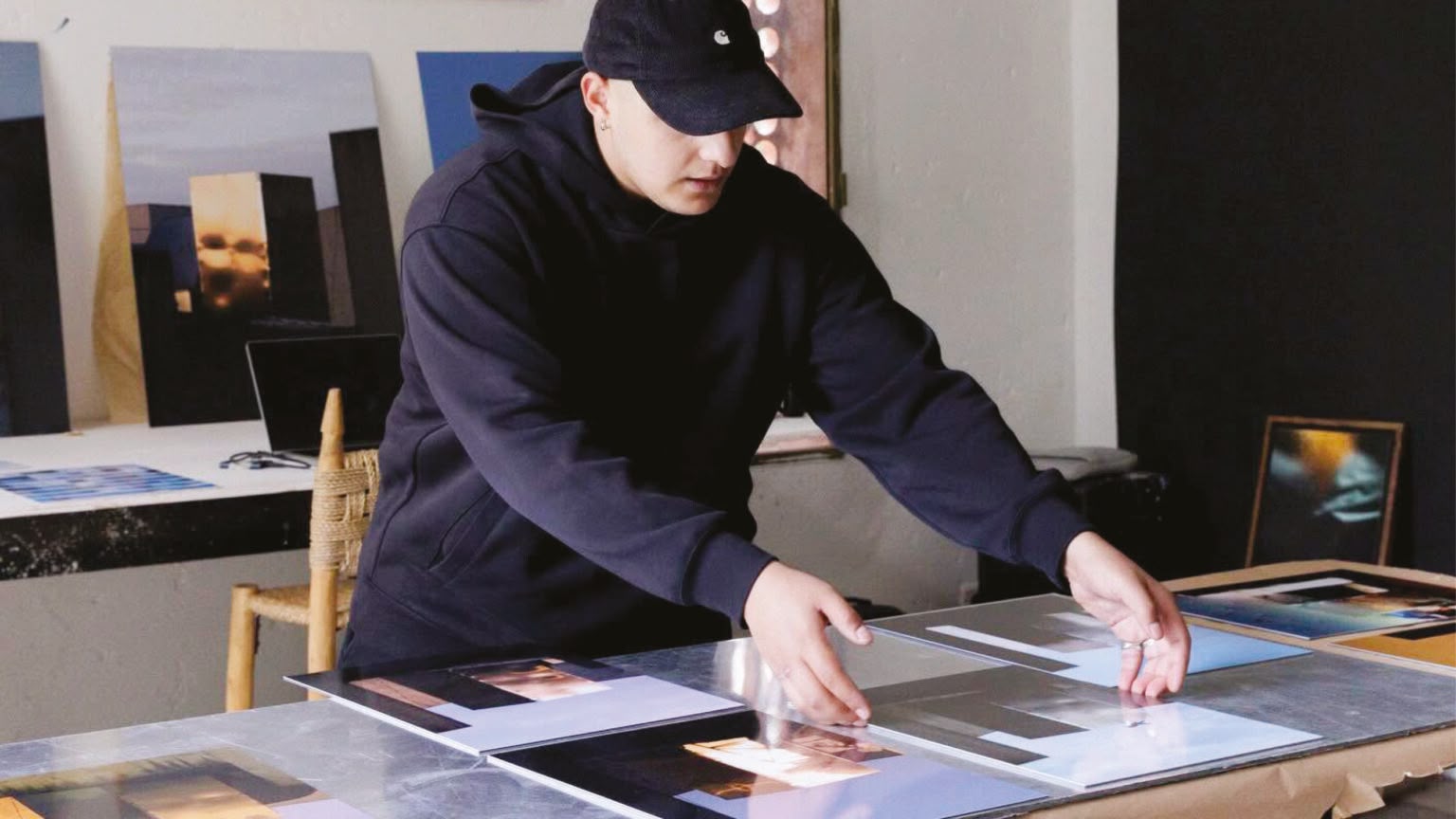
A studio, time, materials, sometimes accommodation and even a per diem. For an artist, a residency can offer what creation often lacks most: time to work without immediately having to think about rent, commissions or sales.
But behind this period devoted to creation lies another, much more down-to-earth reality. Who finances the production? Who owns the work once it is completed? What happens to it after the residency? And above all, what place remains for the artist when the creation enters the commercial circuit?
There is no single model. “It all depends on the residency,” sums up Yasmine Laraqui, cultural entrepreneur, artist, author and founder of the Casablanca Residency.
Some organizations finance both the creative period and the production, while others can only cover accommodation and working conditions.
Additional funding can also be mobilized depending on the projects, notably through foundations or associations. In these cases, she explains, production budgets can allow the artist to work “peacefully.”
The difference is particularly visible when it comes to paying for materials, the studio, transportation or final production.
In independent and self-funded residencies, “generally, it is the artists” who cover these expenses.
The involvement of a foundation, association or another partner can, conversely, considerably change the equation by providing a production budget.
This diversity of arrangements is also highlighted by Hasnae Lachgar, artist, curator and artistic director. Some residencies offer only a place to live and work, while others add production costs, transportation or even a per diem.
Others directly provide a grant, leaving the artist or professional to allocate this amount among their different expenses. “There are as many models as there are residencies,” she stresses.
Checkmate
Funding creation immediately raises a second question: that of ownership of the work. Here again, the rules vary according to the organizations and contracts.
Lachgar thus distinguishes copyright, which remains attached to the artist, from the physical ownership of the work. Some organizations leave the latter entirely to the creator, while others may recover part of it when they have financed the production.
In the case of the Casablanca Residency, the principle is clearly established. “The work that was made at the residency absolutely belongs to the artist,” Laraqui states. The contract provides that the artist retains their copyright “from A to Z.”
Lachgar, for her part, cites her recent experience at Résidence Méditerranée, organized by Fræme, Friche la Belle de Mai and the Institut français. Alongside artist Karim Rafi, she says she benefited from support covering the visa, assistance, accommodation, per diem, studio and production.
In this configuration, both physical and intellectual ownership remained with the artist and the curator.
But a residency does not necessarily constitute the final point of the work. It may only be one stage. “The residency provides the conditions for creation, not the trajectory of the work,” Lachgar sums up.
Depending on the terms of the contract, the work may follow its artist, remain on site or join a gallery.
For Laraqui, the purpose of a creative residency is precisely to allow the artist to leave with work sufficiently developed to present it elsewhere. A finalized portfolio, representation by a gallery, exhibition in other institutions: the work can thus “live again afterwards in other cultural places.”
The residency can therefore constitute a showcase. But it in no way guarantees entry into the art market. Galleries can discover artists directly in their studios, during a presentation or through social media. The latter now play an important role in discovering new profiles, particularly among young artists, Lachgar observes.
Laraqui describes a comparable process. Residency organizations organize exhibitions, communicate about the works produced and maintain their visibility on social media. Galleries can also follow an artist’s work while they are developing their project.
The question then remains of a difficult-to-define boundary: when does a work become marketable? For Laraqui, the answer rests first and foremost with the artist themselves. “The work becomes marketable as soon as the artist has decided that they have finished.” Once the final form has been determined, it can enter different markets.
In practice, however, this entry also depends on the ecosystem. Lachgar considers that a work theoretically enters the commercial circuit when it joins galleries or fairs. In practice, sufficiently strong interest, including on social media, can already trigger this dynamic.
Shared Value
This is where the economic reality becomes most apparent. Income from a sale is generally shared between the artist and the gallery, according to varying arrangements.
Lachgar frequently mentions 50/50 splits, sometimes 60/40, with no fixed standard, as the terms can be negotiated at the beginning of the contractual relationship. Laraqui describes several models.
Some commercial galleries may take 50% of the sale price. Others operate with commissions of 20 to 30%. There are also spaces rented directly to artists, where the artist pays for the space but does not pay a commission on sales.
At the Casablanca Residency, the announced commission is 20%. This mechanism helps explain the fundamental limitation of residencies: they can reduce the cost of creation, improve working conditions and produce more developed works, but they do not automatically create a market around these works.
Laraqui is categorical: “We would like to be an economic springboard for artists,” but she believes that this is not yet the reality of the Moroccan market. For her, the market remains small and the contemporary art ecosystem is not sufficiently mature.
For residencies to truly become an economic springboard, there would need to be more galleries, art spaces, cultural centers, competition and more regular programming. For now, she concludes, residencies primarily constitute “a support mechanism for creation.”
Lachgar provides an important nuance. For her, the two dimensions can coexist. Some artists leave a residency with a series that can potentially be sold. Above all, being able to create “without the anxiety of making ends meet” already represents an economic lever.
In this regard, she cites the Norwegian model of Garantiinntekt, designed to compensate for the low incomes of professional artists, and later transformed into long-term work grant schemes. The logic remains the same: giving artists the material means to fulfill their role as witnesses of their time.
Ultimately, the residency does not yet sell the work. It buys something more difficult to measure: time, working conditions and the possibility for the artist to push an idea through to its final form.
The real question, therefore, may not be whether a residency “keeps an artist alive,” but whether the ecosystem that comes afterward is strong enough to transform this creative time into a career, visibility and, ultimately, income. In Morocco, between the studio and the gallery, this chain still needs to be consolidated.