Kingdom
Guelmim-Oued Noun: The new frontier of development
Propelled by the major projects of the New Development Model for the southern provinces, the territory is accelerating its transformation. Sustainable tourism, the blue economy, renewable energies, strategic infrastructure and openness to Africa shape the face of a region that aims to become one of the Kingdom’s new growth engines.

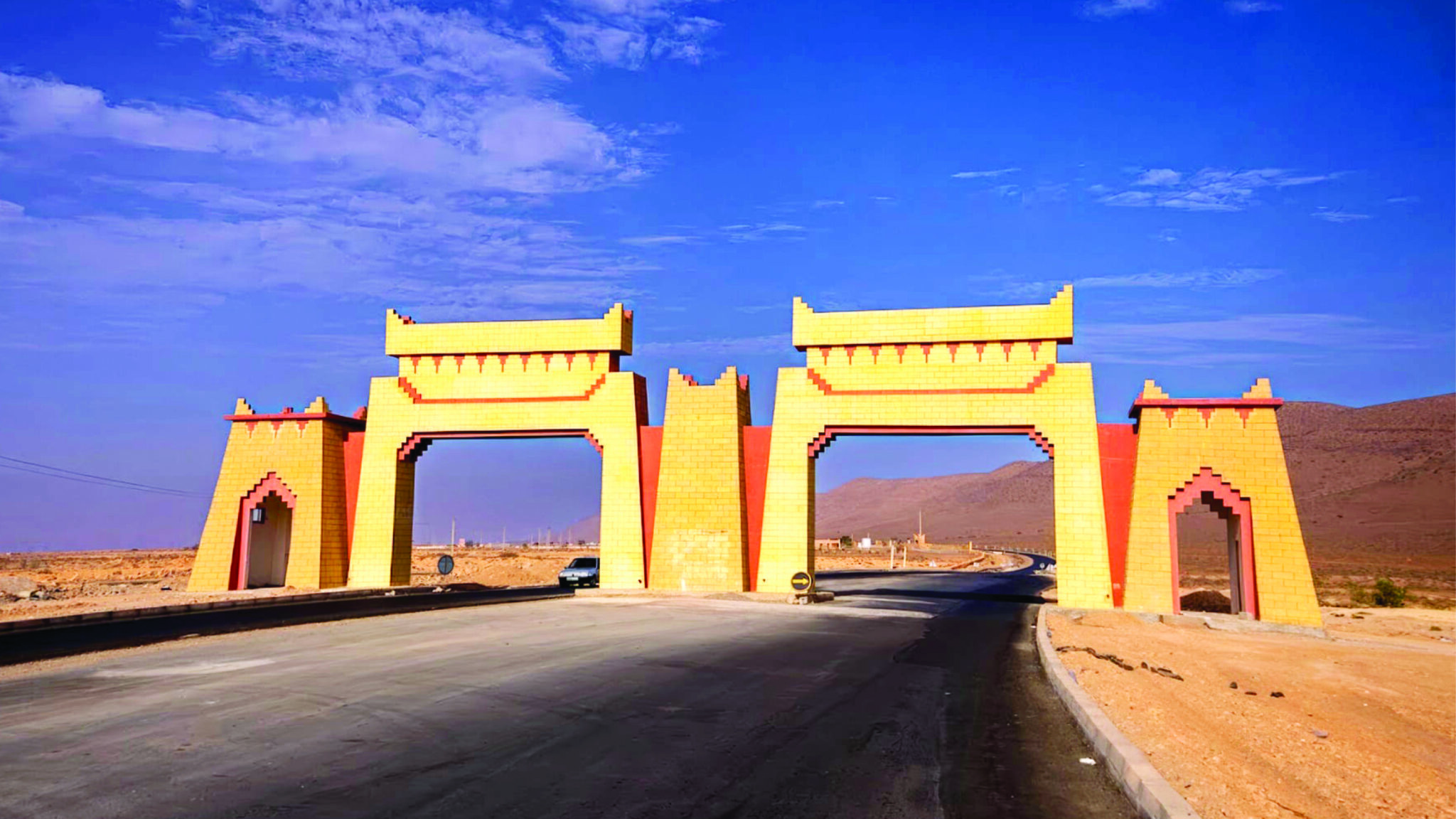
At the crossroads of Saharan routes, Atlantic corridors and the Kingdom’s major transformation projects, the Guelmim-Oued Noun region is scaling up.
Long identified as the gateway to the Sahara, it is now asserting itself as one of Morocco’s most promising territories, combining natural wealth, cultural heritage, economic potential and strategic vision.
Spread over more than 58,000 km² and endowed with 285 kilometres of Atlantic coastline, the region brings together the provinces of Guelmim, Sidi Ifni, Tan-Tan and Assa-Zag.
Its identity was built over the centuries around the commercial exchanges linking sub-Saharan Africa to the north of the Kingdom. The former caravan city of Noul Lamta, the trans-Saharan trade routes and nomadic traditions have shaped a territory where openness and mobility remain strong markers today.
That history now feeds an ambition turned toward the future. The region fully benefits from the momentum driven by the New Development Model for the southern provinces, launched in 2015 under the initiative of His Majesty King Mohammed VI.
Equipped with a budget of more than 77 billion dirhams, this program has enabled the emergence of modern infrastructure and a new vision for territorial development.
For Mbarka Bouaida, president of the Regional Council of Guelmim-Oued Noun, the region today has all the assets to become a reference territory.
“Long known as the gateway to the Sahara, the Guelmim-Oued Noun region constitutes the cornerstone of Saharan Morocco”, she stresses. She recalls that the 2021–2027 Regional Development Plan aims notably to make the region “a welcoming land for renewable energies and green hydrogen”, while consolidating traditional sectors such as fisheries, agriculture, sustainable tourism and crafts.
Connected to major corridors
This ambition relies on an exceptional geostrategic position. Located at the crossroads of exchanges between the north and south of the Kingdom, the region is directly connected to major trade and energy corridors oriented toward West Africa.
The Tiznit–Dakhla expressway, nearly 300 kilometres of which run through its territory, strengthens its logistical integration and economic attractiveness. The region is also concerned by several structuring projects at the continental level, notably the Nigeria–Morocco gas pipeline and the Atlantic Initiative for the Sahel states.
But Guelmim-Oued Noun’s main asset probably lies in the exceptional diversity of its natural resources. Between desert, ocean, mountains and oases, the territory offers a concentration of landscapes unique in Morocco. This richness is the foundation of an emerging sustainable tourism sector.
From the spectacular beaches of Sidi Ifni to the wild expanses of White Beach, from the oases of Assa to the reliefs of the Anti-Atlas, the region has considerable potential to attract lovers of ecotourism, water sports, Saharan tourism and cultural discovery.
Projects for ecocampings, bivouacs and ecolodges respond to a growing demand from travelers seeking authentic and immersive experiences.
Cultural heritage strengthens this attractiveness. In Tan-Tan, the famous Moussem inscribed on UNESCO’s list of Intangible Cultural Heritage perpetuates nomadic traditions through equestrian arts, Hassaniya poetry and ancestral know-how.
In Assa, the ksours and oases tell centuries of adaptation to aridity. In Sidi Ifni, the distinctive architecture inherited from its history and its openness to the Atlantic provide a unique setting for seaside tourism.
Beyond tourism, the blue economy is another major lever for development. Thanks to its 285 kilometres of maritime frontage, the region benefits from particularly fish-rich waters and remarkable biodiversity.
The ports of Tan-Tan and Sidi Ifni play an essential role in national fishing activity. Marine fishing is already a leading economic pillar. However, the most promising prospects concern aquaculture.
The National Agency for the Development of Aquaculture has identified 24 sites distributed between Sidi Ifni, Tan-Tan and Aglou, representing more than 5,000 exploitable hectares for shellfish farming, fish farming and seaweed cultivation. This orientation allows the region to position itself on future markets related to food security and the sustainable valorization of marine resources.
Infrastructure is modernizing
At the same time, Guelmim-Oued Noun intends to become a major player in the national energy transition. Its exceptional sunshine, regular winds and vast available spaces make it one of the most favorable territories for the development of renewable energies.
The Chbika site, near Tan-Tan, has thus been selected under Morocco’s green hydrogen offer to host projects combining solar energy, wind energy, seawater desalination and green hydrogen production intended for export.
The region is already attracting large national and international groups. Consortia specialized in green hydrogen, energy infrastructures and innovative industries are multiplying investment announcements. This dynamic contributes to the creation of a genuine industrial ecosystem oriented toward the technologies of tomorrow.
To accompany this transformation, infrastructure is rapidly modernizing. The airports of Guelmim and Tan-Tan are strengthening the territory’s connectivity.
The port of Tan-Tan is the subject of a major modernization program, while a new port intended to support exports linked to renewable energies is under study. The desalination plants of Sidi Ifni, Guelmim and Tan-Tan also help secure the water resources necessary for economic development.
The region is also investing in human capital. Universities, specialized institutes, vocational training establishments and a future city of trades and skills are preparing the competencies that emerging sectors will need.
Training already covers the fields of tourism, fisheries, the blue economy, technologies, mining, energy and logistics.
For Mohamed Assouss, general director of the Regional Investment Center of Guelmim-Oued Noun, this dynamic confirms the region’s entry into a new phase of its development.
“We are not waiting for the future: we are building it, project by project, with those who believe in the potential of this exceptional territory”, he says. In 2025, nearly 15.4 billion dirhams in investments were validated, representing more than 6,700 planned jobs.
Through this multidimensional transformation, Guelmim-Oued Noun is no longer seeking only to enhance its natural resources or its heritage.
The region now aims to become a platform connecting Morocco, Africa and the major global economic transitions.
A territory where history and innovation meet, traditions and technologies, desert and ocean, and which, more than ever, looks to the future.