Influences
Film: “The Odyssey” of Moroccan Technicians
If the Moroccan landscapes give “The Odyssey” the scale of its epic breath, it is the women and men behind the scenes who give it body. A highly skilled workforce that has become one of the pillars of international film shoots.

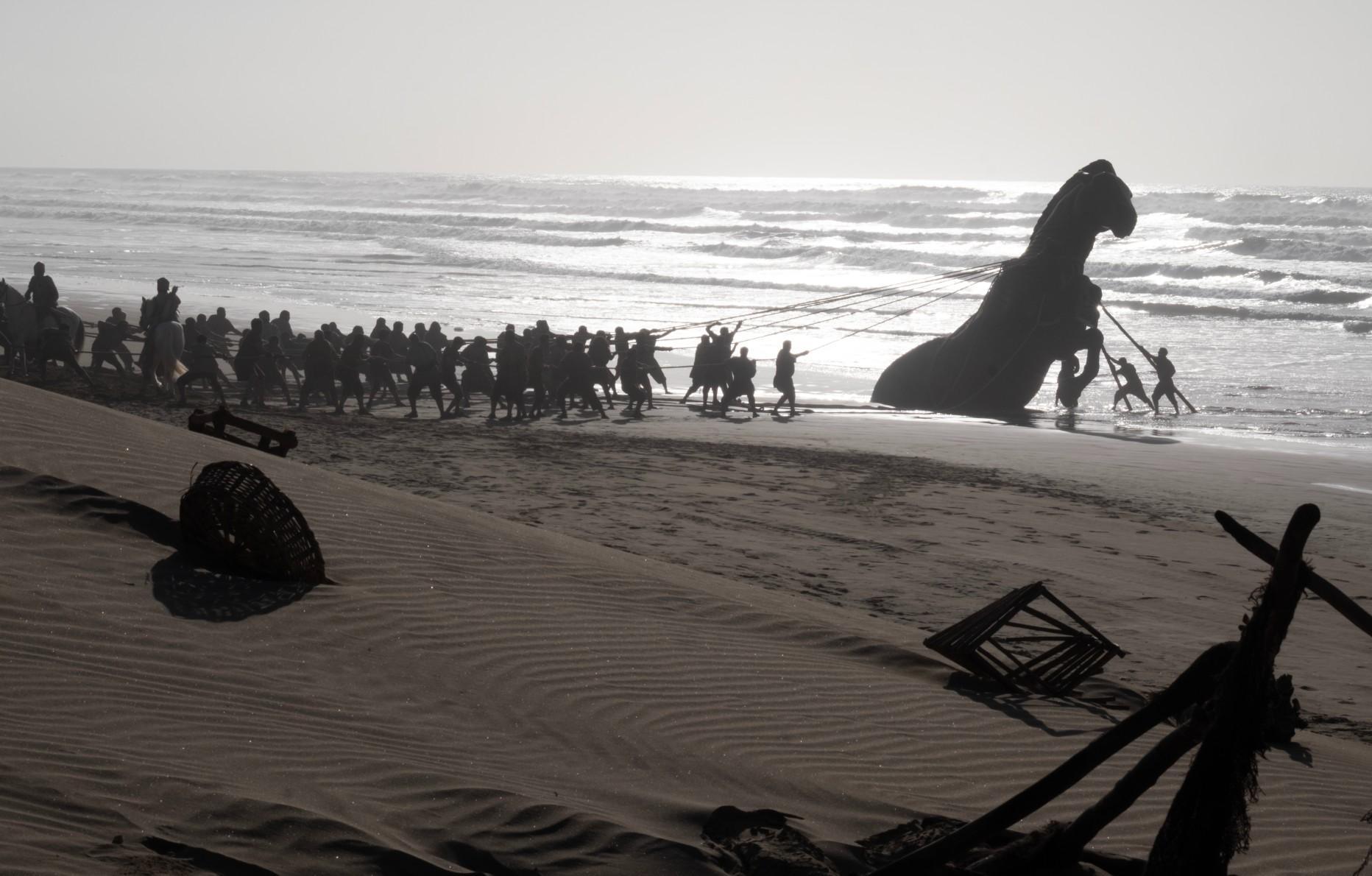
From the desert sets of Ouarzazate to the costume workshops, from production teams to makeup artists, “The Odyssey”, Christopher Nolan’s new film, recalls a little-known reality. If Hollywood comes to Morocco for its landscapes, it especially finds know-how there. Behind the signature of the British filmmaker lies the meticulous work of hundreds of Moroccan technicians who participate, away from the spotlight, in one of the most anticipated productions of the decade. There is something ironic in the history of world cinema.
Viewers immediately recognize the visual signature of a director like Christopher Nolan, the power of a wide shot, or the scale of a battle scene. However, few are those who question the women and men who make these images possible. Even more so when they are shot several thousand kilometers from Hollywood.
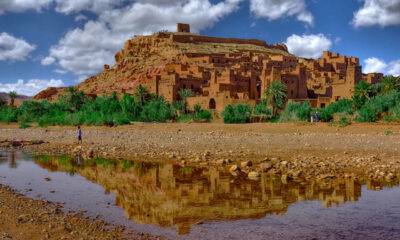
The shooting of “The Odyssey,” an adaptation of Homer’s foundational poem, continues a long tradition that makes Morocco one of the major territories of international cinema. For more than half a century, the Kingdom has lent its landscapes to American and European productions. “Lawrence of Arabia,” “Gladiator,” “Babel,” “The Last Temptation of Christ,” “Kingdom of Heaven,” and even “Mission Cleopatra” all found in the landscapes of Ouarzazate, Aït Ben Haddou, or the Sahara’s far reaches a setting capable of embodying ancient Egypt, biblical Judea, or Mesopotamia alike.
But reducing Morocco to a mere backdrop would now be an analytical error.
Ulysses in the Land of Technical Wonders
As American critic David Bordwell reminds us, “cinema is a collective art before it is an auteur’s art”. This reality takes on its full measure when one peruses the credits of “The Odyssey”. They tell another story, that of a local industry that has become indispensable to international productions.
Morocco’s first strength is no longer only geographical; it is human. Several hundred Moroccan technicians mobilized on the film are counted, spread across almost all departments: production management, unit management, assistant directors, set decoration, construction, casting, costumes, makeup, or hairstyling.
The costume and makeup departments alone give the measure of this rise in skills. More than 150 Moroccan professionals intervene in the creation, maintenance, aging, or adaptation of costumes, from supervisors to civilian and military costumers, through tailors, leatherworkers, leather specialists, dyers, and “breakdown” artists, this technique consisting of artificially aging a garment to give it the appearance of having gone through wars, storms, or centuries.
To this discreet army are added forty-seven Moroccan makeup and hairstyling specialists, mobilized both for the principal roles and for the hundreds of extras required by a historical fresco of this scale. These trades remain largely invisible. Yet, they participate directly in the credibility of the narrative. The viewer never sees a successful costume; they simply believe in the era they are watching. It is precisely this disappearance of work behind the image that constitutes the success of these artisans.
The True Odyssey is Moroccan
Christopher Nolan’s cinema has always relied on an almost obsessive search for authenticity. Where other productions favor digital environments, the British director continues to defend real sets, practical effects, and the materiality of locations. This approach partly explains his interest in Morocco. The mineral landscapes of the South offer much more than a spectacular backdrop. They possess a physical depth that the camera captures naturally. The relief, the light, the textures of the rocks, or the dust carried by the wind produce a sense of space that computer-generated images still struggle to reproduce.
The director of photography, Hoyte van Hoytema, a regular collaborator of Nolan, has often insisted on this search for natural light capable of giving the frame an almost organic density. In this logic, Morocco is not just a set; it becomes an aesthetic partner.
But this fidelity of great directors to the Kingdom is no longer explained solely by the landscapes. It now rests on a veritable industrial chain.
Production managers, shooting coordinators, assistant directors, crowd supervisors, artistic teams, construction or decoration workshops… Moroccan technicians now intervene at every stage of the making of an international film. The credits of “The Odyssey” notably testify to the presence of Moroccans in strategic positions of production, team coordination, and logistical supervision. This evolution marks an important break with previous decades. For a long time, Morocco essentially provided shooting locations and an executing workforce. Today, it also exports expertise.
The Atlas Studios of Ouarzazate perfectly illustrate this transformation. Over the course of shoots, the sets preserved in their vast open-air spaces compose a singular memory of world cinema. Roman columns, ancient temples, oriental palaces, or biblical villages overlap there like so many strata of a common history between Hollywood and the Kingdom. This accumulation is not only patrimonial; it testifies to a continuous transmission of technical skills between generations of Moroccan professionals. The stakes go far beyond the mere commercial success of “The Odyssey”.
Every blockbuster shot in Morocco feeds an economic ecosystem that irrigates well beyond the studios: artisans, sewing workshops, construction companies, transport companies, hotels, restaurants, vocational training, or even young graduates of cinema trades.
In a few months, when Christopher Nolan’s name dominates the billboards and critics analyze his editing, his ellipses, or his directing of actors, few viewers will stay until the end of the credits.
Yet, it is there that another story is hidden. A story written in Arabic, in Amazigh, in French, or in English, carried by hundreds of Moroccan names that, far from the red carpets, will have contributed to giving body to one of the most anticipated films of recent years.
Ultimately, the true odyssey may not be only that of Ulysses. It is also that of a country that, film after film, has passed from the status of a spectacular backdrop to that of an indispensable actor in the great global factory of images.