Kingdom
Production: When the Budget Lacks Animation
On the occasion of FICAM—the festival that has supported the emergence of local animation for over twenty years—Morocco is still struggling to turn its talent into a fully structured industry. Between emerging vocations, constrained budgets, and the absence of a domestic market, the road ahead remains long.

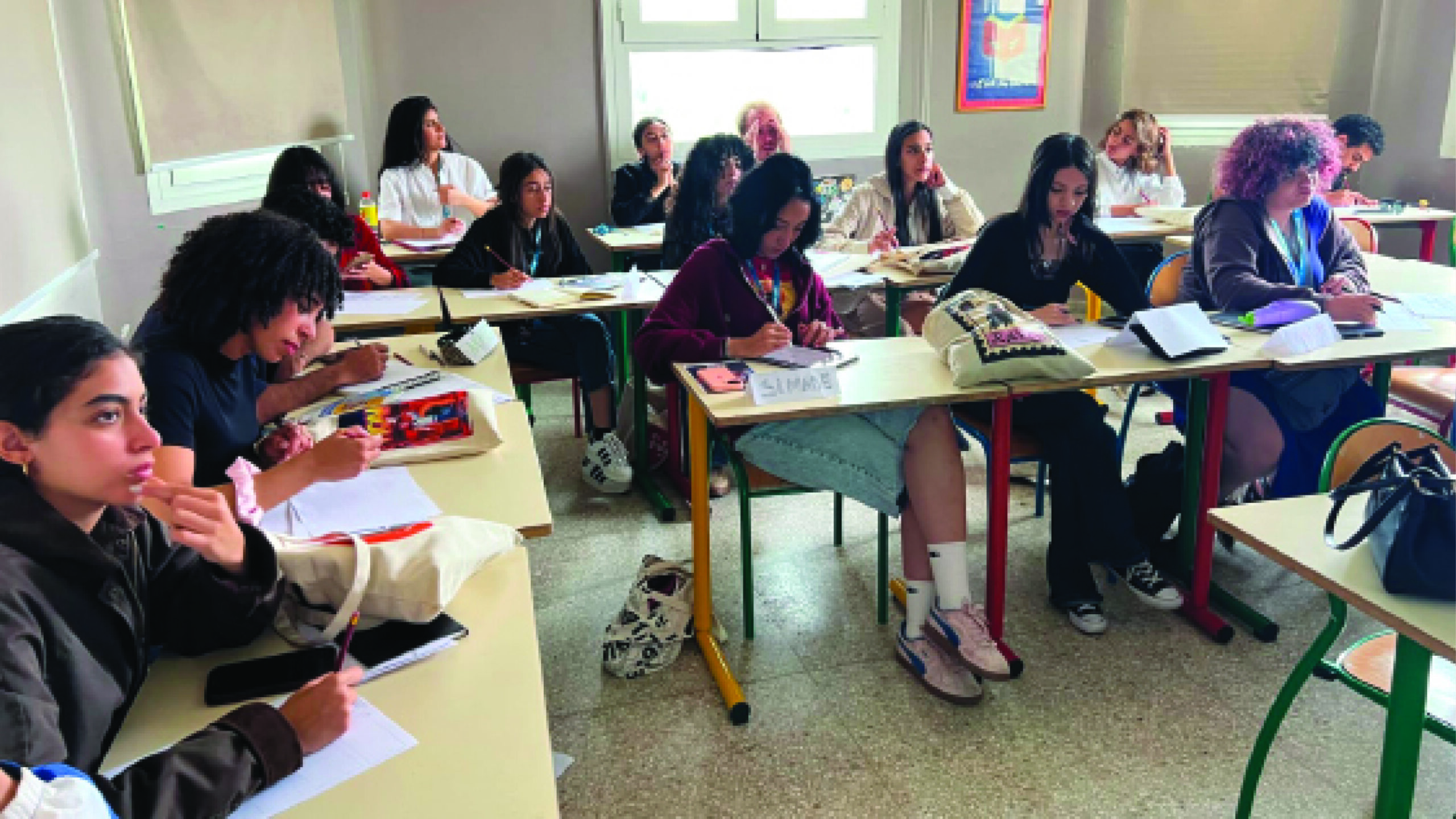
In Meknes, every May, the International Festival of Animated Film (FICAM) transforms the city into an unexpected crossroads of the seventh art. More than twenty editions later, the event remains one of the rare spaces where major international figures and young Moroccan creators come together.
But behind the screenings and mint teas, one reality persists: Moroccan animation cinema exists, yet it struggles to establish itself as a fully-fledged industry.
“If we were to count how many Moroccan animated films there are, it’s easy to say around forty,” observes Aziz Oumoussa, director and member of the preselection jury for FICAM’s Courts Compét’ competition.
This figure includes graduation projects, independent short films, and works produced in connection with the festival’s successive editions. “Each year, there is a film,” he sums up, but very few reach the stage of a complete professional production with a team, a fully developed script, storyboard, and compositing.
Wassim Boutaleb Joutei, a French director of Moroccan origin who graduated from Gobelins in 2008 and is a member of the Grand Prix Aïcha® de l’Animation jury, echoes this view.
For Les Minus, his series broadcast on Canal+, the process took around five years: one year of development, eight months of graphic design, followed by writing and production. “It took about five years of my life,” he explains. The budget amounted to €7 million for 11 episodes of 52 minutes, involving 150 to 200 people depending on the production phase. In Morocco, the situation is very different.
A short film or ambitious project often stretches over three to four years. “It’s not a real industry,” insists Oumoussa. “To create a market, you need a client. We lack a sufficiently developed visual culture,” he adds.
Both professionals point to the same structural obstacles. Animation requires multiple skills (2D, 3D, cut-out animation, directing, storytelling) and a heavy production chain.
Without stable studios, recurring funding, and a solid domestic distribution market, most projects remain isolated. “In France, regions launched tenders and subsidies to encourage Paris-based studios to relocate, particularly to Angoulême. Talent moved, schools opened, and expertise spread. It takes time; it requires real political will,” Joutei explains. In Morocco, despite encouraging initiatives, the ecosystem remains embryonic.
Many creators combine animation with another professional activity. “It is very difficult to make a living solely from animation without a fixed salary,” notes Oumoussa, who teaches at the National Institute of Fine Arts in Tétouan while pursuing a PhD on animated documentary.
Budgets vary significantly depending on the country. In France, an animated feature film often costs between €15 and €20 million. In the United States, major productions can reach $150 million. In Morocco, budgets remain very modest, often limited to international co-productions or occasional support.
Early talent
Despite these constraints, FICAM plays a decisive role. Created in the mid-2000s, the festival goes beyond screenings. It organises the Grand Prix Aïcha® de l’Animation, which awards the winner 50,000 dirhams and a residency at Fontevraud Abbey in France, in partnership with NEF Animation and the French Institute of Morocco. Anas Belgazzar, for Maison sans toit, was its most recent winner.
“Thanks to FICAM, I make a living as an author-director in the Arab world,” says Oumoussa, laureate of the 2007–2008 edition. His short films Voyage vers l’éternel (2007), Révolution (2009), and Soulika (2017) benefited from this exposure.
The festival multiplies professional encounters: “Mint Tea with…”, skills forums (“Producing, financing and sustaining animation,” “Television channels as a springboard”…), as well as a making-of presentation of Les Minus led by Joutei himself.
These spaces allow young Moroccan talents to meet experienced professionals, acquire skills, and above all nurture vocations.
For both directors, storytelling lies at the heart of the craft. Joutei, who also has experience in comics, highlights the difference: “In animation, we work collectively, serving a project often initiated by a producer. In comics, you are relatively alone.”
He advocates an intuitive approach: “It’s not mathematics. You are never certain. These are intuitions refined through experience.” Oumoussa, for his part, emphasises originality of the story, direction, and diversity of graphic styles—criteria he upholds as a juror.
The drawing stroke
Both question the persistent prejudice that animation is “for children.” “Everywhere in the world, it is considered for children,” Oumoussa regrets. Joutei adds: in Japan, adults consume animation massively; in Europe, it is often associated with leisure. Yet works such as I Lost My Body in France demonstrate the medium’s adult potential.
In conclusion, Morocco does have strengths: a newly trained generation, emerging studios, possibilities for co-production with Europe, and a declared ambition to structure the sector. The Moroccan Cinematographic Centre (CCM) supports certain projects, and fully Moroccan series are beginning to appear on national channels.
But moving from around forty scattered films to a true industry will require much more: developing visual culture from school onwards, creating stable outlets, attracting investment, and professionalising production chains.
Through its consistency and its ability to connect local talent with international expertise, FICAM is laying the foundations. What remains is to consolidate them. Where animated images could tell both contemporary realities and age-old stories, the question is no longer whether talent exists, but when the system will finally allow it to thrive fully and sustainably.
Financing animation: the crux of the matter
Time and money remain the two main constraints of Moroccan animation cinema. A project worthy of the name spans three to five years, mobilises dozens of professions, and requires stability. In Morocco, the model remains rudimentary.
Productions rely on occasional support from the CCM, a few international co-productions, and the FICAM Grand Prix Aïcha®, which offers 50,000 dirhams and a residency at Fontevraud Abbey.
“It’s not a real industry. To create a market, you need a client,” Oumoussa summarises. As a result, most creators combine teaching, freelance work, and animation, while fully professional productions remain rare.
Morocco is still searching for its path. European co-productions, tax incentives to attract foreign studios, and the development of a genuine visual culture from an early age are among the necessary levers.
FICAM plays an essential role in connecting local talent with international professionals, but it cannot replace an ambitious sector-wide policy. The talent is there. The economic framework is still awaited.