Kingdom
Foreign Film Shoots: Morocco Delivers a Record “Happy Ending”
The Kingdom attracts big-budget productions like a magnet: in 2025, foreign film shoots generated 1.5 billion dirhams (MAD) in revenue, a record that confirms Morocco’s attractiveness to major international productions.

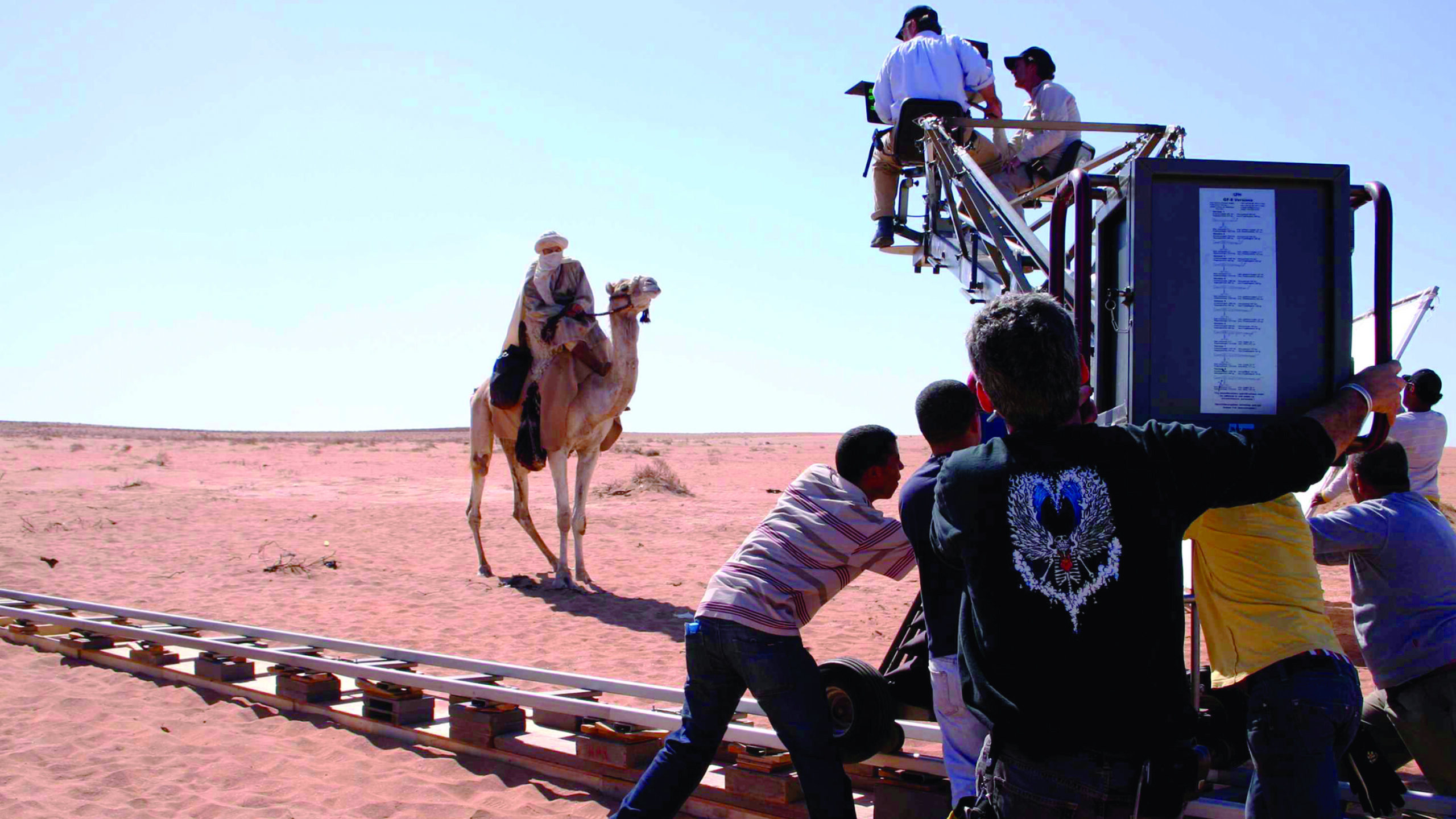
In 2025, Morocco crossed a symbolic threshold. Filming by foreign productions generated 1.5 billion dirhams (MAD) in revenue, an absolute record for the national film sector.
The announcement, made by the Minister of Youth, Culture and Communication, Mohamed Mehdi Bensaid, before the House of Representatives, marks a change in scale. Before 2021, these revenues did not exceed 500 million dirhams. In just a few years, the on‑set economy has tripled in size.
This growth is not presented as a flash in the pan, but as a deliberate trajectory. Ministerial projections now mention a target of 2 billion dirhams, or even more. A highly ambitious horizon that professionals nevertheless approach with caution.
“It is an official estimate, not yet a consolidated figure. No final annual report from the Moroccan Cinematographic Center (CCM) has been published at this stage. So we are talking about a political objective, not a statistical achievement,” recalls an industry figure familiar with international productions.
Silence, we’re counting!
Morocco is no longer just a spectacular backdrop used occasionally, but a production territory capable of absorbing large-scale, lengthy, and technically demanding shoots. “The Ouarzazate region has always been a stronghold of Moroccan cinema, particularly favored by foreign directors,” explains this professional.
According to him, this leading position is reinforced by the immediate availability of three major studios (Atlas, CLA, and Oasis), offering modern logistical infrastructure, as well as a proven human resource base combining extras with the sought-after diversity, skilled craftsmen, and well-trained technicians.
To these resources is added a natural advantage rarely matched. The diversity of landscapes, climate stability, constant sunshine, and the quality of the light have long been decisive arguments.
“These are ideal conditions for shooting quickly and well,” he summarizes. But these attractions would be insufficient without more prosaic advantages. The overall cost of a production in Morocco remains about 50% lower than that of an equivalent shoot in the United States, a difference that weighs heavily in studios’ budget decisions.
This attractiveness also rests on a series of incentive measures built over time. The temporary importation of weapons and ammunition for action films is facilitated, VAT is exempted on goods and services purchased locally, customs clearance for filming equipment is completed within the same day, while filming visas are obtained in record time.
“The explanation follows a simple logic: it is the concrete implementation of a national strategy to promote film production internationally,” observes our interlocutor, who also emphasizes the country’s political stability and the constant commitment of the administration to welcoming film shoots.
Cash rebate
Ouarzazate, the “Jerusalem of cinema,” has taken advantage of this favorable framework, as well as the international co-production agreements signed by Morocco. A major turning point came in 2017, with the entry into force of the subsidy mechanism for foreign productions. Established by a decree modifying the existing framework for support to film production, this mechanism introduced direct financial support in the form of a “cash rebate.”
Concretely, 20% of eligible expenses incurred in Morocco can be reimbursed to foreign productions, within the limits set by regulatory texts and the budget of the dedicated fund.
The objective is twofold: to encourage foreign shoots on national territory and to strengthen, through a ripple effect, the capabilities of Moroccan production through contact with international standards.
“As initially expected, the impact was very clear,” says the professional. “We observed a threefold increase in the number of foreign productions and a snowball effect across the entire sector.
Many professions have seen their activity become structured or intensify, attracted by the prospect of establishing themselves permanently in Morocco.” One detail is not trivial: transactions related to these shoots are invoiced in dirhams, a necessary condition to benefit from the subsidy, which reinforces the local anchoring of the value created.
The economic impact is visible on the ground. An international shoot can mobilize up to 1,200 hotel rooms for several weeks, sometimes several months, while employing actors, technicians, extras, and local service providers.
Fees vary greatly depending on the profiles, but the activity broadly benefits host regions, even if part of this economy remains temporary and poorly documented. This rise in power now raises a strategic question: how far does Morocco want to push this dynamic?
For Mohamed Mehdi Bensaid, the challenge goes far beyond attracting film sets. The minister expresses the ambition of building, by 2035, a complete cinematic ecosystem capable of covering the entire value chain.
Even today, a significant share of post-production, visual effects, and digital finishing is carried out abroad due to insufficient infrastructure within the national territory.
To bridge this gap, training is presented as a central lever. Developing local skills in image-related professions would make it possible to capture added value that still largely escapes the country. “Sets attract attention, but the real wealth lies in the technical side,” summarizes our interlocutor.
One gray area remains. Although Morocco’s attractiveness is now established, the public indicators that would allow precise measurement of the real impact of film shoots, production by production and territory by territory, remain fragmented.
“The country has succeeded in attracting the cameras. The challenge now is to manage this growth,” says our professional. The set is ready. The spotlights are on. What remains is to write the next part of the script, off camera.
“1.5 billion dirhams: Morocco is no longer an extra”
The Kingdom confirms that it is no longer merely a postcard backdrop for world cinema. Superproductions are bringing colossal budgets and mobilizing dozens, sometimes hundreds, of local professionals.
“The Odyssey,” by Christopher Nolan, with a global budget estimated at $250 million, filmed in Aït Benhaddou, Essaouira, Marrakech, and Dakhla between February and August 2025.
“The exact share spent in Morocco is not published, but the film employed hundreds of technicians, extras, and craftsmen,” specifies our interlocutor. “Gladiator II,” by Ridley Scott, filmed around Ouarzazate, has an estimated budget between $250 and $310 million, of which around $40 million was spent locally. “Matchbox,” another blockbuster, exceeds $100 million and chose several Moroccan sites for its key scenes, confirming the country’s appeal for ambitious productions. Auteur cinema is also holding its own.
“Sirāt,” by Oliver Laxe, a European co-production, mobilized a budget of around 70 million dirhams, filmed in the Saghro massif and presented at the 2025 Cannes Film Festival. On the series side, “The Terminal List: Dark Wolf” for Amazon Prime Video filmed in Marrakech, Casablanca, and Tangier.
“The precise budgets for 2025 have not yet been published, but past productions allow us to estimate local spending at 100 to 150 million dirhams,” concludes our professional.