Kingdom
Vocational Training: A Turning Point Towards Employability
Over the past few years, vocational training has established itself as one of the cornerstones of Morocco’s employment policy: a spectacular rise in enrolment numbers, a surge in apprenticeship programmes, the rollout of Cities of Trades and Skills, and massive investments underline this momentum…

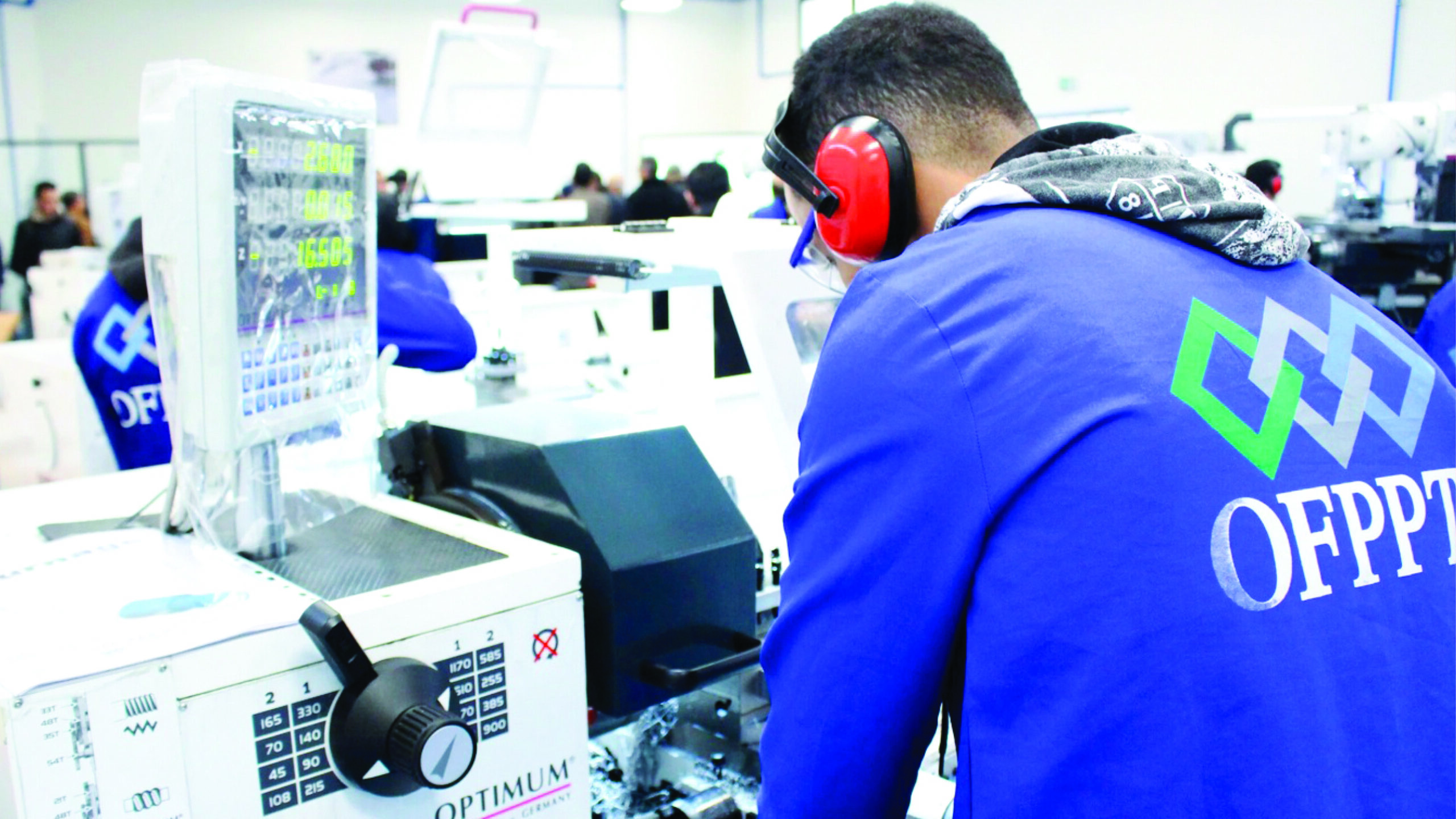
In Morocco, vocational training is undergoing a profound transformation. Far from being a mere complement to mainstream education, it is now positioned as a strategic lever for employability and for addressing labour market needs.
Over the past four years, the figures point to strong momentum, driven by significant investment, rising enrolment numbers and the modernisation of infrastructure, particularly through the Cities of Trades and Skills (Cités des métiers et des compétences – CMC).
According to the latest data from the Ministry, nearly 746,500 trainees are expected to enrol in vocational training institutions in the 2025–2026 academic year, representing a 38% increase compared with 2021–2022.
Of this total, 501,400 young people are following initial training programmes, including 100,000 in apprenticeship schemes—a figure that has quadrupled in just four years—while 217,400 are enrolled in qualifying training and 27,700 in continuing education.
This remarkable growth goes hand in hand with an expanded training offer. For the 2025–2026 intake, the Office of Vocational Training and Employment Promotion (OFPPT) is offering more than 418,000 training places across its institutions, a sharp increase designed to meet the ever-growing demand from young Moroccans.
OFPPT: Towards a Renewed Role
As the country’s main public operator for vocational training, the OFPPT plays a central role in this transformation. Historically known for its technical programmes, the Office has reinvented itself by refocusing its mission on labour market alignment, improved pedagogical governance and stronger cooperation with the private sector.
Today, the expansion goes beyond the creation of additional places. The public training offer now covers more than 460 occupations, with a clear orientation towards high-potential sectors such as digital technologies, energy, industry and services.
Among the most emblematic projects of recent years are the Cities of Trades and Skills (CMC), conceived as innovative, multi-sector platforms.
Launched as part of the vocational training development roadmap, the project provides for the creation of 12 CMC nationwide, each designed to host around 34,000 trainees per year. These hubs include student accommodation, modern learning spaces, specialised workshops and professional simulation areas.
With an estimated investment budget of 3.6 billion dirhams, this flagship project symbolises Morocco’s ambition to make vocational training a genuine driver of territorial competitiveness.
Several Cities are already operational or have begun their activities. The CMCs in the Souss-Massa, Oriental and Laâyoune-Sakia El Hamra regions welcomed their first cohorts as early as the 2022–2023 academic year, with a combined capacity of 8,380 training places. Others are now fully operational in regions such as Rabat–Salé–Kénitra, Tangier–Tetouan–Al Hoceïma, Béni Mellal–Khénifra and Casablanca–Settat.
Improving Indicators
The data reflect a steady rise in the sector’s capacity. The national training network now comprises more than 2,388 institutions, including 792 public establishments alongside a growing number of authorised private centres.
Trainee enrolment has increased at a sustained pace, marking a deep transformation of the vocational education landscape. Young people’s interest is also reflected in high access ratios, with several candidates competing for each available place.
At the same time, Morocco is placing strong emphasis on work-based learning as a pathway to employment. In 2025 alone, nearly 39,000 jobs were created through apprenticeship schemes, highlighting the effectiveness of this model in terms of employability.
Beyond the raw figures, these advances signal a tangible opening towards the economic fabric. Vocational training, once considered secondary, is becoming a pillar of socio-economic inclusion, capable of narrowing the gap between educational provision and the real needs of the labour market.
Partnerships with businesses, the expansion of training pathways and the introduction of modules focused on 21st-century skills are helping turn vocational training into a genuine passport to employment—one that thousands of young people now see as a real opportunity for the future.