Business
Economic Assessment: The Government Delivered
When the Executive first presented its program upon its inauguration, the opposition—though not alone—believed the commitments it had made were unachievable, even fanciful. Four years later, the challenge has been met: the economy has rebounded, and some programs have already achieved their objectives. The numbers speak for themselves.

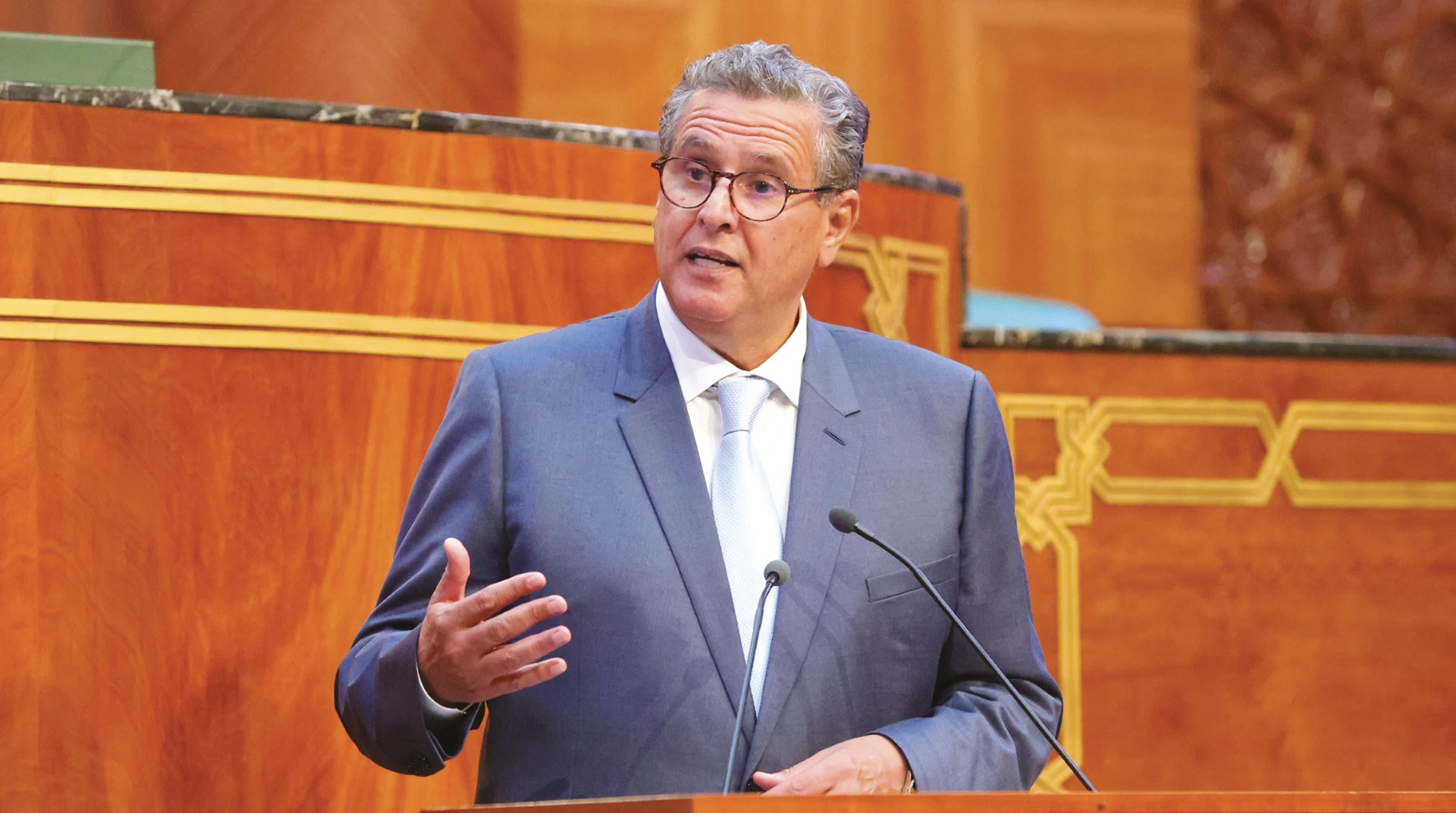
With just over a year remaining in the government’s term, all indicators are positive. Even more, some targets announced for the end of 2026 have already been met. Critics may accuse the governing team of every failure—a practice the opposition has vigorously pursued these past four years—but the numbers remain: stubborn and unyielding.
When Aziz Akhannouch and his team took office, the country faced an undeniably dire situation—to put it mildly. The national economy had contracted by an unprecedented 7.2% in 2020, with 432,000 jobs lost that same year. The budget deficit worsened to 7.1% in 2020, while public debt surpassed 72%.
Adding to this, the Kingdom lost its Investment Grade credit rating in 2021. Meanwhile, the Investment Charter stagnated for 20 years, approving only 386 investment projects between 2012 and July 2021—an average of 39 projects annually. Compounding these challenges, the Kingdom endured an unprecedented drought.
The impact on citizens’ lives was unequivocal: inflation surged, averaging 6.6% in 2022 and 6.1% in 2023, peaking at 10.1% in February. Cereal harvests and agricultural value added declined, leading to the loss of 215,000 jobs in 2022 and 202,000 in 2023 across agriculture, forestry, and fishing.
These factors could easily have been used by the government to justify inaction. Did its predecessors not invoke “pockets of resistance,” “crocodiles and demons,” to explain their inability to address public governance challenges?
Instead, the current government has, as Aziz Akhannouch stated last Tuesday during the plenary session on policy questions in the Second Chamber, “worked continuously and effectively since its appointment to consolidate the gains of our country’s modernization and development process”—a process he emphasized is “rooted in integrating the economic and social dimensions of development while anticipating national and global cyclical transformations.”
The government has reinforced this process by implementing its program, focused on achieving inclusive, sustainable development and laying the foundations for a robust social state.
Through swift and effective execution of economic and social reforms, the Executive has met these challenges head-on, reviving the national economy, safeguarding citizens’ dignity, and improving living conditions. Key measures include boosting economic growth through increased public investment, which rose from 230 billion dirhams in 2021 to 340 billion dirhams in 2025.
An Economy Fully Recovered from the Crisis
The results are clear and swift. After four years of work—often carried out quietly and without fanfare—GDP grew by 3.8% in 2024, despite harsh climatic conditions, driven by the momentum of non-agricultural sectors (4.5% growth) and strong domestic demand.
Growth of 4.6% is projected by the end of this year. Foreign direct investment (FDI) flows reached approximately 43.2 billion dirhams in 2024, up from 26.3 billion in 2020, reflecting an average annual increase of 13.6%. These flows saw an exceptional surge starting in early 2025, reaching roughly 21.9 billion dirhams by the end of May—a 27% rise compared to the same period in 2024.
As of June 26, 2025, the Kingdom’s foreign exchange reserves stand at around 402 billion dirhams, up nearly 10% year-on-year, covering over five months of imports of goods and services. Inflation has been contained at moderate levels, dropping to less than 1% by the end of 2024 after averaging 6.6% in 2022 and 6.1% in 2023.
The unemployment rate fell by 0.4 percentage points nationwide, with approximately 351,000 non-agricultural jobs created in the first quarter of 2025—triple the number recorded during the same period in 2024.
“The government has worked to restore balance to public finances through structural reforms, notably the tax system overhaul, which serves as a strategic lever for fiscal sustainability, tax fairness, and investment promotion,” emphasized the Head of Government.
This was achieved via the phased implementation of a five-year framework law for tax reform. Key steps included: Corporate Tax Reform (2023 Finance Law): Gradually unifying tax rates for businesses to meet targeted rates within four years; VAT Reform (2024 Finance Law): Streamlining rates to two standard tiers (20% and 10%) by 2026; Income Tax Reform (2025 Finance Law): Fulfilling commitments from April 2024 social dialogue to improve wages for civil servants, employees, and retirees.
These reforms boosted tax revenues from roughly 199 billion dirhams in 2020 to 300 billion in 2024—a 100-billion-dirham increase (average annual growth exceeding 11%) without raising fiscal pressure. Ordinary revenues also improved significantly, rising by over 143 billion dirhams (13% average annual growth). These achievements reduced the budget deficit from 7.1% of GDP in 2020 to 3.8% by end-2024, while public debt fell from 72.2% to 67.7% of GDP.
“Financial performance in the first half of 2025 confirms the continued positive revenue trend, with execution of the 2025 Finance Law aligning with—or even exceeding—projections. This provides ample room to advance ongoing projects, cut the budget deficit to 3.5%, and reduce debt below 67% of GDP,” noted Aziz Akhannouch.
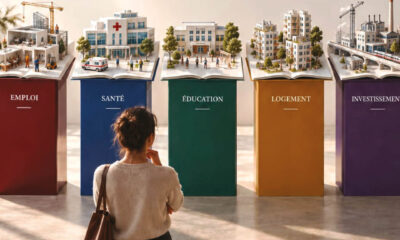
These accomplishments have enabled the government to enhance social conditions through measures aimed at boosting citizens’ purchasing power, ensuring universal healthcare access, improving education quality, and providing decent housing.
“This government’s achievements in economic, social, and financial domains are merely a step in the development and modernization process led by His Majesty the King,” a process rooted in “a clear vision to lay the foundations of a modern, advanced economy and realize our shared ambition for a sustainable societal project that marries economic efficiency and social justice.”
The Social State in Motion
From its earliest days in office, the government initiated reforms in two key sectors: Healthcare and National Education. The healthcare budget surged from 19.7 billion dirhams in 2021 to 32.6 billion dirhams in 2025—a 65% increase. Simultaneously, over 85 billion dirhams has been allocated to the National Education sector for 2025, with an additional 9.5 billion dirhams programmed annually until 2027.
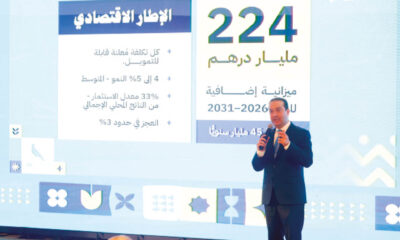
Fulfilling social commitments under the now-institutionalized social dialogue framework, significant salary increases have been secured for approximately 4.25 million citizens: 1.25 million public-sector employees and 3 million private-sector workers. The total financial cost of these measures is projected to exceed 45 billion dirhams by 2026.
In parallel, the share of Moroccans covered by basic Mandatory Health Insurance (AMO) has risen from 42.2% before this major societal initiative to 88% today. Over 4 million households—representing more than 11.4 million citizens—are enrolled in the AMO-Tadamon regime as of late June 2025.
The direct social support program, meanwhile, has reached approximately 4 million households (around 12 million individuals) by the end of April 2025.