Business
Dirham: The Serene Path to a Floating Exchange Rate
The foreign exchange reform is on track. The liquidity of the foreign exchange market is tangible proof, with an average daily volume of interbank transactions exceeding 1.6 billion dirhams in 2025, compared to 100 million dirhams in 2017. An assessment of 8 years of reform.

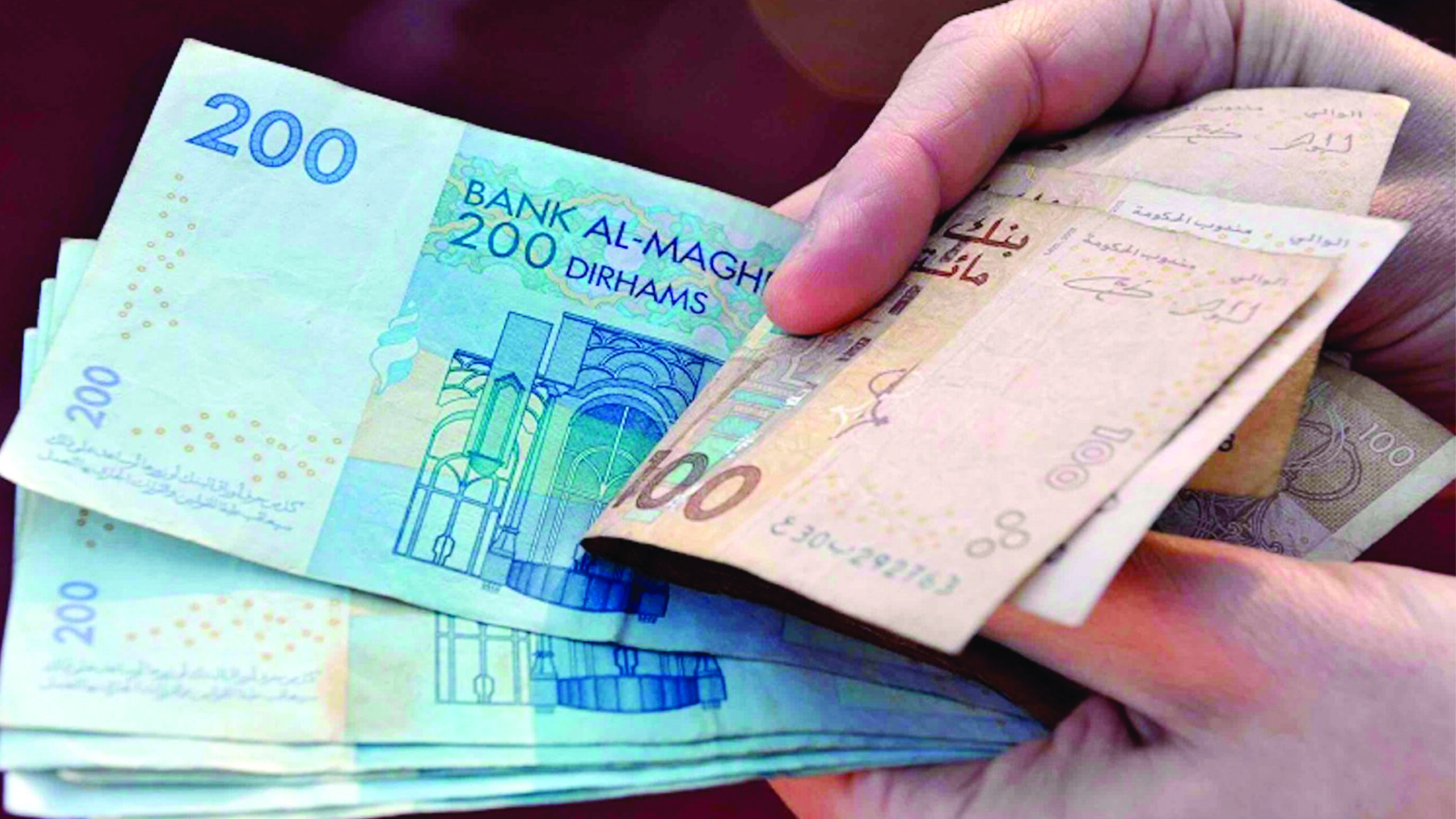
International experience shows that between 5 and 15 years are necessary for a country to voluntarily transition from a fixed exchange rate regime to a floating regime, a configuration in which a currency’s exchange rate is determined by the market (with limited intervention by the monetary authority).
More than 7 years ago (in 2018), Morocco initiated, in a sovereign and gradual manner, the dynamics of reforming its fixed exchange rate regime, which is now a soft-peg system. And this, within horizontal bands where the dirham’s parity is determined relative to a central rate.
This central rate, in reality, reflects the value of the currencies composing the quotation basket (60% euro and 40% dollar). Currently, the exchange rate in the transfer market fluctuates daily within a band of +/-5% relative to the central rate.
Beyond this important reminder, the reasons advocating for greater flexibility of the dirham and a floating exchange rate regime are numerous. As an example, there is the limitation of pressure on foreign exchange reserves through a gradual adjustment via exchange rates and not via volumes (which is the case under a fixed regime configuration).
Other advantages: strengthening the Moroccan economy’s capacity to adapt to external shocks and supporting national competitiveness.
Nearly 8 years after the first steps in implementing the exchange rate regime reform—with the widening of the fluctuation band to +/-2.5% in 2018—which is proceeding under good conditions despite the Covid-19 parenthesis, the assessment drawn is rather positive, as the deepening of the foreign exchange market is intensifying and liquidity is present.
As proof: rising substantially, the average daily volume of interbank transactions has increased from 100 million dirhams in 2017 (before the reform) to over 1.6 billion dirhams in 2025. Another parameter confirming an encouraging assessment: a growing contribution of supply and demand forces in determining the dirham’s exchange rate.
Large companies inclined to hedge
Feedback from the field indicates an increased use of foreign exchange risk hedging instruments by major economic operators. This notably includes large importing companies operating in the energy, agri-food, and commerce sectors.
Furthermore, the efforts deployed to reform the Kingdom’s exchange rate policy have contributed to maintaining foreign currency reserves at a comfortable level. These reached over 421 billion dirhams in October 2025, representing more than five and a half months of imports.
Moreover, according to official projections, the country’s level of foreign exchange reserves is expected to be around 126% of the ARA (Assessing Reserves Adequacy), i.e., within the adequacy range recommended by the International Monetary Fund (between 100% and 150%).
In the same vein, the very limited number of interventions by Bank Al-Maghrib (BAM) on the foreign exchange market amply corroborates the good conditions under which the reform process continues. Supporting figures: Since 2018, BAM has intervened only twice on the interbank foreign exchange market. And yet, the value of the dirham has remained within the fluctuation band without major interventions.
Concretely, the central bank intervened in January 2018 (at the start of the reform) and in 2021, to the tune of 294 million dollars and 1.65 billion dollars in the second half of 2021, respectively. It should be noted that during this period, the dirham was trading at the lower limit of the fluctuation band, due to a liquidity surplus on the market requiring the central bank’s intervention.
Ultimately, it is important to keep in mind that since the exchange rate regime reform came into effect, the evolution of the dirham’s value has been the result of two main factors, namely the euro/dollar evolution on the international market (basket effect) and liquidity conditions on the interbank foreign exchange market (market effect).
Three Essential Prerequisites
There is no doubt that the transition to the ultimate stage of the dirham’s flexibility reform, involving, among other things, abandoning the peg to the currency basket (euro-dollar) and establishing a floating exchange rate regime, depends on several crucial prerequisites.
The first of these is the durable consolidation of macroeconomic balances. In this regard, the country’s economic outlook is rather positive, considering the central bank’s forecasts, which anticipate an acceleration in economic growth to 4.6% in 2025 and a consolidation at 4.4% in 2026.
For their part, official reserve assets are expected to continue strengthening, reaching 418 billion dirhams at the end of 2025 and 434.5 billion dirhams at the end of 2026, levels equivalent to five and a half months of imports. Furthermore, Bank Al-Maghrib forecasts a budget deficit (excluding proceeds from the sale of state holdings) stable at 3.9% of GDP in 2025 and easing to 3.4% in 2026.
Evidently, one of the immediate consequences of controlling the budget deficit is public debt, which is nothing other than the accumulation of deficits year after year.
The second cardinal prerequisite for advancing the reform, and one that raises many challenges, is the sufficient preparation of economic operators, particularly MSMEs. The reason is that, until now, information from the field shows that the majority of MSMEs are unaware of the existence of hedging products for foreign exchange risk in their import or export operations.
For now, only large groups with the means to access trading floors are inclined to subscribe to products that substantially reduce their exposure to foreign exchange risk. It should be noted that approximately 10% of companies use foreign exchange risk hedging products. This ratio drops to 2% for MSMEs.
The democratization of hedging products for MSMEs will require, among other things, raising awareness and facilitating their access for this category of companies, which represents nearly 95% of the economic fabric (affordable prices, a proximity distribution network via bank branches, for example, etc.).
Finally, according to experts, an appropriate nominal anchor replacing the fixed exchange rate regime with the adoption of inflation targeting will be necessary for the continuation of the next stages of the exchange rate regime reform.
Regarding this point, BAM’s calendar is known. 2026 is a pivotal year, as it will be a full-scale test period for inflation targeting before its planned adoption in 2027, provided the test proves conclusive.
It should be noted that the inflation targeting monetary policy framework requires the central bank, among other things, to announce an inflation target and prioritize its achievement (over all other monetary policy objectives) and to use a rigorous framework for forecasting the inflation rate.
Forward Market: A Development Conducive to the Reform
The other crucial parameter for the success of the reform is the deepening of the forward market, allowing operators to hedge against foreign exchange risk.
That said, as recently as September 20th, the Casablanca Stock Exchange successfully conducted a full-scale test of its future forward market, with the objective of ensuring the robustness of its infrastructure. This successful test mobilized all players in the financial center (brokerage firms, trading desks, clearing members, Maroclear, and data vendors).
The objective of the forward market is twofold: namely, to provide investors with a modern hedging tool against volatility (rates, currencies, commodities, equities) and to strengthen the depth and transparency of the capital market.
In the same vein, it should be specified that in February 2025, BAM launched two new segments on the interbank forward market (the interbank foreign exchange swap market and the interbank overnight indexed swap – OIS – market linked to MONIA).