Influences
Cashless at Festivals: A Perfect Match or a False Note?
The ticket fades away, the bracelet or card takes over. Behind this revolution, festivals are reinventing the public experience, between promises of fluidity and persistent gray areas.

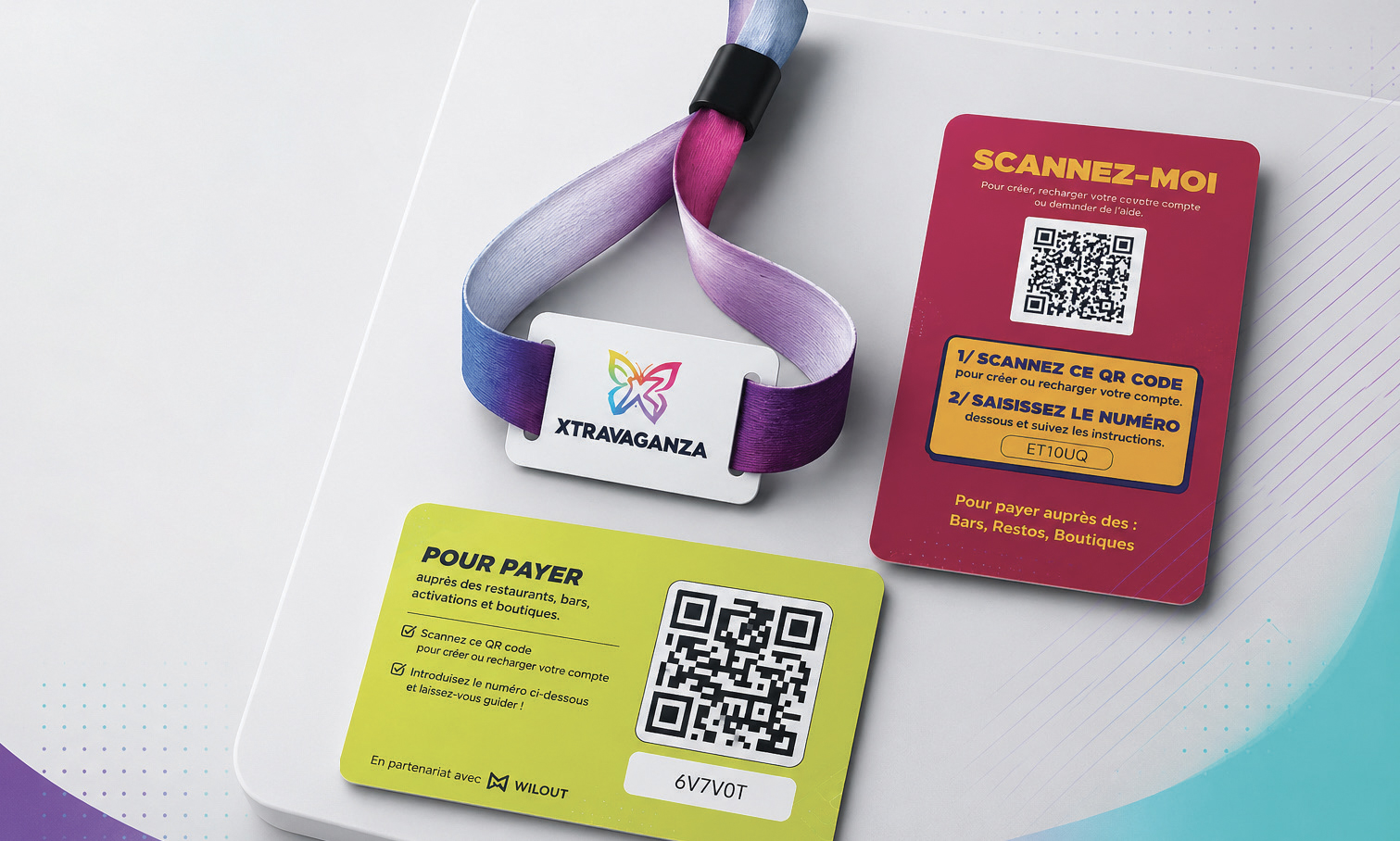
Digital payment has ceased to be an experiment. In a few seasons, it has established itself as the invisible infrastructure of festivals. The crumpled ticket is gradually disappearing from counters, replaced by a simple wrist gesture.
As queues shorten and transactions disappear behind technology, a new way of experiencing cultural events is taking hold. This transformation is based on an ecosystem that is rapidly maturing.
On one side, specialized solutions based on NFC bracelets, RFID cards, or connected badges, developed by players like Wilout, LeCashless, and Billetteries.ma. On the other, mainstream electronic wallets, encouraged by the “Stay Cashless” program, launched in 2026 by the Ministry of Tourism, Attijariwafa Bank, and Visa to accelerate the digitalization of payments in the tourism sector, facilitate spending by international visitors, and support the modernization of MSMEs.
In festivals, these two worlds eventually converge. The festival-goer recharges their bracelet (or card) from an app or kiosk, then their credit accompanies them throughout the event, without having to take out a single bill. The act of paying almost ends up disappearing. The purchase blends into the festival experience, to the point that each vibration of the bracelet seems more like a ritual than a transaction, even though it corresponds to a real expense. Concretely, the operation is very simple.
At Jazzablanca or Timeless, where the Wilout solution is notably deployed, the festival-goer buys an NFC card, rechargeable on site. A few seconds are then enough to pay for a drink or a meal. A simple tap on the terminal validates the transaction in less than a second.
One of the main advantages of the system lies in its ability to function even when networks are put under strain. Thanks to its offline mode, Wilout continues to ensure payments in case of connection saturation or temporary lack of coverage, two situations frequent during large gatherings. The data are then automatically synchronized as soon as the connection is restored.
Without a False Note
Behind this apparent simplicity lies a particularly sophisticated technological architecture. Payments mainly rely on NFC (Near Field Communication) and RFID technologies, which allow instant data exchange at very short distance. Bracelets, cards, or badges are designed to resist splashes, shocks, and long nights spent in the crowd.
Security is one of the pillars of the system. Data encryption, multi-factor authentication during recharges, traceability of each transaction, and the near-disappearance of cash flows contribute to limiting the risks of fraud or error. For organizers, this infrastructure offers an extremely fine reading of activity on the ground. Stocks, consumption peaks, or visitor flows can be monitored almost in real time. Merchants also benefit from better visibility on their sales, while festival-goers enjoy a smoother and more secure purchasing journey.
The benefits, however, go beyond the technical dimension alone. For organizers, the change is first and foremost operational. Cash register management is lightened, cash handling decreases, and sales tracking gains in precision. The data collected also make it possible to refine the organization of future editions by identifying consumption habits, peak attendance times, or the most solicited points of sale.
Cash or Crash?
For the public, the experience gains above all in fluidity. Queues are reduced, transactions are carried out in a few moments, and attention remains turned towards the stage rather than the wallet. A simple gesture is enough to return to one’s place in front of the speakers. Money itself seems almost to disappear from the landscape, without ever ceasing to exist.
However tempting this promise of a frictionless experience may be, it does not escape questioning. For as payment becomes almost invisible, its implications remain very real. This is the paradox pointed out by a festival-goer, an attentive observer of the transformations crossing major cultural events.
Without questioning the benefits of the system, she invites us to look beyond the displayed fluidity. “I cannot ignore the challenges and shadows of this digital utopia”, she summarizes. The first question is that of inclusion. “Not everyone owns a bank card. A part of the public, especially the youngest, may feel excluded if cash recharge is not sufficiently accessible. In many festivals, recharges start from 100 dirhams”, she observes.
Moreover, queues have not disappeared; they have simply moved to the recharge terminals. The prepayment system also modifies the way of consuming. Many festival-goers end up calculating almost to the dirham the amount they credit to their bracelet/card, depending on what they think they will spend during the evening. A precaution that contrasts with the idea of an experience totally freed from constraints.
“And what about remaining balances? This forced ‘loyalty’ sometimes smells like a bittersweet trap: you leave 50 dirhams on the bracelet to ‘come back soon,’ like an emotional credit”, she continues. Refund policies vary, however, from one event to another, according to the rules defined by the organizers or their digital payment provider. Some provide a minimum threshold before a refund can be requested.
Another point of vigilance is the dependence on digital infrastructure. “A server failure, a malfunction of the NFC system, or, even hypothetically, a cyberattack can be enough to disorganize a festival”, she estimates. Operators highlight the robustness of their solutions, notably thanks to offline operation. In the field, during periods of very high attendance, pressure remains nonetheless perceptible among the teams in charge of operations.
Finally, the success of such a system also rests on the human element. Training several hundred temporary sellers in a few hours, accompanying merchants in taking hold of the terminals, and familiarizing festival-goers with these new usages represent so many challenges that do not disappear with technology. The promise of a smoother experience supposes, in reality, an important organizational work behind the scenes.
Despite the reservations it still raises, digital payment seems destined to establish itself durably in major Moroccan cultural events. Between digital ambitions, security requirements, and the search for an ever smoother experience, the movement seems difficult to reverse.
“Leaving the festival, memories full in my head, I feel this ambivalence proper to great transformations. There is the nostalgia of a joyful disorder and the excitement of a party that has become smoother, safer, smarter. Digital payment redraws the festival experience with its promises as much as with its gray areas. I simply hope that as technology disappears behind each gesture, we never lose sight of what makes the heart of a festival beat: the concert”, concludes our interlocutor.