Business
Cash Reduction: Payment Institutions on the Front Line
Building on their traditional money transfer business, payment institutions have become catalysts for financial inclusion by developing a range of digital services around cash. A lucrative business gaining momentum.

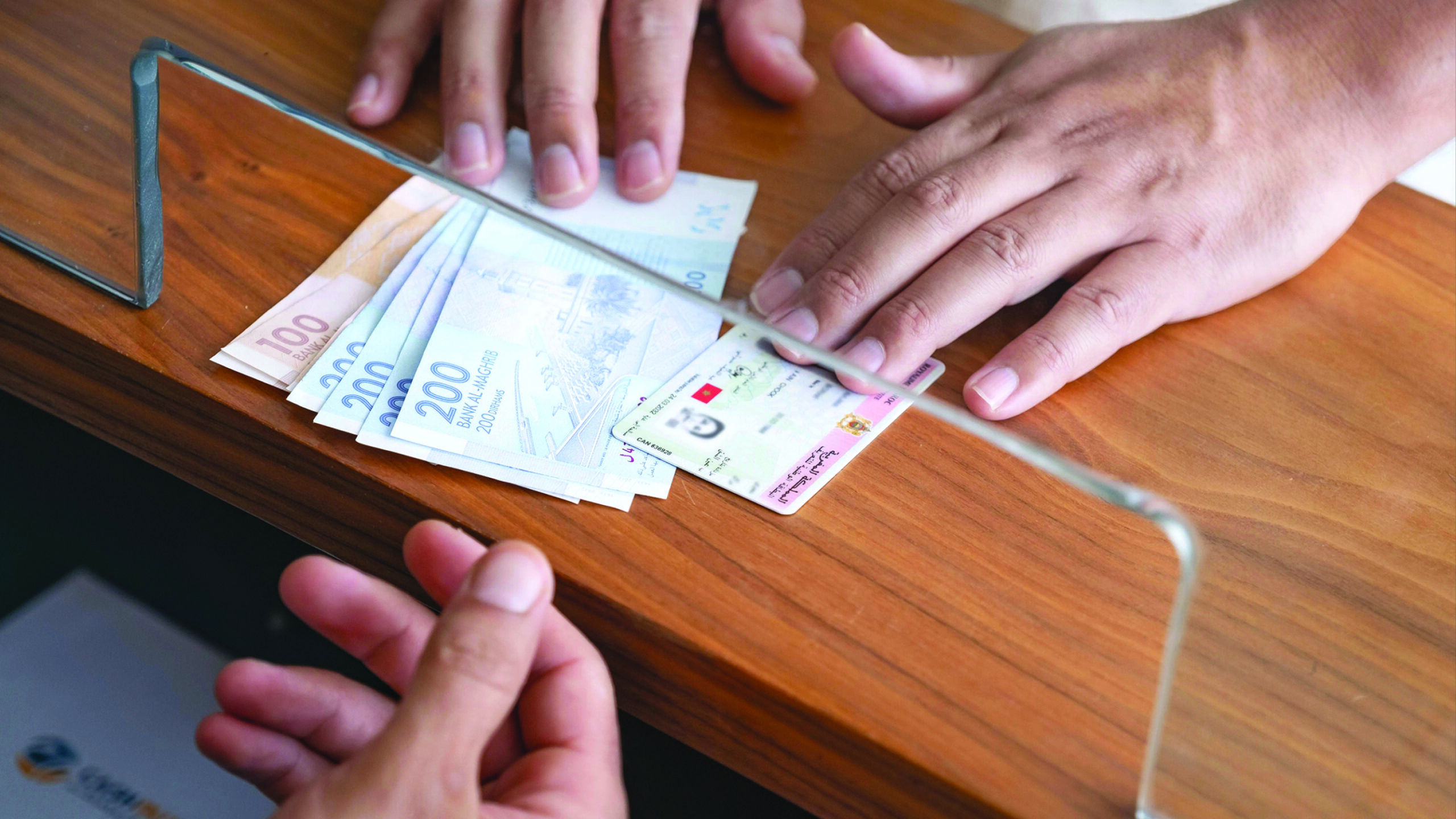
One of the main sources of cash in Morocco is money transfers. A large portion of these transfers, even when made through electronic channels, ends up as cash when the beneficiaries withdraw it.
However, in the name of reducing the circulation of cash, there is no question of targeting these flows upstream, at the risk of drying up the sources of these funds, which play a key role in supporting household consumption and also constitute one of the country’s main foreign currency resources.
The monetary authorities of the Kingdom have instead chosen to act downstream. “We do not have a magic solution to counter the upstream sources that feed cash. We are interested in the downstream. That is, how to redirect liquidity into banking or para-banking circuits,” explained Abdellatif Jouahri, Governor of Bank Al-Maghrib, during a press briefing.
Payment institutions are at the heart of this logic. Created in the wake of the 2015 banking law reform, these companies have developed—most often starting from their traditional money transfer business—a whole range of financial services around cash, tailored to the recurrent transactional needs of underbanked populations, thereby helping to strengthen formal financial circuits.
Benefiting from regulatory easing and stimulated by the state’s social aid transfers via their channels, these institutions, the most prominent of which are Wafacash, Cash Plus, Damane Cash (from the BMCE group), Barid Cash, and Lana Cash (from the CIH Bank group), are on the rise and are establishing themselves as a credible alternative to the traditional banking sector.
The stock market listing of Cash Plus, one of the main players in this ecosystem which raised 750 million dirhams on the market to finance its development, testifies to the dynamism and growing strength of this very Moroccan business, which combines proximity, financial inclusion, and innovation. “A finance that is close and accessible to everyone,” summarizes Nabil Amar, CEO of Cash Plus.
Payment Institutions Gaining Ground
The rise of payment institutions (PIs) can be measured by the growing share of diaspora fund transfers they manage to capture.
The incoming flows of these transfers made via PIs reached 66 billion dirhams in 2024 compared to 39 billion dirhams in 2020, representing a CAGR of 14.1%, steadily gaining more market share from banks. These institutions now capture nearly half of these flows, which reached a record amount of 118 billion dirhams in 2024.
This trend reflects a structural shift towards a more flexible, financially inclusive distribution model, with non-bank players now on the front line for distributing basic services in underserved areas.
Among these services are electronic payment accounts accessible via a simple mobile app or prepaid card, without the need for a traditional bank account, allowing individuals to receive, store, and spend their money digitally, for example to pay their water and electricity bills, instantly make domestic transfers, or pay at merchants via QR code or mobile POS terminal.
This helps to mitigate cash withdrawals and payments, and thus begin to reduce the circulation of cash in daily transactions.
The rise of PIs is also measured by the impressive expansion of their network.
Between 2019 and 2024, the total number of financial service access points in Morocco increased from 15,657 to 34,735, driven almost exclusively by the boom in payment institutions, whose network more than quadrupled during the period.
With an average annual growth of +44% over the period, payment institutions now concentrate 80% of deployed points, compared to a banking network that is stagnant, even slightly contracting, around 6,000 points of sale.
However, it will take time before we see a real take-off in the use of digital payments. Take the case of the domestic transfer market, which recorded an average annual growth rate of 5.8% between 2020 and 2024, rising from 40 to 50.2 billion dirhams.
Of this volume, digital channels processed only 2 billion dirhams in 2024, across all use cases (bill payments, P2P transfers, merchant payments, etc.).
This level of activity represents less than 5% of total domestic transfers, reflecting only partial adoption of this channel for transactional uses. “You don’t change mentalities overnight,” the Governor of Bank Al-Maghrib tirelessly repeats on this subject.
Nevertheless, while the road is still long, PIs are contributing, little by little, to changing behaviors, as Moroccans’ trust in these digital tools continues to grow.
A Profitable Business
Within a few years, PIs have thus become the vectors of a new digital payment culture, driven by trust, proximity, and ease of use.
An activity that proves lucrative for the most structured and well-capitalized operators. With rising transaction volumes, the commissions generated are propelling revenues to new heights. In 2024, the net banking income generated by payment institutions increased by 24% to reach 1.7 billion dirhams, according to BAM’s latest banking supervision report.
A figure set to grow further in the coming years at a sustained pace, according to projections. The cumulative net profit of the sector, meanwhile, stands at 416 million dirhams, up from 301 million the previous year, revealing a handsome net margin of almost 25%. The total assets of these players are also expanding, rising to 7.5 billion dirhams, an increase of 41% compared to the previous year.
The market, however, remains concentrated around a few major operators, with the logistical and technological capabilities to operate on a large scale. Thus, the contribution of the top three payment institutions to the total funds transfers operated by those offering this service reaches 90.2%. For the top five institutions, this contribution reaches 98.4%.