Kingdom
Cash Is More Than Ever King in Morocco
While the Kingdom accelerates its digital and financial transformation, cash circulation in the economy continues to grow inexorably. A paradox that monetary authorities are trying to solve by all means.

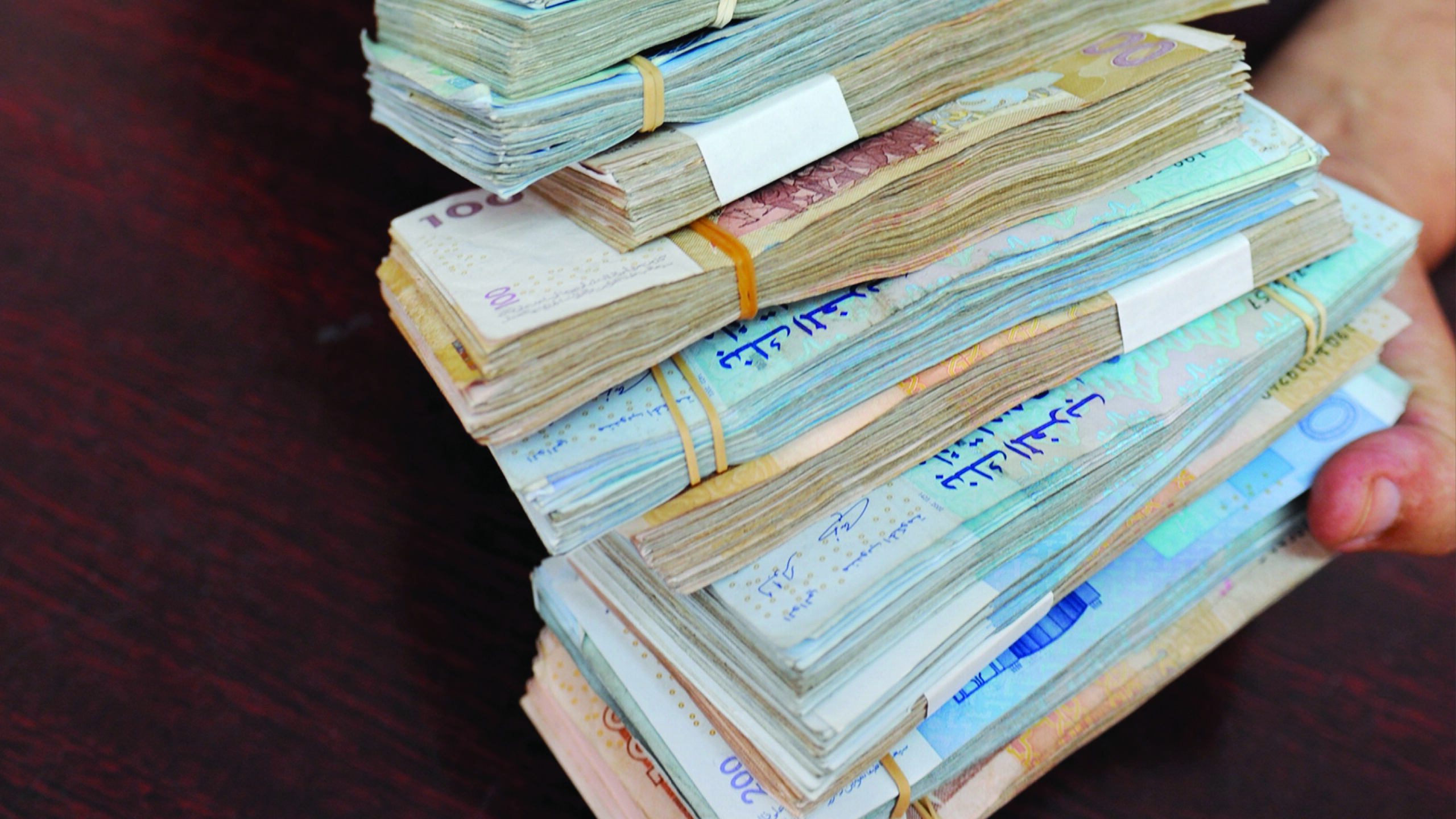
Over 475 billion dirhams. That is the staggering volume of cash currency in circulation in Morocco, according to central bank statistics at the end of October 2025. An amount that represents about 30% of GDP and places Morocco among the countries where cash circulates the most in the world.
It is true that culturally, cash has always been favored by Moroccans in their consumption habits. But what most concerns monetary authorities, led by Bank Al-Maghrib, is that in Morocco, cash currency continues to grow at a steady pace, while the global trend is towards a decrease in the use of cash.
Since the Covid crisis, indeed, the stock of cash circulating in the Kingdom has continued to strengthen. It experienced strong expansion between 2020 and 2023, growing at an average annual rate of 12%.
The year 2024 certainly saw a sharp slowdown, with annual growth of only 5.2%. But this deceleration was only temporary, essentially linked to the operation to regularize the tax situation of individuals, implemented by the government.
This cash amnesty triggered a flood of declarations, particularly in the last days of December 2024, ultimately reaching a total declared amount of 127 billion dirhams, nearly one-third of the cash in circulation at the time! But it must be said that a portion of this money has already left bank accounts.
In 2025, the rise in cash circulation has picked up again with a vengeance: since the beginning of the year and until the end of October, an additional 61.2 billion dirhams in cash have flooded into the national economy, returning to double-digit growth (+14.8%).
Cash Resists Digitalization
Despite the increasing digitalization of payment methods, the Moroccan economy thus remains largely “cash-dependent,” reflecting both social habits, an extensive informal sector, and incomplete financial inclusion. The explanatory factors for the predominance of cash currency are well known.
First, from a sociocultural point of view, consumption habits remain strongly tied to cash payments, particularly in traditional commerce, souks, and local services.
A recent study conducted by Visa in Morocco on a sample of 260 very small and small enterprises shows that cash remains the dominant payment method in Morocco, accounting for 63% of all transactions. From the perspective of economic structures, the significant weight of the informal sector de facto fuels the stock of cash in circulation.
The informal sector represents about 30% of GDP and absorbs a large portion of cash currency, allowing many actors to avoid fiscal traceability.
Furthermore, the various solutions deployed in recent years to accelerate digital payments are slow to produce the expected effects. Take payment accounts, for example.
At the end of 2024, there were 13.8 million of them, a strong growth of 33% certainly. But only 3.81 million of them are considered active, an activation rate of 28%.
What about equipping merchants with electronic payment terminals (EPT)? The number of merchants equipped with these EPTs at the end of 2024 is limited to just over 80,000 (+13%), according to Bank Al-Maghrib data, with very strong disparities between urban and rural areas.
The potential remains immense to expand the acceptance network. The pool of businesses that can quickly be addressed to accept digital payments is huge. According to another study by Visa and the Ministry of Industry and Commerce, this pool is estimated at 1.2 million businesses and shops.
Finally, incomplete financial inclusion is another aggravating factor: approximately 44% of adults remain unbanked according to the central bank. Rural areas remain particularly affected, due to limited access to banking infrastructure.
Strong Measures to Combat Cash
In this context, public authorities are truly on a crusade against cash and are leaving no stone unturned: launching a project to create the e-dirham, implementing tax incentives for merchants using digital payments, intensifying financial education…
The 2026 Finance Law even introduces a surtax on real estate transactions and sales of business assets carried out without a bank trace (see box). More recently, it is the entire architecture of the payment sector that was overhauled this year to accelerate the generalization of electronic payments and densify the acceptance network.
In this new configuration, the twenty or so payment institutions (PIs) in the country are playing an increasingly central role. Several of them have already launched their acquiring services. Above all, these institutions, more agile and better adapted than banks to certain on-the-ground realities, are positioning themselves as catalysts for financial inclusion by playing the proximity card.
From simple intermediaries for money transfers, these PIs are transforming into integrated financial services platforms, which help familiarize unbanked populations with basic financial services, creating bridges between cash and digital payments.
Finance Bill: Surtaxing Large Transactions Paid in Cash
In the 2026 Finance Law, the government introduces an unprecedented measure to reduce the use of cash in transactions and strengthen transparency: applying an additional registration fee of 2% on the transfer of real estate assets or business assets, when the payment methods for these transactions cannot be justified.
In short, for this type of transaction, paying in cash will cost more. It should be noted that currently, real estate transactions are subject to a proportional registration fee ranging from 4 to 6% depending on the nature of the asset, but without the obligation to specify the payment method in the contract.
A loophole into which many taxpayers have rushed, conducting their operations in cash outside the banking circuit, with the risk of tax evasion or under-declaration that this entails.