Kingdom
Casablanca 2030: The Metropolis Accelerates Its Transformation
The unprecedented transformations taking place in the metropolis were at the heart of the new edition of “La Vie éco”’s Conference-Debate Cycle. The major structuring projects are expanding and advancing at a sustained pace, with the organization of the World Cup acting as a catalyst.

Casablanca is transforming at a remarkable and rapid pace. In terms of urban infrastructure, mobility, sustainability and environment, water management, connectivity, and tourism, projects are proliferating.
The prospect of hosting the 2030 World Cup is clearly acting as a catalyst for these changes, which promise a significant improvement in the quality of life for Casablanca’s residents.
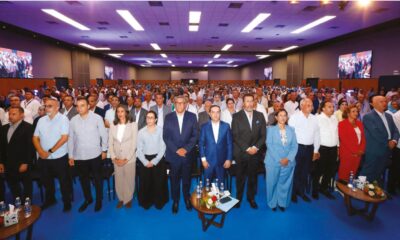
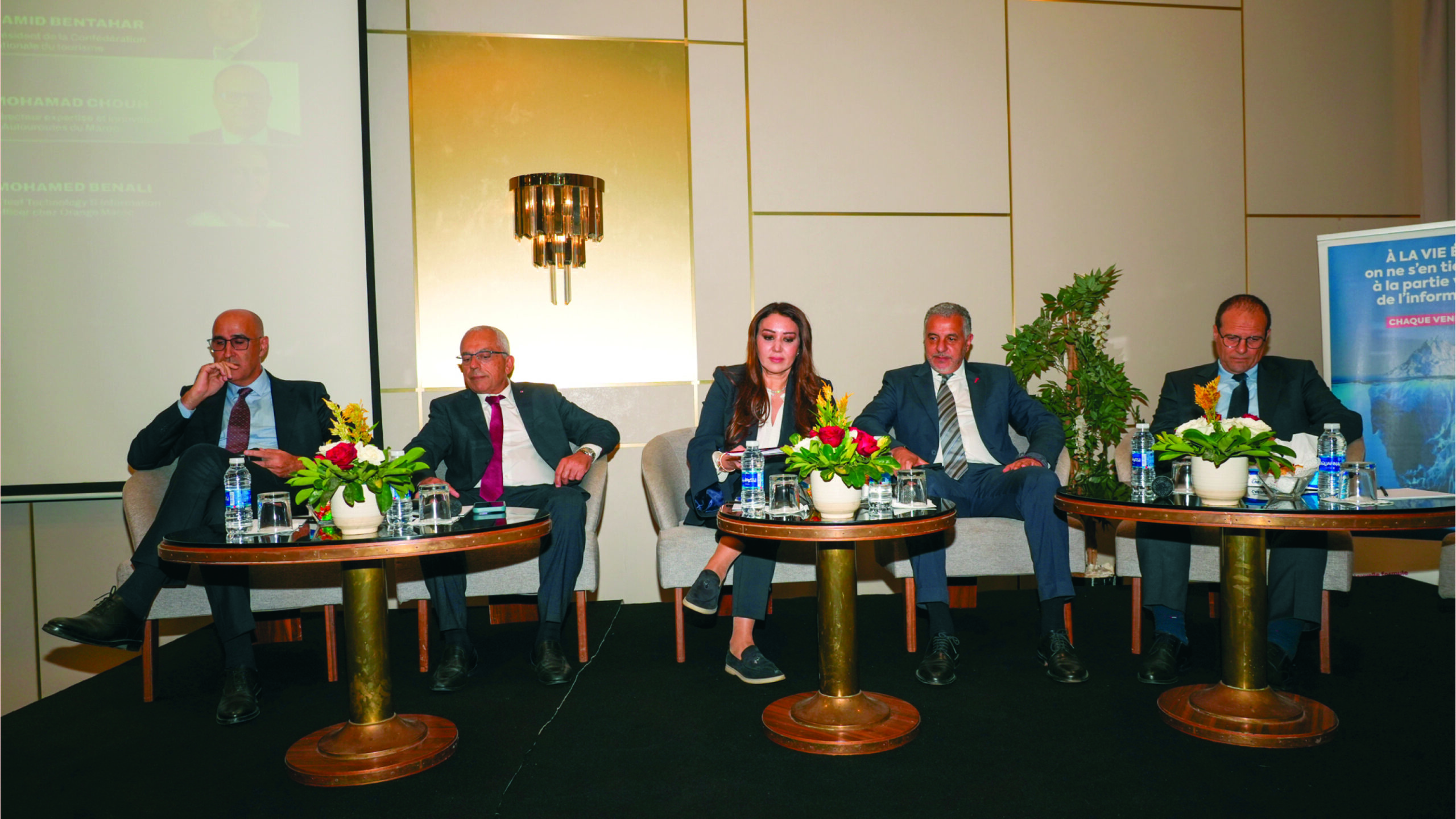
Nearly a year after organizing an initial conference-debate on the topic, “La Vie éco” once again brought together decision-makers and economic stakeholders from Greater Casablanca and the entire region to assess ongoing and upcoming transformations, as well as their challenges.
Prominent figures at the heart of these transformations participated in this conference-debate: Abdellatif Maâzouz, President of the Casablanca-Settat Regional Council, Nabila Rmili, President of the Casablanca City Council, Hamid Bentahar, President of the National Tourism Confederation (CNT), Mohamed Chouh, Director of Expertise and Innovation at Autoroutes du Maroc, as well as Mohamed Benali, Chief Technology & Information Officer at Orange Maroc.
To say the least, 2025 is marked by a clear acceleration in the execution of major projects. According to Abdellatif Maâzouz, President of the Casablanca-Settat Region, these transformations follow a dual imperative. On the one hand, improving the quality of life, particularly through numerous projects related to the environment, green spaces, water management, and air quality.
On this front, Maâzouz is pleased that pollution is significantly decreasing. “This has been made possible thanks to projects related to urban mobility, the tram, the renewal of buses and taxis…, but also the green spaces that have emerged throughout the city. It should also be emphasized that polluting industries are no longer permitted within the urban perimeter,” he clarified.
On the other hand, local authorities are working to consolidate the region’s economic leadership at the continental level. The official cited in this regard the royal projects recently launched, such as the new port complex, the high-speed rail (LGV) and regional express rail (RER), with the Casa-Sud station as an emblem, as well as the start of construction on the new terminal at Mohammed V Airport and the Grand Stade Hassan II, along with the future convention center. All these projects contribute to radically changing the face of the metropolis.
Open-Air Construction Site
For her part, Nabila Rmili confirms this reality that Casablanca residents observe every day: “Many things have already changed in the city. The inhabitants and visitors of the metropolis can already witness an acceleration of construction sites, whether in terms of mobility, connectivity, or sustainability. It is palpable,” she notes.
The mayor of Casablanca cites, in particular, urban infrastructure projects (underpasses, roadways, etc.) that have been completed in record time. A special focus has been placed on sustainability, with numerous projects, including the reuse of wastewater, the creation of green spaces, and the new waste transformation plant.
Regarding mobility, the official indicated that Casablanca has 100 km of tramway (compared to 27 km for Rabat), 26 km of BRT (Bus Rapid Transit), and 700 E6 buses, with an undeniable impact on citizens. “750,000 passengers are transported every day. The city of Casablanca has chosen to bear a deficit of 300 million dirhams to offer complete and multimodal mobility in favor of citizens,” she stated.
Several other major projects are underway. Rmili cites, among others, a new urban project currently being prepared around the Casa-Voyageurs station, which will transform the neighborhoods of Hay Mohammadi and Aïn Sbaâ. The metropolis will also host the largest agri-food platform in Africa. This project, spread over 3 years, will be located in Ouled Hriz, on a 309-hectare site.
Additionally, three large parking lots have been completed in Casablanca in two years. The latest, called Hypercentre and adjacent to the Hyatt Regency hotel, will accommodate 700 spaces and will open very soon. It will be the starting point of the future Avenue Royale, entirely pedestrian, which will completely transform the face of this area of the old medina.
In this stimulating context, tourism professionals are preparing. “Beyond infrastructure, we must work on hospitality, product quality, and service excellence,” affirmed Hamid Bentahar.
The president of the CNT (National Tourism Confederation) emphasizes that considerable effort has been made in the hospitality sector in terms of investment. “New prestigious establishments are setting up in Casablanca or are in the process of doing so,” he indicated.
Highway infrastructure is also booming to streamline access to the metropolis. Major projects, such as the tripling of the Mohammedia-Berrechid highway, have already been completed, recalled Mohamed Chouh. Others, which are strategic in nature since they will help streamline highway access, were inaugurated very recently.
This is the case of the Sidi Maârouf interchange and the Tit Mellil-Berrechid highway. The Aïn Harrouda interchange will be operational by the end of November. The official also highlighted the strategic importance of the future continental Casa–Rabat highway, 60 km long, to be delivered in 2028 and largely built by Moroccan companies.
Connectivity is not lagging behind. In this area as well, the city has taken a great leap forward, notably with the recent launch of 5G. “The essential infrastructure for connectivity is generally underground and not very visible. People are not necessarily aware of the transformations that have been carried out over the years and which now enable fiber optics and 5G, the latter opening new horizons for Casablanca’s residents, businesses, and visitors,” declared Mohamed Benali.
“Casablanca will be the standard-bearer for Morocco as an innovative and smart city,” he estimated. However, in the face of this unprecedented dynamism experienced by the metropolis, the question arises of how to sustain the necessary means, particularly through an active recovery policy.
The equation is as follows: the city’s revenues are around 5 billion dirhams, with a goal of reaching 5.2 billion dirhams in 2025. Fixed expenses amount to approximately 4.7 billion dirhams. Rmili concludes: “The challenge for the city of Casablanca is to find the necessary funding to manage the daily lives of its citizens.”