Kingdom
Aziz Akhannouch: “The Feeling of Duty Fulfilled”
The RNI president has just given a lesson to the partisan elite. At the pinnacle of his glory, he renounces seeking a third term at the helm of a party he has transformed. The journey of a UFO who soars above the Moroccan political class.

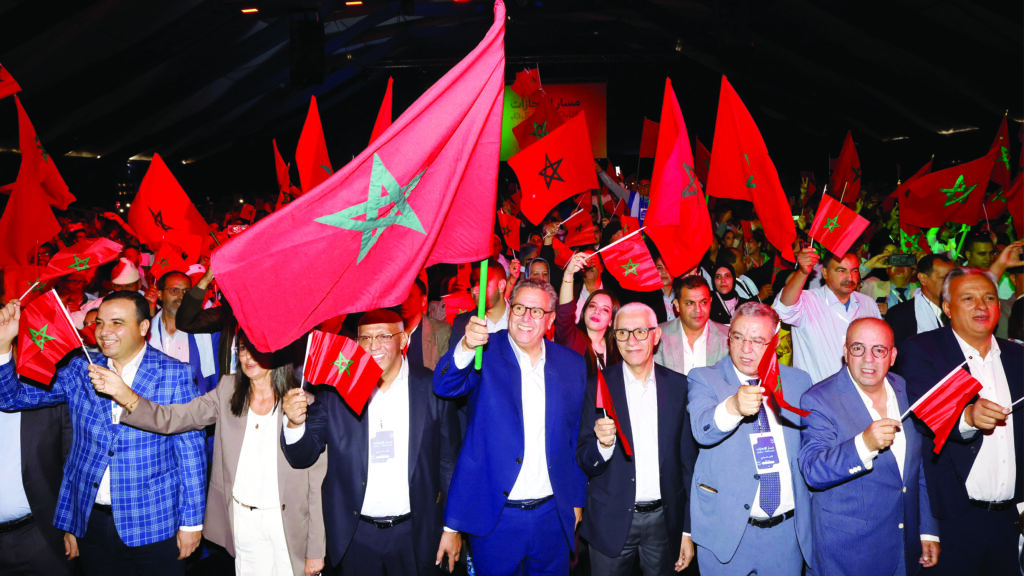
The presidential office on the 3rd floor of the central headquarters of the National Rally of Independents (RNI) in Rabat. A handful of press bosses are gathered on this late morning of January 11th: it is a Sunday, a holiday commemorating the presentation of the Manifesto of Independence, but a meeting with the head of government is not to be refused under any pretext.
True to himself, convivial and warm, Aziz Akhannouch hurries to join his guests, right after the end of a political bureau meeting held two floors below which ran over. Nothing in the RNI president’s demeanor suggests he was about to make a bombshell announcement.
“The political bureau has decided to convene an extraordinary congress for February 7th, to propose extending the terms of the party’s various bodies. But at my request, the congress will also proceed with the renewal of the presidential body,” he explains, before dropping the bomb: “I will not stand for a third term at the head of the RNI. A new president will take over to steer the party for the next legislative elections, for which I will also not be a candidate.” A hammer blow! Deafening silence! An angel passed…
Surprise Announcement
The shock was even more pronounced a few hours earlier when Aziz Akhannouch announced the news to the members of his political bureau. Only a few leaders were let in on this decision, which the president says he definitively made “during his few days of rest over the year-end holidays.”
The RNI’s senior executives were all against the president’s choice and took turns, during the political bureau meeting, trying to convince him to run again, especially since the party’s internal regulations could always be revised to allow for an extension or even a third term.
But this did not account for Aziz Akhannouch’s resolve and his authentic, sincere democratic fiber. “I would no longer have been able to look at myself in the mirror if I had allowed myself to be tempted to extend for a third term. The RNI is neither an inheritance nor a family business, and since I acceded to its presidency, I had promised not to exceed two terms. So it is time to pass the torch, especially since the party is now better structured, better organized, and has become an active and influential force on the political scene,” confides the man who announces his departure with “the feeling of duty fulfilled.”
And with good reason…
A New Boss
Already on October 12, 2016, the RNI political bureau’s statement welcoming the proposal to call upon Aziz Akhannouch to succeed the resigning president Salaheddine Mezouar had the effect of a political earthquake.
The new boss is a kind of alien to the partisan stables, labeled as a technocrat too “weld nass” to triumph in the grey areas of political poker bluffing. Except that the seasoned minister proved from the start that he has the mettle to project the RNI into a new dimension, to make it an example of internal democracy and citizen engagement.
Rather than relying solely on the party leaders’ plebiscite, Akhannouch insisted on establishing his legitimacy at a congress organized in record time: just two weeks after the announcement of his name, on October 29, 2016. “It was during this congress that President Akhannouch insisted on setting a maximum of two terms for the party’s presidential body. We should have refused at the time and left that provision open. We might have had a chance to convince him today to continue with us,” indicates this party cadre who believes there will be a before and an after Akhannouch. “He has a rigor and a culture of results that will be difficult to find in his successor,” he adds.
Ten Years of Achievements
The touch of this native of Souss, whose motto is “agharass agharass,” was quickly felt on the governance of the political formation. The party’s parallel organizations, which had struggled to emerge, proliferated and attracted new talent.
Youth, women, engineers, teachers, higher education professionals, medical and nursing associations, social aid organizations, student party members…, the RNI network expanded and infused a dynamic of quality over the months. The leader’s personality served as a magnet to attract new talent and his innate tact allowed him to value the historical figures of the party created by Ahmed Osman after the 1977 legislative elections.
These organizational entities, the RNI turned them into spaces open to developing expertise, honing skills, and strengthening its grassroots roots. The permanent contact with citizens – who had resigned themselves to equating parties with seasonal shops of the electoral market – gradually allowed for replanting the seeds of trust in political action.
Before presenting its 2021 electoral program, the RNI took care to consult the base and participatory mapped out a “path of trust” that set priorities focused on the social and the human.
The approach was unprecedented and proved winning: the ballot count on September 8, 2021, placed the RNI as the big winner of the legislative elections with 102 seats and over 2 million votes, as many as the combined score of the 4 previous elections.
Akhannouch was then legitimate for the royal trust as head of government. And here again, he demonstrated that he is much more than a party boss, but rather a unifying political leader…
“Since Driss Jettou, who himself was not a party leader, Morocco has never known such synergy and harmony within its governmental majority,” explains a former minister to us. And he adds: “We owe this to the pragmatism of Aziz Akhannouch who managed to convince his allies to place the supreme interest of the country above any partisan consideration, starting by setting the example himself.”
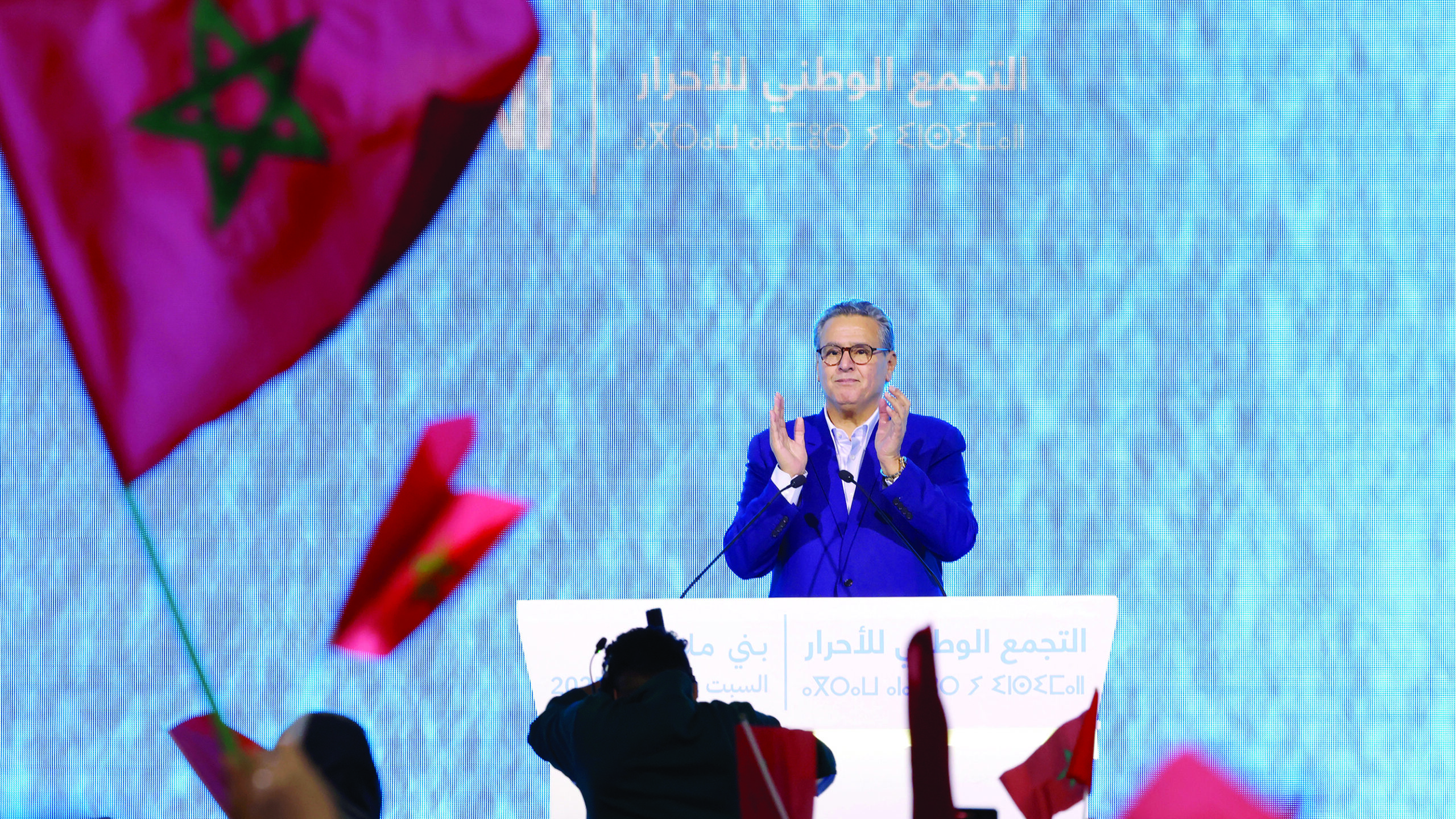
Indeed, it is very rare for the majority leader’s speeches to lack recognition of his allies’ commitment. “I wish to salute the unprecedented cohesion that has characterized the work of the current governmental majority. Thanks to the harmony prevailing among its members and the clarity of its methodology, the coalition parties were able to create favorable conditions for implementing our government program and respecting its commitments. This gave a positive and constructive impetus to the political landscape and our country’s development, steering various socioeconomic transformations in the right direction,” he said again on January 10th at the podium of the party’s National Council.
A speech that now sounds like the legacy of the RNI’s 4th president, undoubtedly the one who transformed not only this party, but the practice of politics in a country serenely pursuing its path toward democracy.
Politics Done Differently
Akhannouch’s decision not to seek a third term goes far beyond the RNI framework alone; it is a kind of lesson in humility and coherence addressed to the entire political class.
While dinosaurs cling to their armchairs and string together mandates at the helm of political ships drifting away amid rebellion in the hold, Captain Akhannouch shows consideration for the stripes of power. He passes the torch at the pinnacle of his glory, be it as party boss or head of government.
The country’s development indicators, on both economic and social fronts, soar from record to record. The reign’s projects, which once advanced slowly, mired in the sands of immobility, are deployed with speed and efficiency by the Akhannouch cabinet: medical coverage, hydraulic projects, direct social aid, the Investment Charter, health, education…, the train of reforms has shifted to high speed at the rhythm of Government Councils where decrees and laws are adopted in rapid succession.
Neither exogenous crises that flared inflation nor years of drought that destroyed agricultural jobs have served as a pretext for the Akhannouch government to shirk its responsibilities. Targeted aid and exceptional measures were implemented to mitigate the effects, while maintaining the course of development through structural reforms.
Pockets of resistance were also not lacking, infected with bad faith and disinformation against a backdrop of nihilistic and destructive discourse. Faced with this, Akhannouch has always been exemplary, with polite yet incisive words: “The RNI has chosen the path of responsible action, rejecting the logic of vain rhetoric and sterile postures that Moroccans are tired of and which have directly contributed to widening the gap of political apathy. This choice stems from our conviction that true politics is practiced on the ground, not through incendiary declarations or virtual forums, nor by exploiting crises to establish oneself in the public debate without any concrete impact,” to quote his retort during his last address before the National Council.
“Those who have no realistic alternative to propose have no right to lecture others,” Akhannouch had added. His detractors need only bite their tongues and content themselves with applauding the maestro…
Head of Government to the End
His second term at the head of the RNI is due to end on February 7th with the election of a new party leader, but his term as head of government continues in principle until the end of the legislature and the appointment by His Majesty the King of a new government. The same goes for his term as President of the Agadir City Council, which runs until the 2027 municipal elections.
Aziz Akhannouch, moreover, is not a man to shirk his responsibilities or leave work unfinished. The leader of the governmental coalition is counting on the cohesion of the majority, which has so far allowed for prioritizing the supreme interests of the country over partisan calculations and political squabbles.
The RNI will also always stand behind its former leader – who will continue to be part of the political bureau alongside the party’s ministers – to support the action of the head of government and enrich the achievements of the political formation in conducting affairs. For the record of the Akhannouch government is undoubtedly the best electoral argument for a formation that has been transformed under the leadership of a leader who has demonstrated that politics can be done differently.
It is up to his heirs to perpetuate this spirit and this dynamic that he knew how to instill by wisely renewing their leadership. Not easy, knowing that Akhannouch’s successor will have to contend with the shadow of a political UFO that will always hover over the palm trees of Annakhil Avenue in Rabat, where the party has planted its new emblem of a winner…