Kingdom
A quality public service for all
Water, energy, health and public schooling. Large-scale policies have certainly been carried out in these sectors, through reforms and major projects. But what the RNI proposes for the next phase is to make these achievements tangible for citizens in every territory.

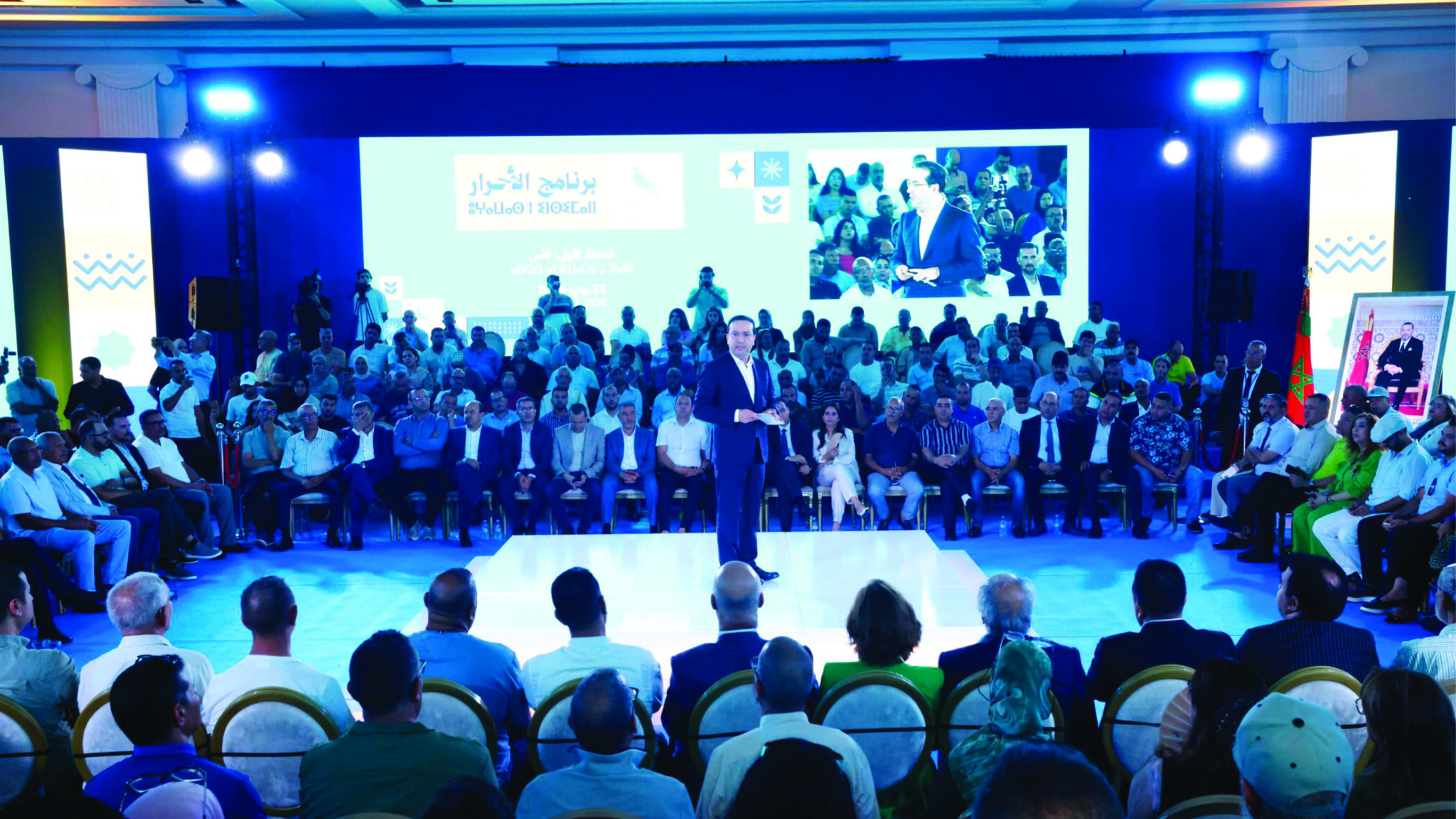
In Oujda, during the second stop of the RNI’s national communication tour to present the major commitments that form the pillars of its program, the party set out its second priority: “Ensure the quality of public services across all territories.”
This commitment, like the rest of the Independents’ Program, “is the result of listening, proximity, consultation and dialogue operations carried out by the party’s activists and elected officials in the country’s various regions, in addition to institutional consultations led by the party’s parallel organizations, numbering 19,” explained the party president, Mohamed Chaouki.
It also echoes the discussions organized as part of the “Path of the Future” meetings with the different components of society.
The drafting of the program, the RNI leader continues, relied on two fundamental pillars. First, the record of the government led by Aziz Akhannouch, which he described as exceptional.
Second, the ideas and aspirations expressed by citizens during the different consultation stages. This interaction enabled the party to develop a comprehensive and integrated vision “that charts the prospects for the next phase and responds to the real expectations of Moroccans.”
After presenting the four shields for the sustainable protection of purchasing power two days earlier, the RNI returned on June 24 with details of the second commitment of its program. Like the previous one, this commitment is broken down into four concrete measures.
Water: The last-mile bet
This measure is based on guaranteeing secure, autonomous and sustainable access to water resources. It is particularly aimed at rural families in precarious situations.
It will be implemented through a set of adapted provisions whose aim is not only to manage water stress, but rather to turn that management into a lever for territorial development, ensuring income stability in rural areas and strengthening economic inclusion. The party proposes action at three levels.
It plans to set up an “integrated water mix,” accelerating the implementation of major projects related to dams, interconnection of water basins and seawater desalination and, incidentally, brackish water desalination.
The second level of intervention is the “last hydraulic mile.” This consists of individually connecting families to the drinking water network in areas suffering from water stress. The third level is “local water.”
By this, the party means rainwater harvesting, support for localized irrigation systems and securing water supplies during drought periods.
The aim of this measure is to protect vulnerable populations and revitalize territories.
Energy: Enough to resell
This measure aims to help produce green energy and reduce household bills. It protects each family against price increases by enabling them to produce their own electricity and sell the surplus, without an initial down payment. To implement this measure, the RNI proposes a national self-generation program for electricity via solar panels.
Beneficiaries can equip themselves without an initial down payment, repaying the equipment purchase progressively through the savings made on their electricity bill, with the possibility of selling any surplus.
For direct social-assistance beneficiaries, energy costs will be directly integrated into the calculation of the social index threshold. In other words, any significant price increase will automatically result, without any action by the beneficiary, in an increase in aid for the 4 million families concerned.
For low-income families, the party proposes maintaining the electricity tariff unchanged in the lower consumption brackets during periods of exceptional energy shocks.
For the rest, this measure foresees opening the electricity market linked to medium voltage, the development of liquefied natural gas (LNG) and the green hydrogen value chain to strengthen energy sovereignty.
School: Success for all
Public school reform is already underway. Pioneer primary schools and colleges will be generalized by 2028, and pioneer high schools by 2031.
In parallel, the party commits to cutting school dropout by at least half. The aim is to make school a genuine lever for social mobility.
Operationally, this will translate into the generalization of school transport in all rural areas, in partnership with provincial councils, as well as school canteens and the provision of basic meals to children in public preschool and primary education.
Moreover, individualized pedagogical support via educational technologies is planned. In addition, the number of universities will increase from 12 to 27, along with 12 vocational and skills cities.
Health: Accessible quality care
The RNI has set itself the goal of overcoming remaining obstacles to access to care through integrated hospital networks, increasing medical density and gradually reducing out-of-pocket expenses for patients.
Within this framework, the action will focus on guaranteeing equitable access to quality health services, based on effective territorial and social equity.
This should be achieved through the generalization of Territorial Health Groupings (Groupements sanitaires territoriaux, GST) by 2027, at a rate of one health grouping per region, guaranteeing graduated care pathways from the health center to the University Hospital Center (Centre hospitalier universitaire, CHU), under a unified health system.
The family doctor will henceforth be considered a fundamental pillar of the care pathway, with the deployment of about 5,000 health assistants in rural areas.
The party also commits to increasing medical density from 30 to 45 health professionals per 10,000 inhabitants by 2030, while completing all University Hospital Centers (CHU) by 2029.
In parallel, it proposes rehabbing 1,600 primary healthcare facilities and creating 200 additional facilities in medically underserved areas, as well as deploying 100 mobile medical units.
Another commitment is the generalization of the Emergency Medical Assistance Service (national SAMU 141), with a single number, 12 regional SAMU services, and telemedicine covered 100% by Mandatory Health Insurance (Assurance maladie obligatoire, AMO).
Furthermore, the party commits to gradually introducing a third-party payment system in the public sector and, in parallel, to review medicine prices and update reimbursement tables.