Kingdom
2026–2031 Program: The RNI traces the “Path of the Future”
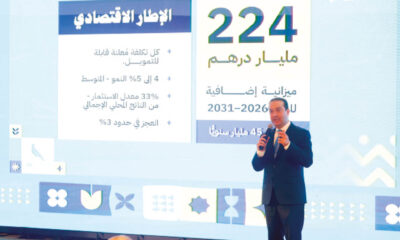
Through its three commitments, each broken down into four measures, the party initiates a shift from a logic of assistance to one of accompanying citizens toward financial and economic autonomy. Moroccans are no longer merely assisted; they are given the means for their own emancipation. Analysis.

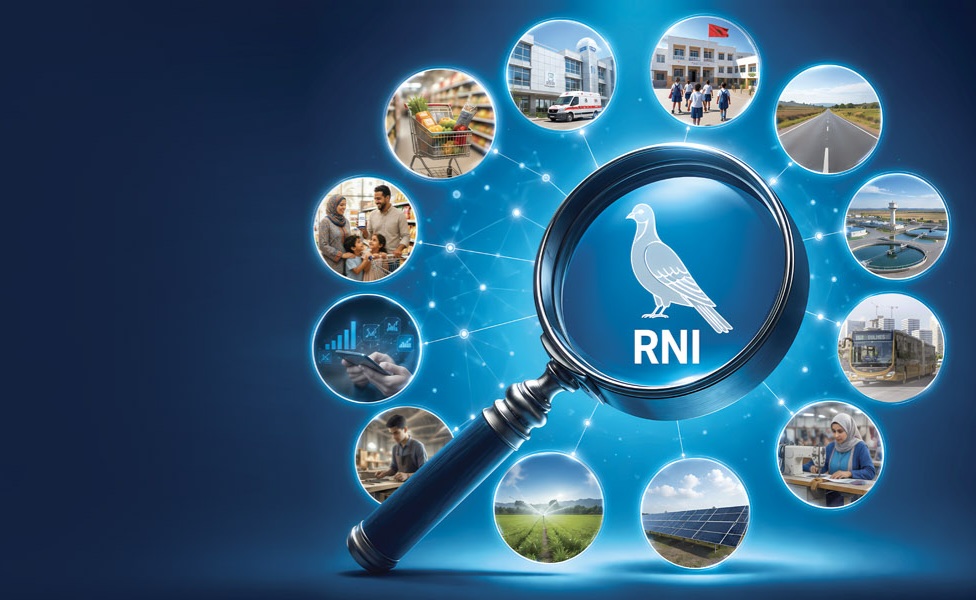
“Three commitments, twelve measures.” Behind this simple formulation is a serious program with a coherent guiding line and precise sociological targeting.
Between the three commitments presented progressively, in a skillful use of political communication, one detects a logical and well-constructed progression of measures, their substance and the targeted groups. As the party specifies, this is a “clear roadmap for a Morocco that unites us and preserves our dignity.”
Through this program, the RNI lays out its political project: “a unifying project to build a social and economic edifice that preserves dignity and opens horizons for social ascent.”
But also a project “that brings about a radical change in the philosophy of the social state, moving from a logic of assistance to an effective accompaniment toward autonomy.”
Unlike other political projects that advocate “redistribution” and “universal services” within a welfare-state model, the RNI proposes what could be defined as a model of an “State-as-platform.” In this logic, the state creates conditions, guarantees the floor (a minimum threshold or social safety net), then leaves room for individual initiative. The terms used are revealing. This is also consistent with the party’s ideological frame of reference.
It is useful to recall, in this regard, that officially the RNI declares itself aligned with the broad social-democratic family as its ideological reference. In that sense, the party favors a pragmatic approach focused on values and ideas rather than dogmatic ideology.
That is why, in its commitments, the party refers to “shield,” “lever,” “springboard”… but never solely to “assistance.” The choice of cities is itself revealing.
The party began its tour in Fes to present its first commitment related to the sustainable support of purchasing power for certain social categories, from the most vulnerable layers to the lower middle class. The informed observer will note that the Fes-Meknes region houses the highest density of people in poverty (according to the 2024 census results).
Its multidimensional poverty rate is 9%, placing it just behind Beni Mellal-Khenifra (9.8%) and well above the national average, which is 6.8%.
L’Oriental, in Oujda, where the party presented its second commitment regarding access to basic services (water, energy, school, health), is one of the regions where the deficit in basic infrastructure is noticeable.
The water issue recurs there, especially as it is a region with high sunshine levels, making the measure on photovoltaic self-generation of electricity especially relevant.
Nevertheless, it is a region expected to experience significant growth with the progressive commissioning of the Nador West Med port. Marrakech and its region, which the party chose as a stop to present its third commitment, are both a tourist city and agriculturally oriented.
Also, thanks to the coasts from Safi up to north of Agadir, it is known for maritime fishing activities. Again, the measures specifically targeting seasonal workers, whether in agriculture or tourism, make full sense.
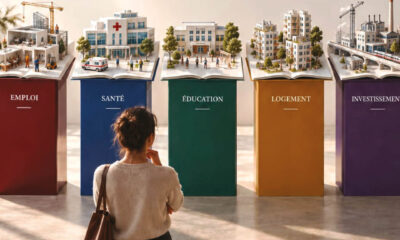
The guiding line is clear. One cannot economically integrate a person or household whose purchasing power collapses and who lacks access to water, healthcare or schooling.
A question of coherence
To recap, and as presented, the party’s first commitment concerns the sustainable protection of purchasing power (social shield, savings, wages, education), the second focuses on the quality of public services across all territories (water, energy, school, health), while the third concerns economic inclusion through employment (job dynamics, return bonus, seasonal workers, productive loans).
Each commitment aims to combine immediate protection with medium-term productive capacity. The “seasonal worker card” is the most sophisticated example: it does not distribute; it formalizes and accumulates rights.
Access to energy becomes not only a right but a means to generate additional income. The surplus of produced and unused energy is, in fact, sold back to the public operator and the profit contributes, in time, to finance repayment of the equipment cost.
Similarly, a savings account for informal-sector workers becomes, besides a pension insurance, a tool of financial inclusion and, beyond that, a means to contain cash circulation.
That said, the target of this program is clearly defined: the middle class, the informal sector and socially precarious groups. Note that the first two categories run across the three commitments recurrently.
The savings shield (1st Commitment), the seasonal worker card (3rd Commitment), interest-free loans (3rd Commitment), the education tax-credit (1st Commitment) — all this targets a population that earns too much to be officially declared poor, but too little to plan for the future.
The territorial dimension is also very present. It is not a slogan; it is a structuring approach. It appears through the final link of water, the last mile, in health via the Territorial Health Groupings (2nd Commitment), the university network, vocational training establishments and pioneer primary schools, colleges and high schools (2nd Commitment), and the employment dynamic by territorial basin (3rd Commitment).
It is hard not to see here a policy of deconcentrating public supply that responds perfectly to needs created by reforms already launched in social policy.
The generalization of Mandatory Health Insurance (AMO), for example, would only be relevant if the healthcare supply accompanies the demand generated. That said, the three commitments form a coherent whole, where each element is intimately linked to the others.
The logic that ties this whole together is a social-democratic vision of the state. The protective state (presented in Fès) that guarantees dignity and social stability to avoid internal fractures that would block reforms.
The builder state (presented in Oujda) that invests in heavy infrastructure to correct market failures (water stress, energy cost), and the facilitator state (presented in Marrakech) that removes individual barriers (with access to credit, recognition of informal work, continuous training) so that economic growth (5% per year) truly benefits individuals and not just macroeconomic aggregates.
After the 2021–2026 government mandate focused on establishing and consolidating the foundations of the social state, the overall guiding line of the 2026–2031 program is to ensure that the Moroccan citizen is no longer merely a beneficiary of public policies, but an actor in a Morocco that generates wealth for all, wherever they are.