Influences
UM6P CoreLabs: A New Pan-African Platform for Experimental Research
These laboratories of excellence, dedicated to imaging, biosciences, and analytical chemistry, offer researchers unprecedented access to cutting-edge technologies.

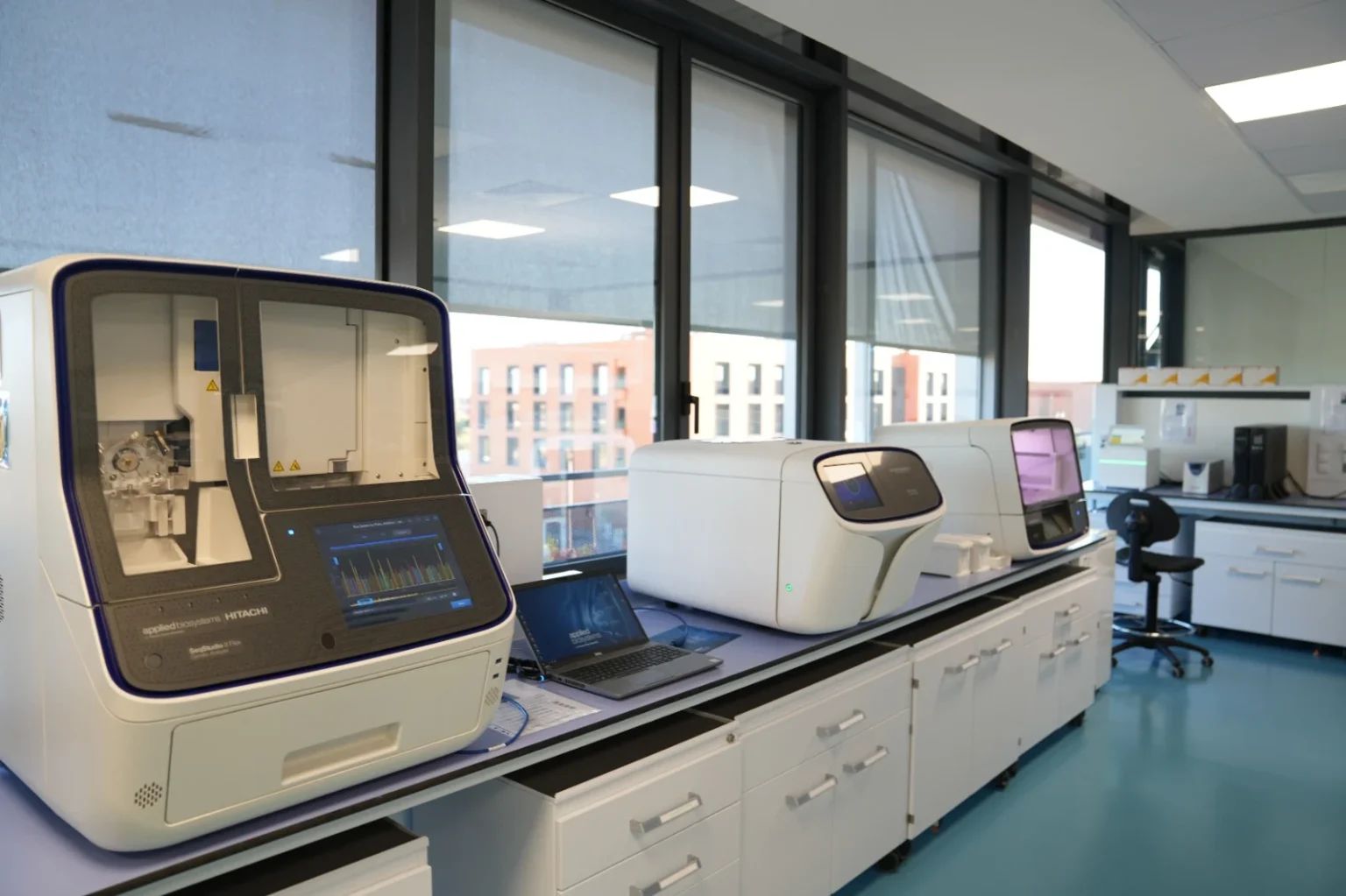
Mohammed VI Polytechnic University (UM6P) inaugurated on Thursday in Benguerir the UM6P CoreLabs, a multidisciplinary scientific infrastructure designed to transform research, innovation, and training in Africa.
The establishment of this new platform is based on the observation that scientific and industrial competitiveness today depends as much on the mastery of infrastructures, data, and analytical flows as on training or funding.
African researchers have often been forced to depend on laboratories located abroad, with access constraints, significant delays, and a loss of control over the data generated.
UM6P CoreLabs addresses this deficit by offering an integrated environment where all stages of research (observation, experimentation, analysis, and validation) can be carried out locally and according to international standards.
These laboratories of excellence, built around three platforms – Imaging and Characterization, Biosciences, and Analytical Chemistry – offer unprecedented access to cutting-edge technologies that were until now rare on the continent.
The Imaging and Characterization CoreLab provides researchers with unique instruments on the continent, such as the Transmission Electron Microscope (TEM) and the Focused Ion Beam (FIB).
These tools enable nanometric-scale analyses and in-depth investigations of the structure and composition of materials. These capabilities open concrete perspectives in the fields of advanced materials, clean energy, precision agriculture, and health.
Issam Rabtti, Director of “UM6P CoreLabs,” noted that this achievement marks a major step in strengthening scientific sovereignty, producing local value, and integrating Africa into international networks of knowledge creation and dissemination.
For her part, Zineb Rchiad, Lead at the UM6P BioSciences CoreLab, noted that this represents a major milestone for research in biotechnology and genomics, noting that it makes it possible to decode complex biological systems, from the individual cell to the complete genome, and to develop applications ranging from precision medicine to food security.
She emphasized that this capability opens the way to research conducted in Africa and for Africa, strengthening scientific sovereignty and control over sensitive biological data.
The Analytical Chemistry CoreLab completes this infrastructure by offering tools for the detection and detailed analysis of pollutants, trace metals, and emerging substances in water, air, soil, and food.
These technologies transform complex data into actionable information, providing researchers, industry players, and decision-makers with the means to develop concrete and sustainable solutions for responsible development and effective management of natural resources.
Beyond equipment, the CoreLabs embodies the strategic vision of an integrated scientific ecosystem, where the university, applied research, and industry converge to generate tangible socioeconomic impact.
The platform promotes interdisciplinary and international collaboration, giving researchers and companies privileged access to the instruments and expertise needed to tackle the continent’s complex challenges and strengthen the technological and scientific sovereignty of Morocco and Africa.
It should be noted that the CoreLabs is also designed as an innovation accelerator and a continental reference hub, open to collaboration with universities, research centers, and industrial actors across Africa, enabling the transformation of scientific output into concrete solutions adapted to regional priorities.