International
Escalation and Entanglement: The Evolving Conflict between Israel, the US, and Iran
The Israeli-US campaign against Iran is increasingly characterized by an escalation trap, where initial tactical successes fail to achieve strategic goals, leading to heightened risks of a protracted conflict. Iran’s “horizontal escalation” strategy complicates the situation, threatening regional stability and deepening economic impacts on the Gulf states and global energy supplies.

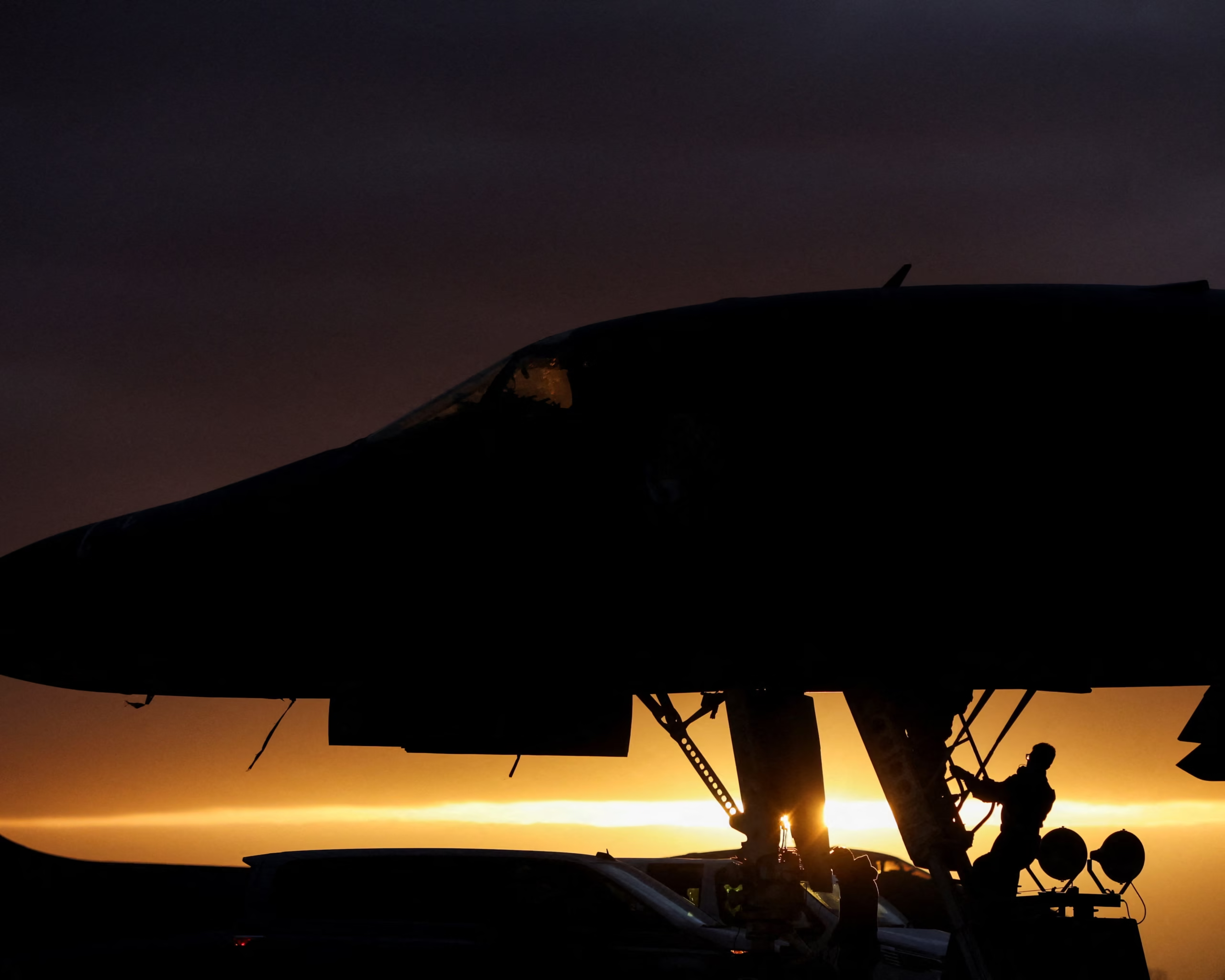
The ongoing Israeli-US military campaign against Iran and its proxies has entered a complex phase characterized by two competing concepts of military escalation, which pose significant risks. Despite initial tactical successes, including the targeted killings of key Iranian leaders, the broader strategic objectives have not been met, with Iran’s nuclear capabilities remaining intact. Tehran’s response has involved a deliberate strategy of “horizontal escalation,” aiming to expand the conflict’s geographic scope and economic impact, particularly on energy supplies and US-Gulf relations.
Robert Pape highlights the phenomenon of an “escalation trap,” where initial tactical victories do not translate into strategic success, leading to a cycle of increased military engagement without clear objectives. The situation is exacerbated by diverging views within the US administration and military on how to proceed, with President Trump driven by a desire for coercive control, while experts warn of the potential for a broadened conflict that could involve troop deployments in Iran.
Simultaneously, Iran is utilizing its military capabilities to target Gulf states, complicating US interests and fostering domestic dissent within those nations. The dynamics of the conflict suggest that both sides are engaged in a precarious game of escalation, with the risks of unintended consequences and prolonged engagements looming large. The trajectory of this conflict will significantly depend on the political decisions made in the immediate future, particularly regarding how the US approaches the complex landscape of threats from Iran and other global actors.
SOURCE: THE GUARDIAN