Kingdom
Zidane: Africa Today Needs Policies and Initiatives Aligned with Its Priorities
Karim Zidane, Minister Delegate for Investment, Convergence and Public Policy Evaluation, stressed on Friday in Laayoune that, in the face of the continent’s challenges, public action must be adapted by developing evaluation and forward-looking mechanisms.

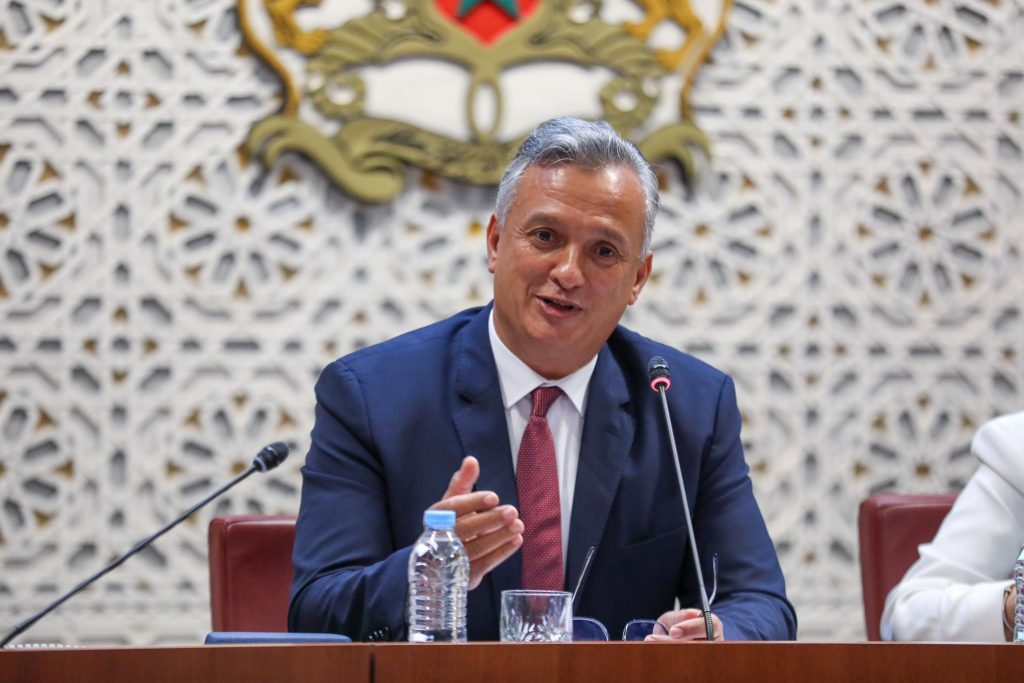
The Kingdom of Morocco is constantly committed to major African causes, particularly sustainable development, economic integration, and the consolidation of peace and stability, stated Karim Zidane on Friday in Laayoune.
This commitment falls within the framework of the enlightened Vision of His Majesty King Mohammed VI, which elevates South-South cooperation into a fundamental lever for development in Africa and embodies a solidarity-based approach among the continent’s countries, emphasized Mr. Zidane in an address during the 10th General Assembly of the African Parliamentarians’ Network on Development Evaluation (APNODE).
The Minister highlighted the importance of effective public action, centered on the citizen and based on policies capable of tangibly improving living conditions, in an international context marked by rapid changes and growing challenges.
In this regard, he recalled that Morocco, aware of the strategic importance of evaluation, has strengthened its institutional governance system through reforms targeting the performance of public action, the modernization of the administration, and the convergence of public policies.
The Minister stressed that evaluation “should not be perceived as a simple a posteriori control tool, but as a tool for guiding investment, providing economic actors with reliable data on the results of sectoral policies.” This approach fosters, according to him, a more predictable environment for investors and strengthens the credibility of public initiatives.
Faced with the continent’s challenges, Mr. Zidane insisted on the need to adapt public action by developing evaluation and forward-looking mechanisms, by improving the effectiveness of development policies through better regional cooperation, and by reforming operating methods to strengthen convergence and consultation.
Likewise, he insisted on the need to develop evaluation systems in African countries, considering it a collective responsibility involving governments, legislative institutions, oversight bodies, academic circles, and civil society.
He concluded that Africa, rich in investment and growth opportunities, today needs policies and initiatives aligned with its priorities, capable of overcoming obstacles to its sustainable development and economic integration.
Held under the theme “APNODE: A Lever for Improving Public Policy Evaluation for Inclusive Governance,” the 10th General Assembly aims to reaffirm political commitment to evaluation in Africa, strengthen the legislative and institutional frameworks that govern it, and promote regional cooperation in this field, at a time when African countries are assessing progress made under Agenda 2030 and Agenda 2063.
This meeting is a key moment for APNODE, offering a space for consultation, institutional monitoring, and exchange of experiences, and contributing to the strengthening of an African evaluation culture in service of more effective, transparent, and results-based public governance.