Kingdom
Zakaria Tmalah: “Moroccan Comics Are Fragile, But They’re Holding Strong”
The comics artist and educator breaks down for LVE the Ninth Art scene in Morocco, between a fragmented legacy, outside influences, and the emergence of innovative collectives.

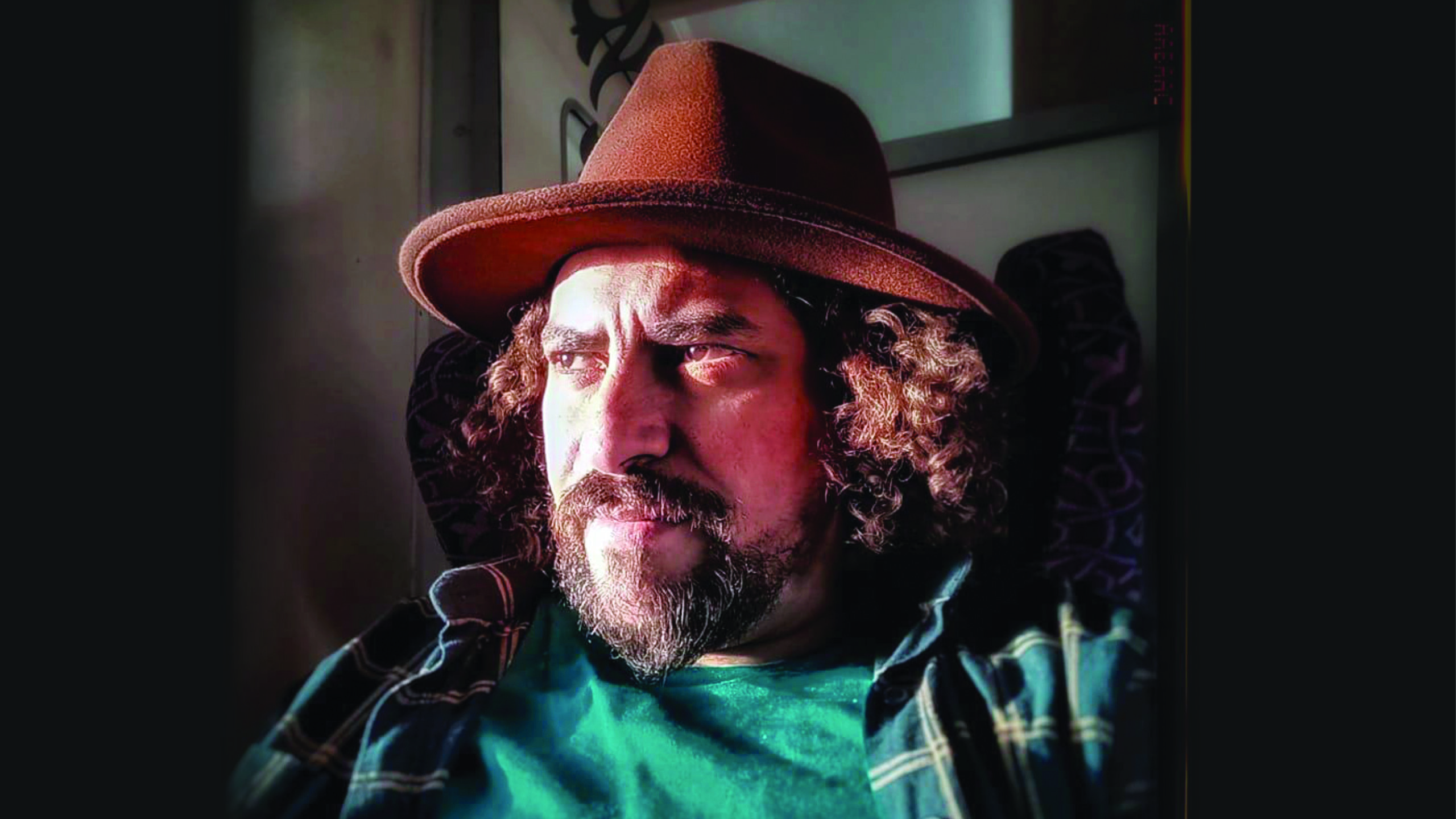
Zakaria Tmalah is a Moroccan comics artist and visual artist active on several fronts of the Ninth Art scene. His work—visible in particular on online art platforms where he presents comics such as Tahta A’Ssifr, Tentation Bleu, or Le KiDnappé, as well as illustrations and covers—reflects a committed, multifaceted aesthetic within contemporary Moroccan comics.
On social media and other platforms, he regularly shares his creations and visual reflections, helping keep alive a milieu that is still fragmented, yet buzzing with activity.
How did comics begin to exist in Morocco?
They had one foot everywhere and the other nowhere. Comics existed in discourse, in childhood memories, or in a few activist fanzines, but there was no truly structured readership. Passionate readers were there, but following production over time and building a collection was almost impossible.
What obstacles delayed the emergence of a local scene?
Even before speaking of a Moroccan scene, the country was saturated with pan-Arab youth magazines: Majid, Bassim, Al-Arabi. These cheap, mass-circulation publications defined what was expected of comics: a medium for children, in standard Arabic, with standardized values. This froze the image of comics as a minor art, meant for learning more than for experimentation.
Can we say Moroccan comics began with Mouride?
No—well before him, there were pioneers like Bouhali. Mouride published On affame bien les rats in the 1970s, released while he was still imprisoned.
Each page was secretly passed out by a relative or a lawyer, circulating from hand to hand out of sight. Later, in the 1990s, Le Coiffeur moved between comics and caricature—an in-between that served to comment on society, but limited the possible forms.
How were the different models structured in the 80s–90s?
Two logics coexisted: on the one hand, French-language production, highly political, intended for a small, committed readership. On the other, Arabic youth magazines—massive and regular, accessible to everyone.
The balance of power was clear: the elitist production struggled to compete with the industrial machine of children’s publications. I remember buying Majid early every Monday; it was impossible to keep up with the pace using our irregular local publications.
Does the new generation bring a new momentum?
Absolutely, but it doesn’t come out of nowhere. Many started as early as 2004 with the first comics class at the Tétouan School of Fine Arts. Since then, a multitude of creations has emerged.
Foreign collectives, like Toktok in 2011, and local initiatives, like the fanzine Skefkef, inspired this momentum. Artists such as Mohamed El Bellaoui, aka Rebel Spirit, popularized comics through social media and helped structure the milieu.
What role do residencies and academic research play?
A fundamental one. Residencies, workshops, and research work have helped make comics a recognized cultural field. In 2012, I took part in a residency in Spain with Omar Ennaciri and Brahim Raïs: each of us explored a different universe (begging, global warming, adaptation of action films).
Two Spanish women were also involved, working on manga… Where Spain focused on a single genre, we were exploring a broad spectrum of styles and themes—reflecting Morocco’s cultural richness.
Have subsidies changed things for authors?
Yes, but with stricter rules. The first supports from the Ministry of Culture date to 2013. Today, you need an artist card, a detailed project broken down phase by phase, and a precise budget. The amounts sometimes exceed 200,000 dirhams, but generally hover around 100,000. It helps, but comics remain above all a labor of passion—demanding and poorly paid.
What should we take away from Moroccan comics today?
They are minority, fragile, and often invisible, but they do not disappear. Thanks to collectives, festivals, residencies, and the authors’ tenacity, they continue to reinvent themselves. Moroccan comics are under construction: they grope forward, rub up against reality—and that may be their greatest strength.