Kingdom
Zagora: El Bouari chairs the opening of the first National Oasis Forum
A partnership agreement was signed to finance and implement the Zagora Oasis Development and Rehabilitation Program 2026–2029, with a budget of 624 million dirhams over four years.

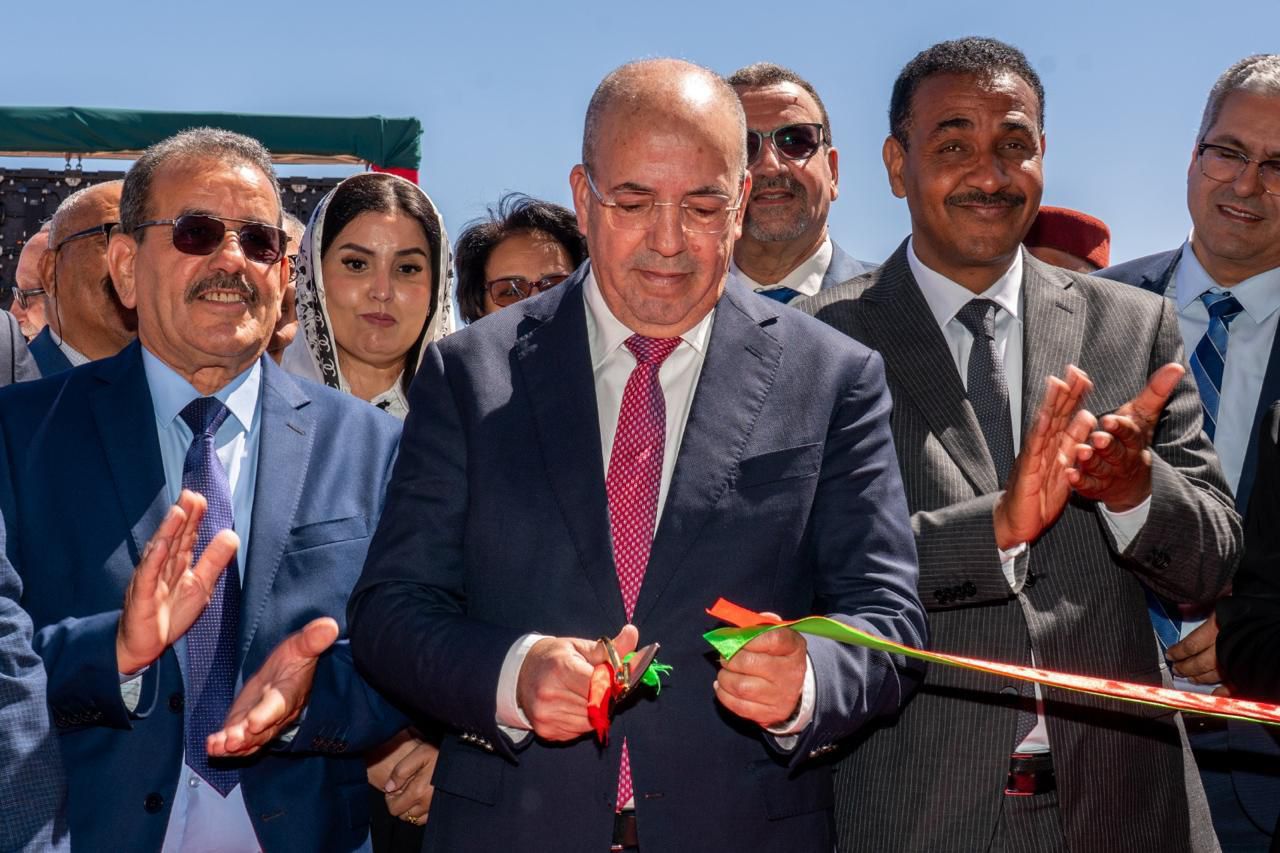
The Minister chaired the opening of the first edition of the National Oasis Forum, held in the province of Zagora from April 10 to 13, 2026, under the theme: “Oases: a challenge for sustainability and human development.”
This forum serves as a platform for exchange and reflection, bringing together institutional officials, researchers, experts, and local stakeholders to examine the challenges facing oasis ecosystems, particularly the effects of climate change, sustainable water resource management, the promotion of oasis products, and the strengthening of the resilience of production systems. It also saw the participation of 60 agricultural cooperatives and economic interest groups (EIGs) from oasis areas, representing a diversity of agricultural products and illustrating the richness and economic potential of these territories.
A first partnership agreement was signed for the financing and implementation of the Zagora Oasis Development and Rehabilitation Program 2026–2029, with a total budget of 624 million dirhams over four years. It notably aims to rehabilitate the oases of the province, strengthen oasis production systems, enhance water resources and local products, and improve the living conditions of local populations.
In addition, a framework agreement was signed between the National Institute of Agronomic Research (INRA) and the company DigiCrop, with the aim of strengthening innovation in the field of smart agriculture in Morocco. This agreement seeks to structure the partnership in research and development as well as innovation valorization, while supporting decision-making through the use of real-time digital agricultural data. It also aligns with the digital transformation of the agricultural sector by promoting its deployment in oasis areas toward a more sustainable and competitive model. In this context, these technologies will be deployed, in partnership with DigiCrop, at the experimental research domain in Zagora as a pilot phase within oasis zones.
On the sidelines of the forum, a competition was organized to select the best sheep and goat breeds from oasis areas. The competition featured the D’man, Blanche de Montagne, and Noire de Siroua sheep breeds, as well as the Drâa goat breed.
The competition was supervised by committees composed of breed experts, technicians, livestock advisors, and representatives of the Ministry of Agriculture. Twenty breeders took part, and the selection process resulted in four breeders being awarded as the best producers of sheep and goat breeds in oasis areas.
Visit to agricultural infrastructure
On this occasion, the Minister inaugurated the new headquarters of the Zagora agricultural subdivision. Built over a covered area of 1,620 m², this infrastructure will improve reception conditions for farmers and users, while strengthening support and advisory capacities for the agricultural sector at the provincial level.
In the commune of Assrir, the Minister reviewed the actions undertaken to develop the beekeeping sector in the province. With a total investment of 7.2 million dirhams, these initiatives include support for beekeepers, the distribution of beehives and equipment, capacity building for stakeholders, and the establishment of a processing unit.
The Minister also visited the Assrir beekeeping processing unit, built on a total area of nearly 700 m². With a cost of 1.7 million dirhams, this unit will help process around 50 tons of honey and hive products, while generating local employment opportunities.
The visit also covered hydro-agricultural development and water-saving projects in the province of Zagora. Mobilizing a total investment of 275 million dirhams, covering both large-scale and small- and medium-scale hydraulic perimeters, these interventions include strengthening irrigation networks, constructing hydraulic infrastructure, and improving rural facilities.
As part of the National Irrigation Water Saving Program, 1,758 farmers have benefited from subsidies totaling 568 million dirhams, enabling the equipment of 9,177 hectares with water-efficient irrigation systems. In addition, solar-powered irrigation now covers 7,320 hectares in the province.
Irrigation management in the Drâa Valley is based on rigorous monitoring of water releases, ensuring controlled and equitable distribution of water resources among the different palm groves.
In this context, the agreement related to the construction of diversion weirs, covering 17 municipalities, mobilizes a total investment of 170 million dirhams. To date, 63 structures have been completed, helping to strengthen water resource mobilization and improve living conditions in oasis areas.
Furthermore, the development project for the Maghouss and Tanssita perimeters includes the construction of two diversion weirs and the development of 4 km of canals, aimed at improving the efficiency of the irrigation network and optimizing water use in these agricultural areas.