Business
Yola Fresh: Reinventing Agricultural Distribution Channels
By digitizing the fruit and vegetable supply chain, Yola Fresh is tackling one of the most fragmented markets in Morocco. It aims to bring structure to a key sector and establish itself as a future leading player in agritech in Africa.

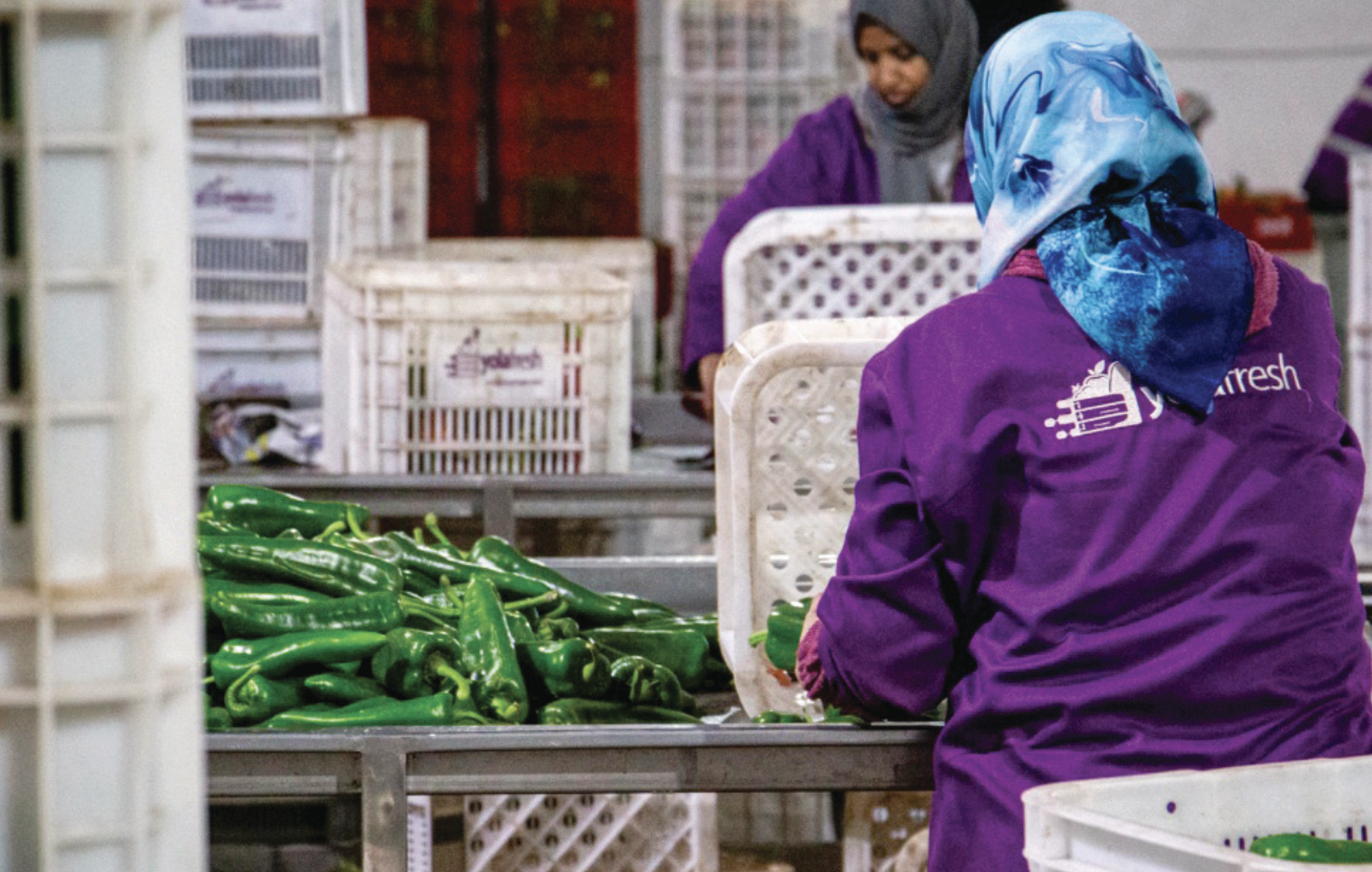
In the bustling alleyways of Casablanca as well as in the residential neighborhoods of Rabat, a new generation of Moroccan entrepreneurs is tackling the blind spots of the informal economy. Among them, Yola Fresh stands out as one of the most promising foodtech companies in the Kingdom, reinventing the distribution of fruits and vegetables between farmers and retailers.
Founded in 2023, the startup is built on a simple observation: in Morocco, the agricultural supply chain remains fragmented, poorly digitized, and marked by multiple intermediaries. The result: squeezed margins for producers, high price volatility for merchants, and significant waste.
The young company offers a technological alternative. Through a digital platform, it directly connects farmers with grocery stores, greengrocers, and small urban retailers. Yola Fresh handles logistics, optimizes delivery routes, and ensures better visibility on prices and volumes. Behind this promise lies a clear objective: to streamline the supply chain, reduce costs, and improve traceability.
Digitizing the informal sector without disrupting it
Yola Fresh’s bet is not only technological; it is also cultural. The fruit and vegetable trade in Morocco still largely relies on trust-based relationships, traditional wholesale markets, and long-established distribution channels.
Rather than bypassing these practices, the startup chooses to modernize them. Retailers place orders via smartphone, track their deliveries in real time, and access a purchase history that simplifies inventory management. On the farmers’ side, the platform provides better demand predictability and more structured payment timelines.
This vision quickly attracted investors. The startup completed a seed funding round in March 2024 to accelerate its scaling efforts. Shortly after, it secured $7 million in pre-Series A funding to optimize the supply chain for small farmers and retailers. The round was led by Al Mada Ventures, with investments from Algebra Ventures, E3 Capital, Janngo Capital, and FMO.
This transaction, backed by funds active across the African continent, confirms the growing interest in B2B models rooted in the real economy. The capital raised is intended to densify the logistics network, improve demand forecasting algorithms, and expand geographic coverage.
Rapid growth
In just a few months, Yola Fresh has rolled out operations in several major Moroccan cities, relying on regional hubs. Its asset-light yet structured model leverages urban density to quickly achieve profitability in each area.
However, its ambition goes beyond the Moroccan market alone. The problem it addresses—fragmented agricultural supply chains, logistical inefficiencies, and lack of price transparency—is common across many African countries.
In the medium term, the startup could capitalize on these structural similarities to pursue regional expansion. The growing interest of investors in agritech in Africa works in Yola Fresh’s favor. Between food security imperatives, price pressures, and the rapid digitization of SMEs, the sector is increasingly attracting capital in search of scalable models.
Yola Fresh embodies this new wave: a startup grounded in the real economy, operating in a massive and tangible market, yet structured by data and logistical optimization. In a Moroccan ecosystem long dominated by fintech and e-commerce, it serves as a reminder that innovation can also emerge from the heart of wholesale markets and agricultural operations.
At a time when Morocco is accelerating its strategies for food sovereignty and agricultural modernization, Yola Fresh could well establish itself as one of the most emblematic faces of this transition: that of a connected, more equitable agriculture resolutely focused on the future.