Kingdom
Women in Parliament: One Third by 2026 and Parity by 2030?
Since the launch of consultations on the 2026 legislative term, women politicians have been actively involved. They have initiated a proposal advocating for the principle of allocating one-third representation in the Chamber of Deputies. Details.

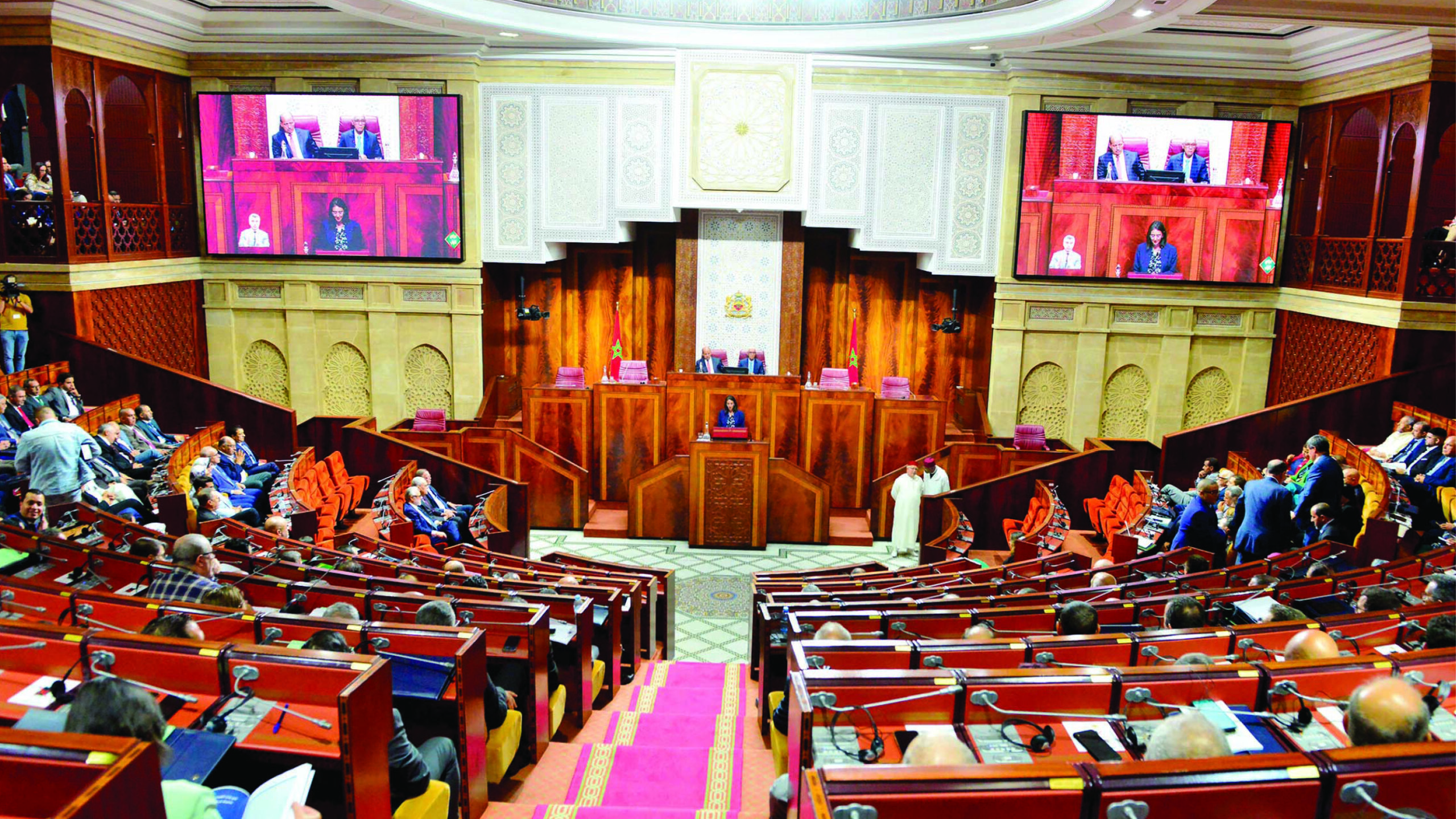
In the political scene, there are moments when the political divides between the majority and the opposition fade. The initiative by women from political parties represented in the first Chamber of Parliament recently illustrated this. A common cause to defend: one-third of the seats in the upcoming legislative elections.
To this end, in early August, they held a first coordination meeting to launch their common advocacy. An initiative that could not have come at a better time, as the leadership of political parties were working on proposals to submit to the Ministry of the Interior as part of the process initiated to overhaul the legal framework for the 2026 legislative elections.
And since the beginning of September, the agenda of the initiative’s leaders, representing eight women’s organizations from eight parties, has been particularly busy. They have held meetings with the leadership of parties represented in Parliament, namely the RNI, the PAM, the PI, the USFP, the MP, the PPS, the UC, and the PJD.
Their advocacy centers on several points aimed at strengthening women’s representation in the first Chamber. According to consistent reports, these meetings have led to “realistic proposals” to enhance female presence in the parliamentary arena.
These proposals range from maintaining electoral lists reserved for women, to providing financial support before and after elections, as well as ensuring continuous training to strengthen their leadership skills, and establishing constituencies reserved for them, among others.
For Khadija Ezzoumi, an Istiqlal Party deputy, increasing women’s representation “is not a political luxury, nor a privilege, but a genuine necessity” in anticipation of parity by 2030. A way to cut the ground from under those who see it as “anything but an attempt to respond to personal ambitions.”
The initiative, which has unanimous support among women from both the majority and the opposition, is a crucial step to “convince the respective party leaderships to include this demand in their proposals,” our source indicates.
For the activist from the Balance Party, it is about progressing gradually by opting for what is “achievable” and taking into account the “interests” of the parties regarding their concern to “win elections,” but without this being at the expense of the priority that must be given to women’s representation in the legislative institution.
Moreover, our source indicates, “we advocate for this increase to align with the principles of merit and competence, far from any narrow calculations that see women’s presence in the parliamentary arena as nothing more than an accessory.”
Without going into details, Ezzoumi believes that increasing women’s representation could be achieved through several levers, either through direct regional or national lists, or by “establishing local constituencies exclusively for women.”
Beyond the first Chamber!
For her, what is certain is that it is not “a gift,” but a recognition of merit. Moreover, she recalls, female deputies in the current legislature demonstrate their “full involvement, particularly through their attendance in committees and the work they accomplish there.”
She specifies that this initiative is “by no means against men, but a necessary step to shift the lines and shake up certain mentalities,” especially since 14 years after the enactment of the 2011 Constitution, the pace must be accelerated to fully implement Article 19.
However, the August 7 meeting would only be a beginning, pending clarity following the consultations launched on Saturday, August 2, between the Interior Department and political parties.
In any case, the momentum has begun. Still, according to initial reports, this demand has not fallen on deaf ears, as the USFP, for example, has included it in the memorandum submitted to the Ministry of the Interior.
The party reportedly proposed increasing the number of seats reserved for women from 90 to 133, without obviously altering the composition of the Chamber.
To achieve this, the party suggests merging constituencies in some major cities and reallocating the surplus seats to the quota of regional constituencies reserved for women.
This would also be an opportunity to increase the level of women’s representation in party leadership bodies. On this point, Ezzoumi believes that, at present, it is equally necessary to “reform the law on political parties by requiring greater presence of women, as well as youth, in the leadership bodies of political formations through legal mandate.”
Similar sentiments come from the coordinator of the “Parity Now” collective. Indeed, for Ouafa Hajji, who has long advocated for the principle of “parity governance,” the initiative, which she considers “interesting,” should not be limited to parliamentary representation but must expand to embrace other spheres, including the second Chamber of Parliament, local governments, constitutional institutions, and even the government.
A broader momentum to move closer to parity by 2030, which, she emphasizes, is an integral part of the United Nations’ sustainable development goals.
A horizon equally important because it coincides, as the former president of the Socialist International tells us, with hosting the World Cup in 2030, with the stars aligning to enhance the Kingdom’s influence on the global stage.
Rearview Mirror…
From “zero women” in Parliament to 96 in the current legislature, much has changed. Indeed, it was not until 1993 that two female deputies, Badia Skalli and Latifa Bennani Smires, entered under the dome.
In 2002, the introduction of the national list reserved for women allowed 35 women to enter Parliament. And in 2011, thanks to the new Constitution, 67 women secured seats in the Chamber of Representatives.
At the time, this represented about 17%. The number continued to grow, reaching 20.5% in 2016 with 81 female deputies. Moreover, due to electoral reforms aimed at strengthening women’s presence in the chamber, this rate has exceeded 24%. It is worth noting that this brings us closer to the global average of 27%.