Kingdom
Why is the Treasure Hunt in Full Swing?
Morocco’s mining sector is experiencing an unprecedented boom, marked by a surge in investment in prospecting and exploration of the country’s subsurface resources. This momentum is being driven by a convergence of economic, geopolitical, and regulatory factors.

This is ‘the’ topic at the start of the year on global commodity markets: prices for the main energy-transition metals are reaching new highs.
On the London Metal Exchange (LME), Nymex, and Euronext, silver prices have recently hit record levels, topping $90 an ounce for the first time in January 2026, supported by strong industrial demand, heightened geopolitical tensions, and expectations of interest-rate cuts that are boosting purchases of safe-haven assets.
For copper—one of the essential metals of the energy transition—prices are also holding at historically high levels at the start of the year. The price per tonne is trading around $13,000, driven by exponential global demand, coupled with supply struggling to keep up and supply tensions with strong geopolitical undertones.
Overall, the vast majority of metals needed for electrification, electric vehicles, green infrastructure, and data centers have followed an upward price trajectory in recent months, punctuated by episodes of high volatility. This is the case, among others, for zinc, tin, cobalt, and lithium.
These upward trends largely explain the intensification of investment in mining exploration and development around the world. The goal for mining companies is to secure sources of strategic raw materials while prices remain attractive on global markets, thereby making their investment profitable.
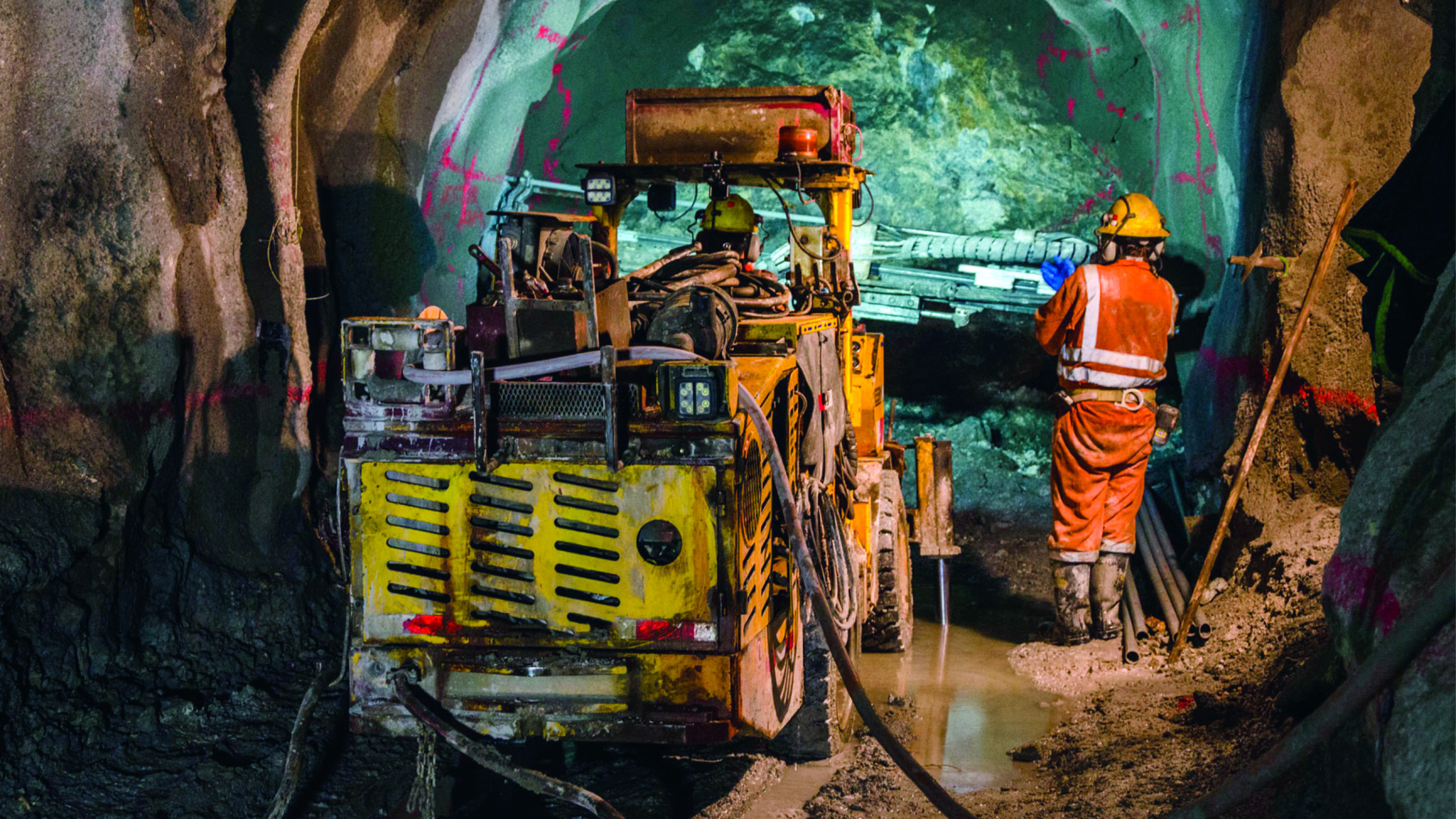
Morocco is at the heart of this global trend. Indeed, for the past few years, mining exploration projects have been multiplying across the country.
A real treasure hunt that is accelerating and plunging the national mining sector into a new buzz. Quarries closed for years are coming back to life, while a host of foreign companies—mainly Anglo-Saxon juniors—are launching exploration projects in Morocco.
For its part, the National Office of Hydrocarbons and Mines (ONHYM) is coordinating several dozen prospecting projects covering precious metals, base metals, industrial minerals, and critical minerals.
Investment is pouring in
The mining sector has certainly always been a pillar of the Moroccan economy, contributing significantly to GDP—with a share of around 10%—and accounting for more than a quarter of exports.
However, the sector is largely dominated by phosphate, which represents nearly 90% of the value of national mining output. Moreover, investment in non-phosphate projects had been somewhat muted for several decades.
But things should rebalance somewhat over the coming years. Anticipating the surge of interest in strategic metals, the Morocco Mines Plan 2021–2030, developed by the supervising ministry, has given a real boost to mining activity, with the goal of doubling the sector’s revenues by 2030.
This proactive policy’s key pillars are: enhancing the value of strategic minerals by leveraging, in particular, the battery ecosystem currently being developed; improving the tax and regulatory framework, notably through incentives for exploration and investment; and strengthening geoscientific infrastructure through an ambitious digital mapping project.
Improving sector governance is also one of the foundations of the mining plan, to expand exploration and extraction. The first results were quick to follow.
Today, mining is one of the sectors attracting the most foreign direct investment, behind the traditional activities of industry, real estate, and trade.
Morocco even ranks first in Africa for the attractiveness of its mining sector, according to the Fraser Institute, a major Canadian think tank.
A doubly favorable context
It must be said that the context is doubly conducive to this boom. On the one hand, domestically, ambitions for the energy transition and the strengthening of the national industrial ecosystem offer unprecedented opportunities for the sector, according to a recent report by the Policy Center for the New South (PCNS).
The report’s authors believe the mining sector can become “a lever for industrial transformation,” making it possible not only “to ensure a strategic supply of raw materials,” but also to create value added locally, while strengthening the competitiveness of emerging industries such as electric batteries.
On the other hand, internationally, “Morocco is positioning itself in a particularly favorable context,” the Policy Paper notes: global demand for critical minerals is exploding, while certain supply chains are being instrumentalized for geopolitical purposes, creating opportunities for countries like Morocco that can guarantee a safe and responsible supply.
For metals such as cobalt, copper, and nickel, global demand could quadruple by 2030, “offering Morocco a strategic window to turn its mining potential into a driver of growth and industrialization,” the report’s authors argue.
Winning the value-add bet
But to truly turn the opportunity into reality and make Morocco an essential mining hub linking Africa to global markets—as Leila Benali, Minister of Energy Transition and Sustainable Development, hopes—it will be necessary to succeed in the bet on local value addition.
This is a major challenge for the sector and for the country’s industrial sovereignty: developing local raw-material processing industries and creating value added would make it possible to create skilled jobs, strengthen the country’s autonomy, and stimulate industrialization.
The OCP Group has already shown the way with its ambitious 130-billion-dirham transformation plan. Managem, Morocco’s mining giant, is following the same trajectory. Its copper smelter project could be a game-changer.
The Moroccan mining group is very seriously considering building the region’s first copper “smelter” to process copper concentrate, dedicated to producing copper cathodes for the automotive sector and sulfuric acid for fertilizers (OCP). This major project, carried out in collaboration with the phosphate-fertilizer giant, is estimated to cost between 10 and 15 billion dirhams.
The stakes are clear: to add value to copper by producing finished products and become North Africa’s first copper smelter. The feasibility study for this project is underway, with operations expected to start from 2028.
For cobalt, Managem is preparing to commission, in the coming weeks, a cobalt sulfate plant that will produce up to 5,800 tonnes per year, adding value to metals from the Bou-Azzer mine. Nearly 80% of the output will be delivered to Renault over a seven-year period.
Other value-add projects are on the table, notably the one led by Korea’s LG Energy Solution and China’s Yahua Group, which aims to develop a high-purity lithium refinery in Morocco. This project, estimated at 5.5 billion dirhams, is intended to produce lithium hydroxide for electric-vehicle batteries.
However, although promising, “these initiatives should be seen as first steps in a broader national strategy, still to be formalized, to develop a real ecosystem around critical minerals,” the PCNS report emphasizes.
This requires, the same source believes, “the imperative to develop a comprehensive national strategy,” stemming from a debate involving public actors, the private sector, research, and civil society, defining priorities for critical and strategic minerals and encouraging local processing.
It also requires the creation of a bank of industrial projects focused on local processing, as recommended by the CESE (Economic, Social and Environmental Council).
Finally, it requires greater coordination between Morocco and resource-holding countries, particularly on the African continent, by leveraging their complementarities.
Such a strategy would foster the emergence of regional value chains going beyond extraction to include processing, refining, the manufacture of industrial inputs, and ultimately recycling. It would position Morocco as a key player in global supply chains.
Morocco’s Rich Mining Heritage
Morocco has a diversified and rich mining heritage. Beyond phosphate, Moroccan cobalt is also strategic, with proven reserves estimated at 14,000 tonnes, primarily exploited at Managem’s Bou-Azzer mine.
Unique in the world for the quality of cobalt extracted as a primary product without associated minerals, Bou-Azzer cobalt ensures the purity sought by the battery industry. National production stands at about 2,500 tonnes per year, making Morocco the ninth-largest producer worldwide.
Copper reserves, estimated at 590,000 tonnes, are mainly exploited by the Managem group, among others. Annual copper concentrate production had been around 100,000 tonnes per year.
Managem’s Tizert mine, whose exploitation began in the second half of 2025 with a $440 million investment, is poised to double national production. In addition to these main resources, Morocco also holds significant reserves of lead, zinc, silver, baryte, fluorite, and antimony.
To explore this mineral potential, a fully digitized national mining cadastre will be launched this year. It will consolidate more than 240 administrative procedures to simplify processes, increase transparency, and improve access to information for potential investors.