Kingdom
When the University Becomes a Start-Up Factory
Moroccan universities are changing in scale. From places of knowledge, they are becoming start-up incubators, transforming research and academic talent into high-impact entrepreneurial projects for the national and African economy.

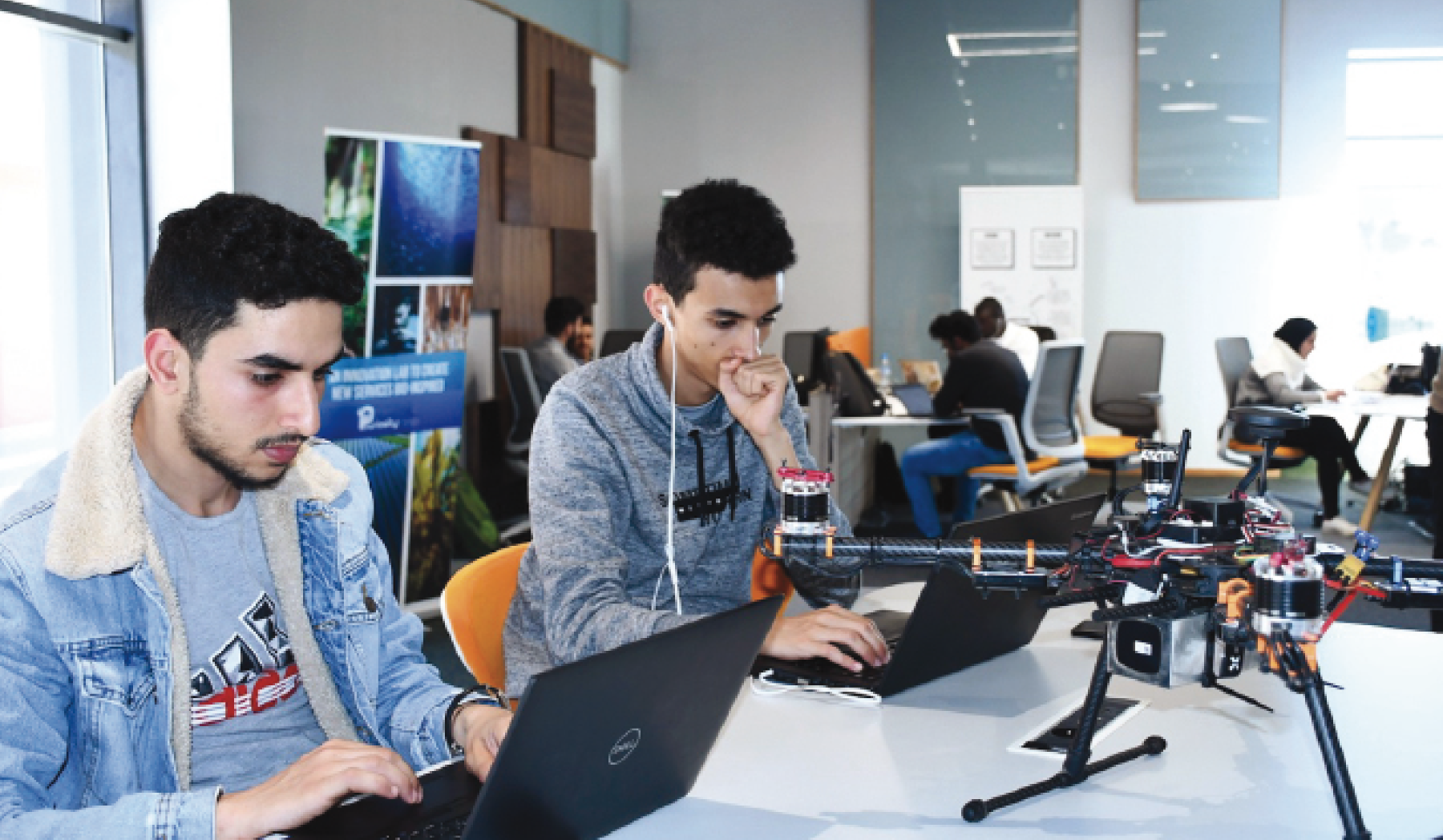
At a time when innovation has become a key factor of economic sovereignty and global competitiveness, universities and elite institutions are no longer content with simply training graduates. They are now establishing themselves as true start-up factories, capable of transforming scientific research into concrete market solutions. From biotechnology to artificial intelligence, including deep tech and digital technologies, the academic world is asserting itself as a strategic link in the innovation economy.
This shift is visible on an international scale. In Cambridge, the university is no longer limited to producing Nobel Prize winners: it is generating high-impact companies. Biomodal, a spin-off specializing in bioinformatics applied to epigenetics, has raised nearly $150 million to accelerate research into cancer and other complex diseases.
In another field, PolyAI, also originating from Cambridge, is developing conversational artificial intelligence solutions already deployed in the customer service centers of major international corporations.
UM6P, a driving force of university innovation
In Morocco, this momentum is gaining increasing scale, notably driven by Mohammed VI Polytechnic University (UM6P), which in just a few years has become a central player in academic and entrepreneurial innovation. Through its innovation campus StartGate, UM6P has supported more than 500 start-up projects, offering a continuum of support ranging from ideation to market launch.
Incubation, acceleration, mentorship, access to funding: StartGate stands out for its integrated approach, combining cutting-edge technological infrastructure, international openness, and strong alignment with industrial needs. Among its flagship programs is Explorer, co-developed with the MIT Sandbox Innovation Fund, which provides university project leaders with advanced training, targeted mentorship, and financial support to transform their ideas into prototypes and then into marketable products.
For Yassine Laghzioui, Director of Entrepreneurship and Venturing at UM6P and CEO of UM6P Ventures, the philosophy is clear: “Entrepreneurship is no longer a peripheral activity at UM6P. It is at the heart of our priorities. Our ambition is to convert the research, engineering, and creativity of our students and researchers into useful, scalable, and exportable solutions. This requires an integrated model combining a technological campus, international laboratories, a global network, and a specialized investment fund.”
This strategy is bearing fruit. Among the promising start-ups is SmartProf, an edtech company founded in 2021 within the StartGate ecosystem. The platform modernizes tutoring by connecting students and teachers for personalized lessons, online or in person, while also developing digital academies for companies. It notably secured a $110,000 pre-seed round with participation from UM6P Ventures and Plug and Play.
Another emblematic example is Moldiag, a spin-off created by the MAScIR Foundation, itself affiliated with UM6P. Its goal is to industrialize and commercialize molecular diagnostic solutions derived from Moroccan academic research.
A structuring ecosystem
Beyond UM6P, other Moroccan universities are multiplying initiatives to bring higher education and entrepreneurship closer together. At Al Akhawayn University in Ifrane, more than 530 students recently took part in Ventures Adventure, a month dedicated to entrepreneurial innovation that rewarded 17 projects in fields as varied as agritech, health, education, and information technology.
Cadi Ayyad University (Marrakech), Sidi Mohamed Ben Abdellah University (Fez), and Moulay Ismail University (Meknes) are also standing out through initiatives combining academic reflection and entrepreneurial experimentation. The start-up Trustii, behind the first inter-university Data Challenge dedicated to artificial intelligence applied to healthcare, embodies this collaborative approach between institutions.
Schools such as ESSEC Morocco are also contributing to this momentum by developing innovation hubs where students, researchers, and economic stakeholders co-create solutions addressing both local and global challenges. From a sectoral perspective, start-ups emerging from Moroccan universities cover a wide range: edtech, artificial intelligence, HR tech, business solutions, and healthcare. Jobzyn, an AI-based recruitment platform supported by pan-African investors, illustrates this rapidly emerging potential.
Nevertheless, challenges remain. Despite progress, only a minority of companies actively collaborate with academic research, hindering the systematic transformation of scientific results into marketable innovations. Access to funding, particularly in the early stages, also remains a major obstacle, in a context marked by persistent risk aversion and strong selectivity in public support mechanisms.
Despite these constraints, Moroccan universities are gradually establishing themselves as incubators of innovation and engines of value creation. By training talent, structuring support ecosystems, and building strong bridges with industry, they are shaping a new vision of higher education—one in which research, education, and entrepreneurship converge to position Morocco as an emerging hub of sustainable innovation in North Africa.