Kingdom
When The State Catalyzes Private Initiative
The unprecedented levels of public investment and their spillover effect on the private sector were the subject of a La Vie Éco conference-debate. Tourism, trade, energy—all of them are feeling this momentum, supported by new financing instruments.

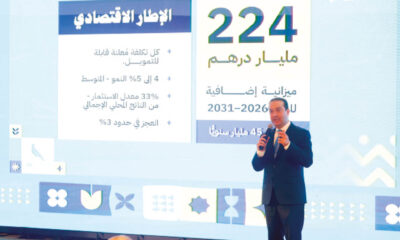
Public investment is more than ever emerging as one of the pillars of the national development strategy. With 380 billion dirhams scheduled for 2026 and nearly 1,600 billion mobilized over five years, the investment effort is reaching an unprecedented scale, equivalent to almost one full year of cumulative GDP.
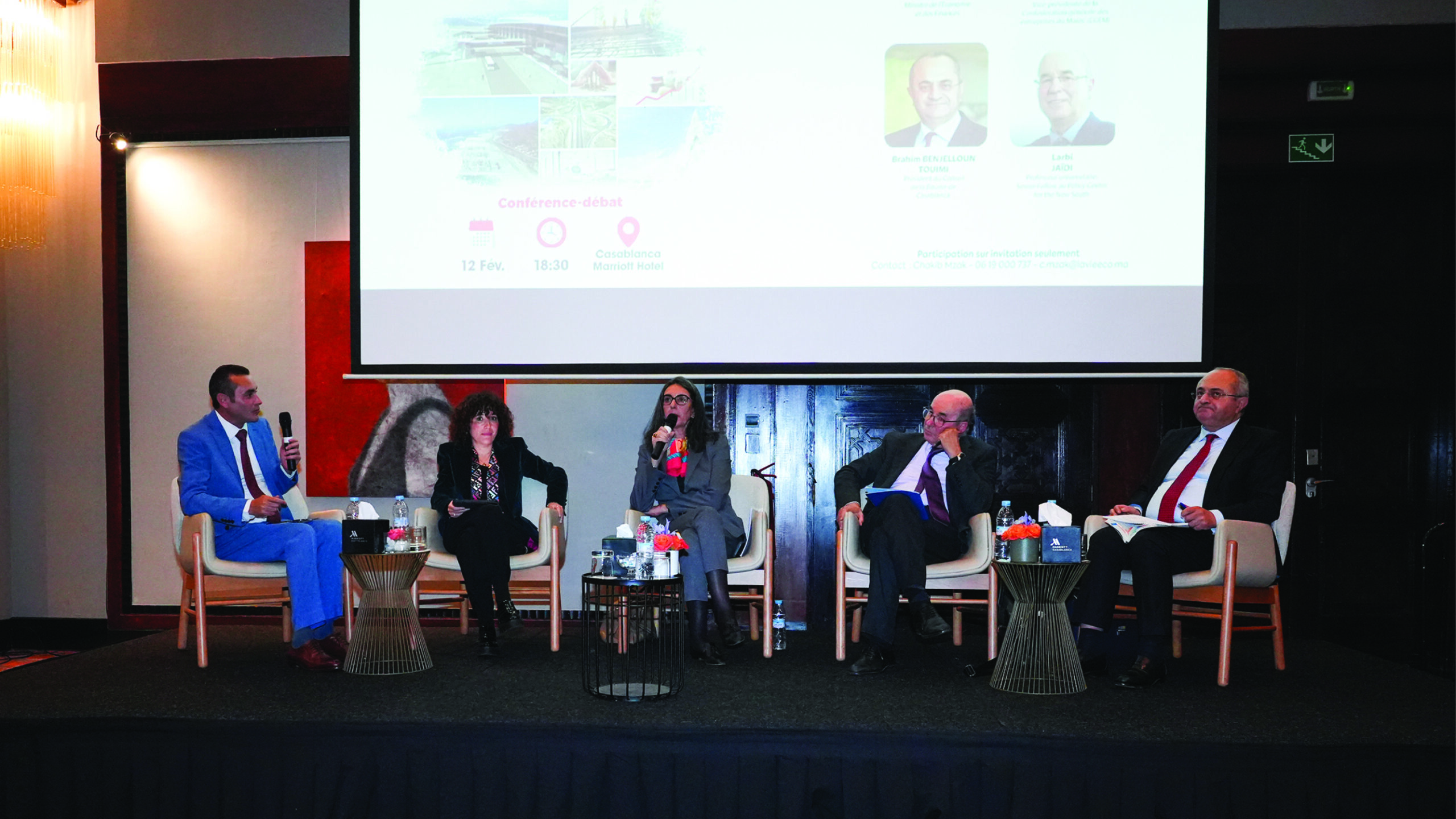
It was to debate the scale of public investment and its spillover effect on private-sector dynamics that La Vie Éco brought together, at its first conference-debate of the year, political decision-makers and economic actors.
“The volume committed by the State represents an increase of 61% compared with the previous five-year period, with generally satisfactory implementation rates, often close to 80% for major programs,” specifies Nadia Fettah Alaoui, Minister of Economy and Finance.
Except that these investments are increasingly oriented toward the development of social sectors. “Even before economic performance, the choice was that of the welfare state,” the minister recalls. Several strategic projects have been launched, including health and social protection, water, infrastructure, and territorial development.
It is therefore indisputable that “Morocco is moving from a State that invests massively to a State that acts as a catalyst and a shareholder of a new kind, thanks to the various reforms that have been initiated, including the reform of the public sector, improved governance, and the transformation of public institutions and enterprises,” emphasizes Larbi Jaïdi, university professor and Senior Fellow at the Policy Center for the New South.
Moreover, “the trade-off between social spending and infrastructure spending was an issue a few years ago. That is no longer the case today, since a new phase is taking shape in which social spending must be productive and thus enable the private sector to be an indirect financier of the social sector,” Jaïdi adds.
Leverage effect, across all sectors
But what momentum do all these public investments generate for the private sector? Saadia Slaoui Bennani, Vice-President of the CGEM, believes that public investment has clearly driven economic momentum.
“Certain indicators bear direct witness to this, notably the increase in cement sales—the conventional barometer for measuring activity—which shows growth of around 10%. But not only that. Tourism, energy, trade, insurance, and banks are also benefiting from this upswing.”
In her view, the real question is no longer whether public procurement supports activity, but whether it fosters sustainable development of the entrepreneurial fabric.
Which is the case, since “private investment rose from 100 to 120 billion dirhams in 2024. All the more so because the objective of the national investment strategy—aiming for 550 billion in private investment between 2022 and 2026—could even be exceeded,” she assures.
All this investment budget—amounting to billions of dirhams for both the public and private sectors—requires appropriate financing means and products.
As a result, “the banking sector has aligned its financing strategy with national priorities. Better still, it has even been able to innovate by developing new tools, such as syndicated loans, debt funds, REITs (OPCI), or public-private partnerships.
These mechanisms make it possible to mobilize substantial capital while diversifying sources of financing,” explains Brahim Benjelloun Touimi, Chairman of the Board of the Casablanca Stock Exchange and Managing Director and CEO of Bank of Africa.
Innovative financing, a new tool initiated by the State, is not to be outdone. As Nadia Fettah explains, “we prefer to transfer assets so that we can have the liquidity that allows us not to hesitate to accelerate growth and investment. On the other hand, another windfall has opened up for the State: having maturities of 30 years, without guarantees and without debt.
Moreover, this financing method has not only made it possible to diversify sources, but also to reduce the trajectory of public debt and, consequently, the budget deficit.”
Still, “10% of State investments are carried out through these instruments, while 90% are done in a ‘traditional’ way,” she qualifies.
This mechanism, however, raises questions for Larbi Jaïdi regarding its limits: “This instrument raises a number of questions, because the institutional actors that were approached are not very numerous.
In addition, the mechanism’s transparency arrangements raise a number of questions, especially since foreign countries have resorted to a law that sets out the conditions for using this instrument in order, in the end, to anticipate its future costs, while at the same time ensuring transparency in the modalities of this choice.”
FM6I, an investment accelerator
On another front, the role of the Mohammed VI Investment Fund remains important in this public-investment effort and in stimulating private investment.
At present, “the leverage effect is 1 dirham to 2 for thematic funds. In three years, the FM6I has mobilized what the private equity industry managed to do in 20 years, namely 20 billion dirhams.”
And it must be said: a wide range of financing possibilities is offered through this fund. “This ranges from direct lending to equity stakes, via subordinated loans, in addition to support,” Benjelloun Touimi emphasizes.
That is to say, this fund reflects a qualitative leap in investment vehicles, which “will certainly generate many positive aspects in how resources are mobilized, how financing is diversified, and above all in meeting specific expectations of a number of segments in the private sector.
However, this must be accompanied by outreach, communication, and follow-up,” Jaïdi warns. In any case, by 2035, the goal of an investment split of two-thirds for the private sector and one-third for the public sector appears achievable.
“Everything is being done to reach this structure, through the Investment Charter, improving the business climate, and also all sectoral strategies.”
There are, however, areas that still need improvement because, according to a survey carried out by the CGEM, “simplifying administrative procedures remains an obstacle to investment, despite all the efforts made in digitalization, in addition to the complexity of the Labor Code, as well as human capital—especially vocational training,” Saadia Slaoui concludes.