Kingdom
What Morocco Won: Victories Beyond Sport
From an external viewpoint, the 35th Africa Cup of Nations transcends a mere continental competition. It symbolizes a nation in full growth: soft power, modern infrastructure, and above all, a springboard toward 2030. Morocco just secured a global showcase.

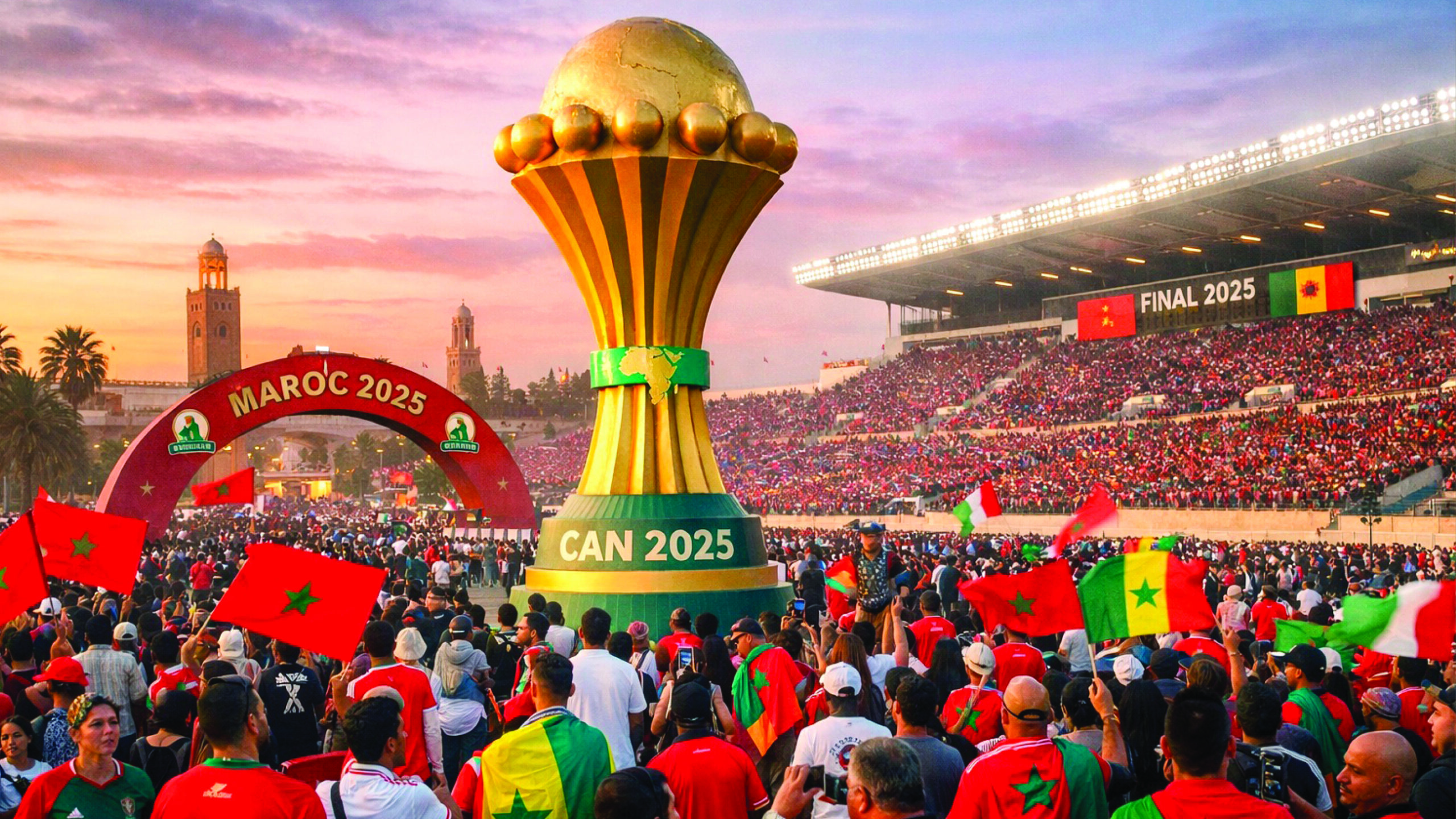
Even though the defeat in the final, against Senegal, leaves a bitter taste, the 2025 AFCON will nonetheless remain, in many respects, historic!
Not only did Morocco demonstrate its organizational capabilities – let’s say extraordinary in the African context – this edition also contributed significantly to consolidating the Kingdom’s brand image as an African leader, focused on the continent. The testimonials confirm this.
At the summit of world football, FIFA President Gianni Infantino congratulated Morocco last Monday for being the “exceptional host” of the 2025 Africa Cup of Nations, which he called a “fantastic tournament.” Within the continent, the AU Commission expressed its deep gratitude to Morocco for the “exemplary” organization of the 2025 AFCON.
As Italy did in 1990, and unlike what happened in Brazil in 2014, Morocco managed to separate the organization of the sporting event from the performance of the national team.
This is precisely what allowed it to manage with mastery the few excesses that marred certain moments of this event, as well as the overall organization.
International experiences show, indeed, that countries which succeed in managing these kinds of difficult moments are those that manage to make this separation between the two aspects and which have, consequently, reached a high level of maturity in terms of organizing sporting and other events.
This earned the Kingdom international recognition for the quality and level of the organization. This organization is thus unanimously considered exemplary.
As highlighted in the royal message addressed to the national team, what was achieved during this AFCON is proof of “the importance of our strategic vision to invest in human capital and modernize the Kingdom’s infrastructure, which have demonstrated their resilience and their world-class level of preparedness in anticipation of hosting the 2030 World Cup.”
The quality of the organization and the warmth of the welcome are “a message of hope and confidence from Morocco towards its continent, confirming that African talent is capable of excelling and innovating in all fields,” states His Majesty the King in this message.
As we saw, just months before the competition, most of the stadiums were still under construction. The same for some infrastructure, while urban transport in several cities was not yet up to standard. Morocco proved itself ready on time, demonstrating impeccable organizational credibility.
Thus, it has, once again, shown its capacity to organize mega-events within short, even untenable deadlines for most African countries. It thus presents the image of a stable country, with quality infrastructure and undeniable logistical expertise.
Rising Image Capital
Likewise, by hosting all of Africa under the conditions everyone witnessed (no fewer than 3,800 media outlets covered the event, plus an impressive number of influencers and content creators), Morocco affirms its vanguard role on the continent, both in sporting, political, and economic terms.
This is likely to promote the Kingdom as a tourist destination (the matches were broadcast in around thirty European countries, in North America and Asia, including, for the first time, China and Japan) and also strengthen its diplomatic ties with other countries on the continent.
In doing so, Morocco also consolidates its position within CAF and FIFA. This gives it more weight to influence continental, even global, football decisions.
Furthermore, through this event, Morocco promotes its development model, blending modernity and traditions, as well as its investments in both infrastructure and human capital.
The observation is clear, as noted by some observers: Morocco did not only organize an exceptional competition, it also had to face a wave of hostility, bad faith, propaganda, and fake news, coming from certain supporters, media, and African football actors.
There was also a very notable activity on social media, and this, it is noted, with the sole aim of “sowing hatred” and provoking violent behavior like those we witnessed at the end of the final match.
Security Model
The fact that these excesses were quickly contained, because the security forces anticipated them, is a sign that the latter have perfectly integrated this component into the “security package.” On the security front precisely, the Moroccan edition of the AFCON is by no means limited to the action on the pitch.
It is a case study on an international scale. This is at least how the visit by FBI members to Morocco was interpreted, the goal of which was to assess security, technologies, and infrastructure.
A visit by the American federal agency that shows just how seriously African football is now taken and how the Moroccan experience in organization has become a textbook case.
Furthermore, a few days after this visit, another equally notable one will take place, this time by the British sports security team. A mission that falls within the framework of an exchange of expertise regarding security arrangements for major sporting events.
On site, “the British officials reviewed the security and public order plan, and the exchanges focused on the overall architecture of the system, from access management to the dispersal of spectators after the match,” it is emphasized.
One of the manifestations of Moroccan genius is having intelligently given this 2025 AFCON a political dimension; the communiqués from the South African Ministry of Sport, the Senegalese Ministry of Foreign Affairs, and the Egyptian Federation, among others, are a manifestation of this, as is the symbolic dimension of the famous DRC supporter’s performance.
All this, while ensuring that there was no form of “political interference” in the competition. Inside the stadiums, in their surroundings, on buses, trains, airports, public displays…, no message referring in any way whatsoever to politics.
The Royal Moroccan Football Federation worked, in complete independence, with CAF for the end-to-end organization and success of this event.
Nevertheless, the ups and downs of this competition continue, no longer on the pitch, but this time on the regulatory field, before the bodies of CAF and FIFA, which will set a precedent and will undoubtedly further clean up the practice of this sport on a continental scale. Another point for the Kingdom.
Cyberwarfare
There is also this sinister aspect that Morocco has learned to deal with. This intensified particularly on the eve of the final match. First, we witnessed the “reappearance” of the infamous “Jabaroot” group, which now openly claims affiliation with Algeria, with this incursion into the files of the FRMF and incidentally the Ministry of Justice.
Then, and this has been highlighted by experts in the field who did not hesitate to call it a “destabilization operation,” we indeed witnessed a rise in tensions on social media between the Moroccan and Senegalese communities.
“It is a hybrid war waged by trolls,” it is suggested. Malicious statements, attributed in a considerable number of cases to “Moroccans,” would, in reality, come from fake accounts, bots, or anonymous profiles.