Kingdom
Water: The Casablanca Desalination Plant in the Pipeline
By the end of 2026, desalinated seawater will flow from Casablanca’s taps. This will be the case within the next three or four years for all coastal cities.

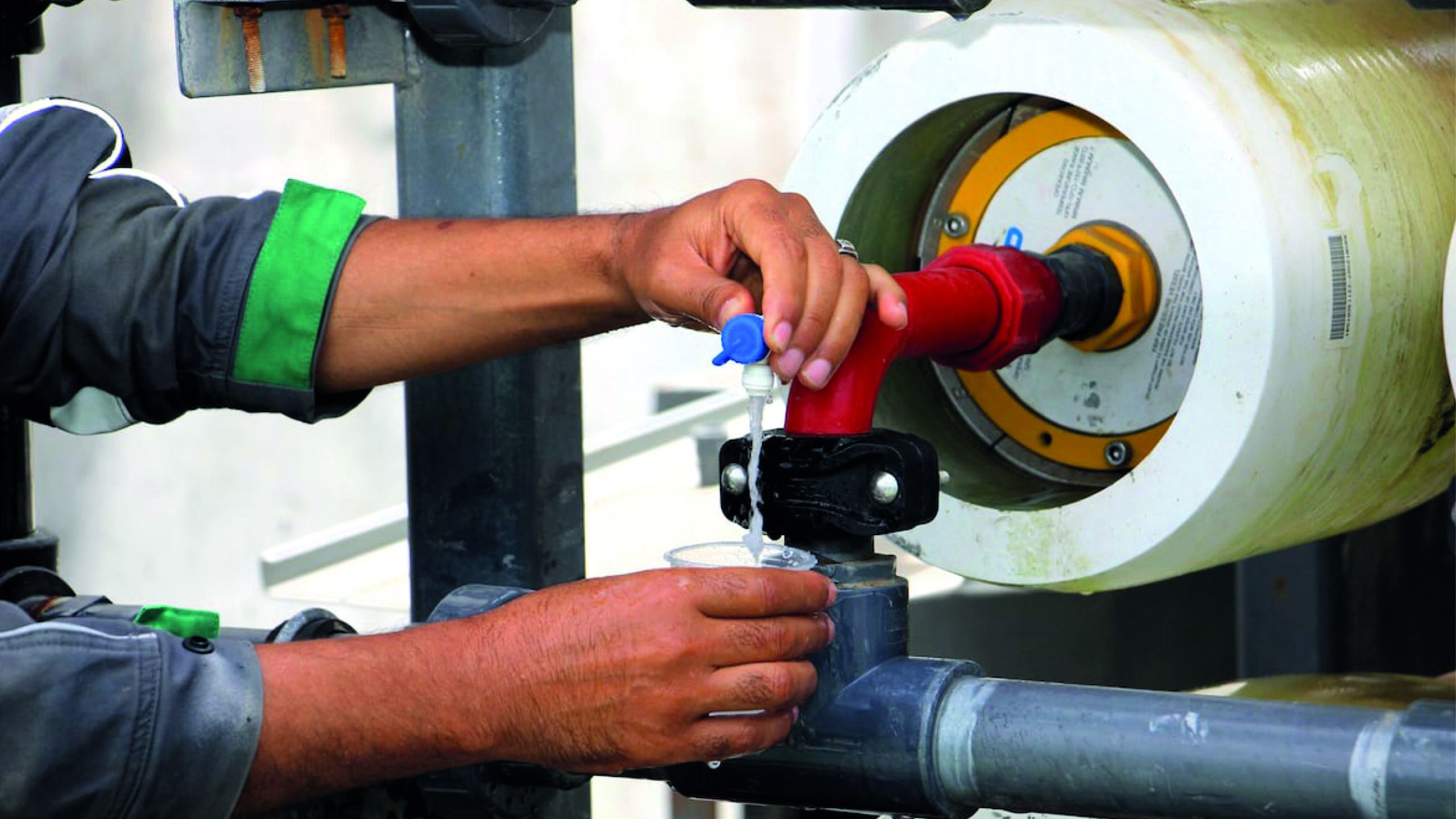
The first millions of cubic meters of water produced by the Casablanca desalination plant are expected to be injected into the network starting this year 2026.
At full capacity, the plant’s first phase should meet nearly all of the metropolis’s drinking water needs. 200 million cubic meters (Mm³) will be produced initially, rising to 300 Mm³ by 2028, at a time when the city’s needs are estimated at 220 Mm³.
The infrastructure, led by the private sector with an investment of 10 billion dirhams, is particularly notable: firstly, it will supply water at an unbeatable price, one of the lowest, if not the lowest, in Morocco. Furthermore, it operates entirely on renewable energy.
Once completed, the project will supply not only Greater Casablanca but also the Berrechid-Settat and El Jadida-Azemmour areas, while mitigating the deficit recorded in the Oum Er-Rbia basin.
The plant will both provide water for irrigation, with 50 Mm³ dedicated to it, and redirect water transferred from the Sebou basin to irrigation. The Casablanca desalination plant is part of a more ambitious national program aimed at covering 60% of the Kingdom’s annual drinking water needs, up from the current 30%.
Morocco currently operates 17 desalination plants producing 345 Mm³ per year. Four additional facilities, with a combined capacity of 540 Mm³, are under construction and are expected to be completed by 2027.
By 2030, the Kingdom plans to produce 1.7 billion cubic meters (MMm³). Desalinated water will also be directed to irrigation as a supplement to agricultural areas, and even as primary irrigation as is already the case in Agadir, whose plant is in the expansion phase, as well as in Dakhla.
In Tan-Tan and Laâyoune, a large portion of the production from the desalination units will be directed towards industry, including green hydrogen. Following Casablanca, the expansion projects of the Jorf Lasfar plant (300 Mm³ by 2027), and Agadir, which will increase from 100 Mm³ to 146 Mm³ by 2027, will follow.
In parallel, other major projects will be launched: the Tiznit plant, the largest in Africa with a capacity of 350 Mm³, whose studies are underway and tenders are expected in a few months for commissioning in 2028; the Nador project (250 Mm³), whose construction work has already begun; the Tangier plant (150 Mm³), scheduled between late 2028 and early 2029; and finally, the Rabat plant, which will produce 300 Mm³ per year.
Since its launch, the underlying idea of the PNAEPI 2020-2027 program for securing drinking and irrigation water has been to supply coastal cities, and even some inland cities, with desalinated water produced using renewable energy, which will also cover industrial and, in part, agricultural needs. The bet is on the verge of being won.